
Grant Williams
2
Article
514
View
1
Followers
The Blockchain Trilemma: Why No Chain Is Perfect (Yet)
Introduction
Web3 promised us a future of open, decentralized systems. But as builders and users quickly discovered, blockchains come with a stubborn challenge: the Blockchain Trilemma.
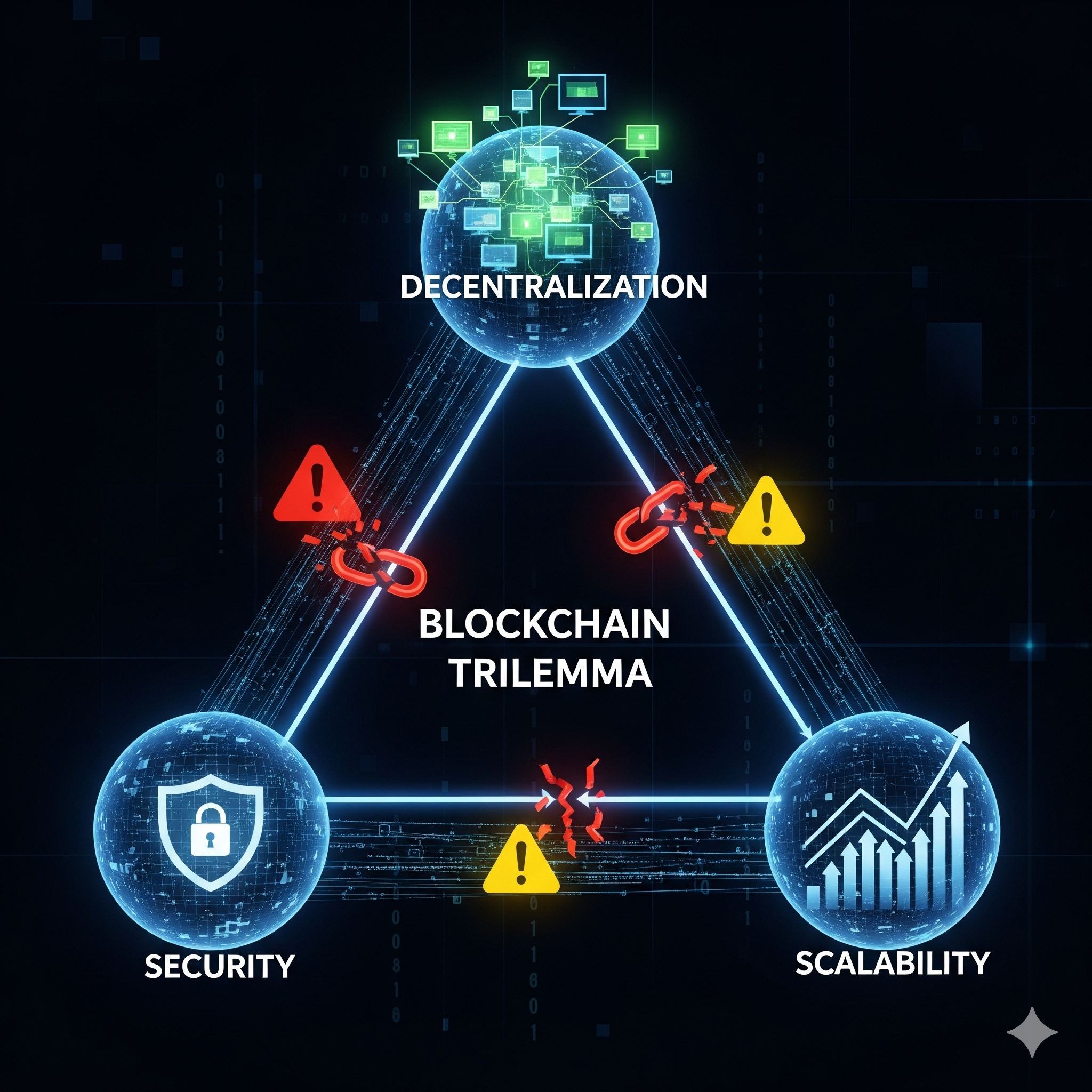
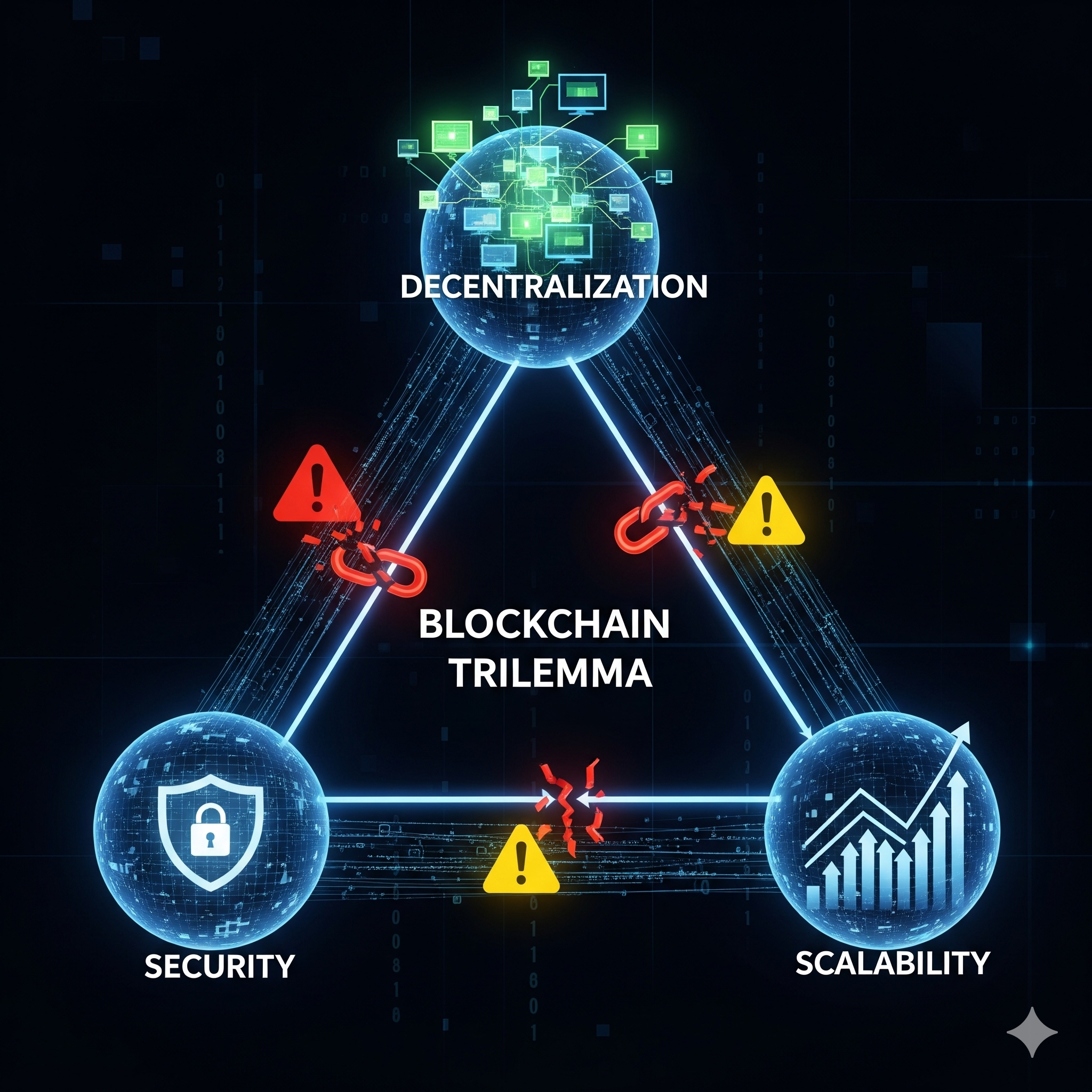
This term was coined by Vitalik Buterin, and it explains why blockchains struggle to achieve security, decentralization, and scalability at the same time. Understanding this trade-off helps you see where the ecosystem stands today and guides anyone building in Web3.
The Three Pillars of the Trilemma
Security
A secure blockchain protects your money and data. It prevents hacks, fraud, and errors.Decentralization
This means no single entity controls the blockchain. Anyone can participate, validate transactions, and help keep the network honest.Scalability
Scalability is about speed and capacity. Can the blockchain handle thousands (or millions) of transactions per second without slowing down or becoming expensive?
The Trade-Off
In theory, the perfect blockchain would excel at all three pillars. In practice, most blockchains can only fully optimize two at a time. Choosing which pillars to prioritize defines the blockchain’s strengths and limitations.
Why Is It a Trilemma?
The problem is simple: when you optimize for two pillars, the third tends to weaken. For example,
Bitcoin focuses on security + decentralization, but sacrifices speed and cost-efficiency.
Ethereum has strong security + decentralization, but has historically struggled with scalability (hence Layer 2 solutions).
Solana pushes scalability + security, but critics question the level of decentralization due to its validator requirements.
Every chain is an experiment in balance.
Attempts to Solve the Trilemma
The Web3 space is full of innovation aimed at breaking this trade-off. These inludes:
1. Layer 2 Solutions
A Layer 2 solution is a protocol built on top of an existing blockchain (Layer 1) that helps scale the network. Instead of processing all transactions on the main chain, Layer 2 handles some work off-chain and then records the final result on the main chain. This reduces congestion, lowers fees, and improves speed, while still inheriting the security of the main chain.
Types of Layer 2 Solutions:
1. State Channels – Users lock funds on the main chain and conduct multiple transactions off-chain. Only the final result is recorded on-chain. Example: Lightning Network on Bitcoin.
2. Sidechains – Independent blockchains running in parallel to the main chain with their own security but connected to the main chain. Example: Polygon (sidechain mode).
3. Rollups – Aggregate multiple transactions off-chain into a single batch, then post a summary to the main chain.
Layer 2 Rollups
A Layer 2 Rollup is a secondary protocol built on top of a blockchain that handles transaction processing off the main chain. Rollups move transactions off the main blockchain and process them on a secondary layer. Once processed, they record the results back on the main chain. This increases transaction speed and lowers costs while keeping the main chain’s security intact. Examples include Arbitrum and Optimism.
Types of Rollups:
1. Optimistic Rollups – Assumes transactions are valid by default, but allows challenges if someone spots fraud. Example: Optimism.
2. Zero-Knowledge (ZK) Rollups – Uses cryptographic proofs to instantly verify that transactions are valid before posting them on-chain. Example: zkSync.
How Rollups Address the Trilemma:
Scalability: By processing many transactions off-chain, Rollups increase throughput and lower fees.
Security: They inherit the security of the main chain because the final state is anchored on it.
Decentralization: Most Rollups allow multiple validators or sequencers, maintaining decentralization while scaling.
In short, Layer 2 Rollups let blockchains handle more users faster without sacrificing security, providing a practical way to mitigate the Blockchain Trilemma.
2. Sharding
Sharding splits a blockchain into smaller segments called shards. Each shard processes its own set of transactions in parallel with others, instead of making every validator process every transaction. This improves the network’s throughput and allows it to handle more users simultaneously.
3. Hybrid Consensus Models
Hybrid consensus combines different mechanisms, like Proof-of-Work (PoW) and Proof-of-Stake (PoS), to balance security, decentralization, and scalability.
Blending these approaches enables blockchains to optimize some trade-offs while keeping the network safe and decentralized. These solutions help blockchains get closer to balancing security, decentralization, and scalability, but a “perfect chain” that maximizes all three still doesn’t exist.
Why It Matters for Builders
As a builder, understanding the Blockchain Trilemma helps you:
Choose the right chain for your project’s needs.
Recognize the trade-offs you’re inheriting.
Stay ahead of where the ecosystem is innovating.
The trilemma isn’t just a limitation — it’s a design compass guiding the entire Web3 movement.
Conclusion
The Blockchain Trilemma reminds us why no single chain dominates Web3. Each one makes trade-offs. Each one is a living experiment.
Instead of waiting for a flawless blockchain, we should see the trilemma as an invitation: to keep building, to keep testing, and to keep bending the rules.