
Deposit USDC into a yield vault that stays in your wallet. Only the interest it earns becomes LLM credit, issued as spend limits on keys for your developers and agents.

Inferest lets an organization pay for AI with the interest on its stablecoins, without spending the stablecoins.
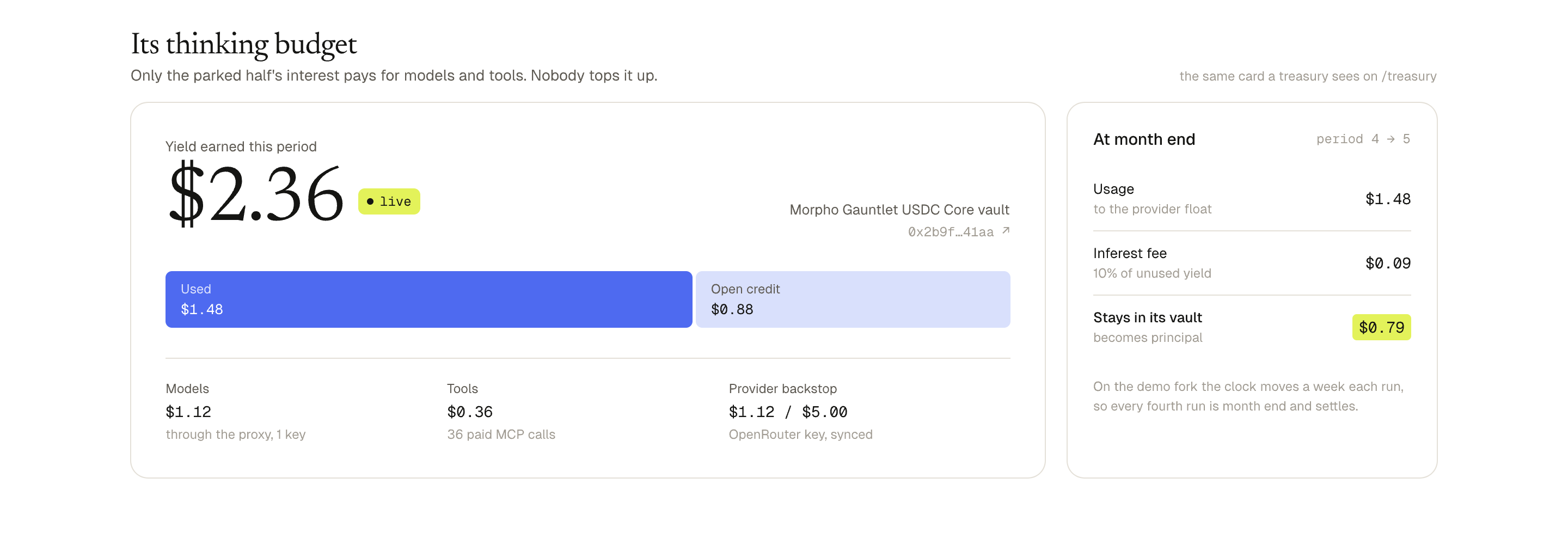
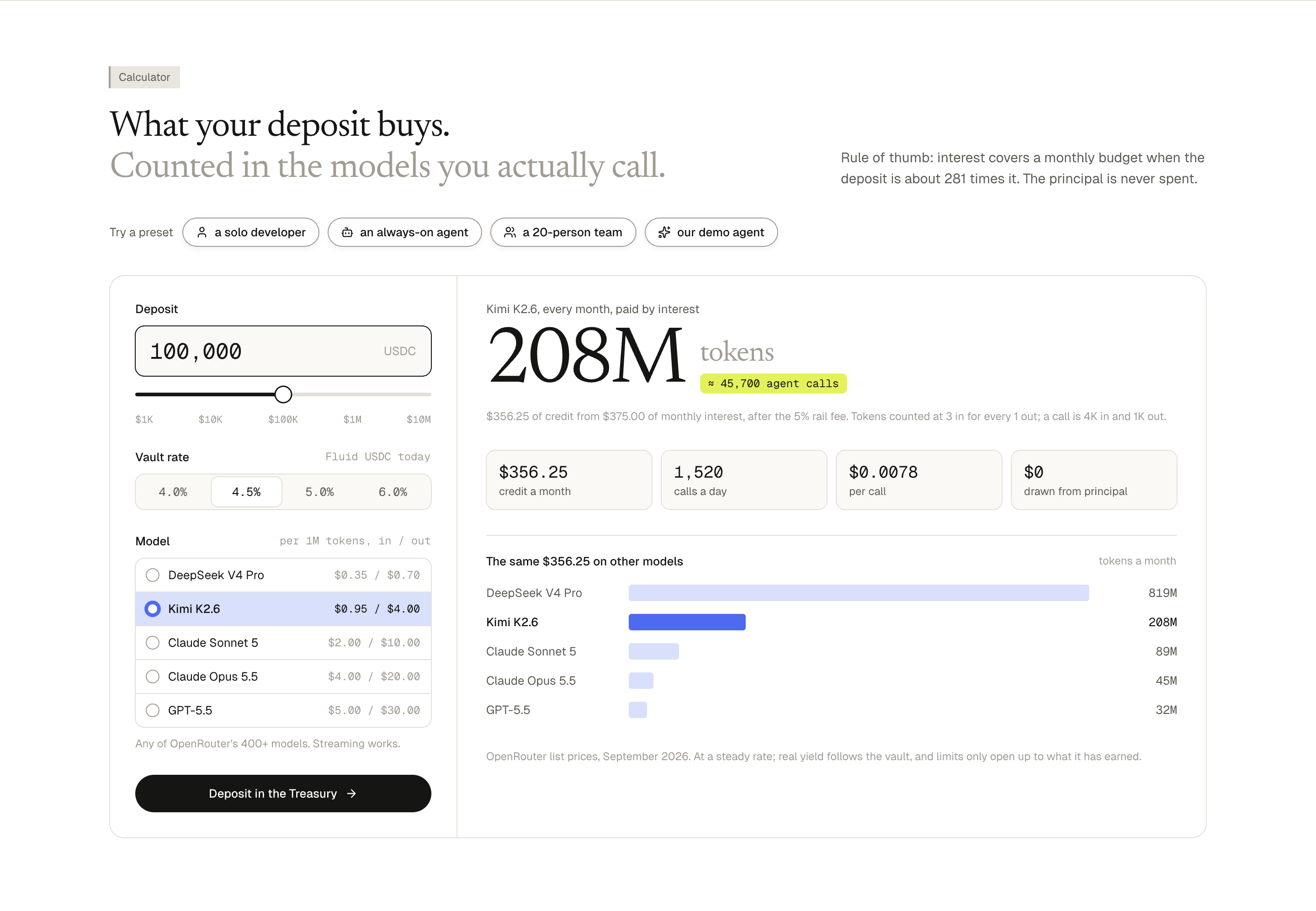
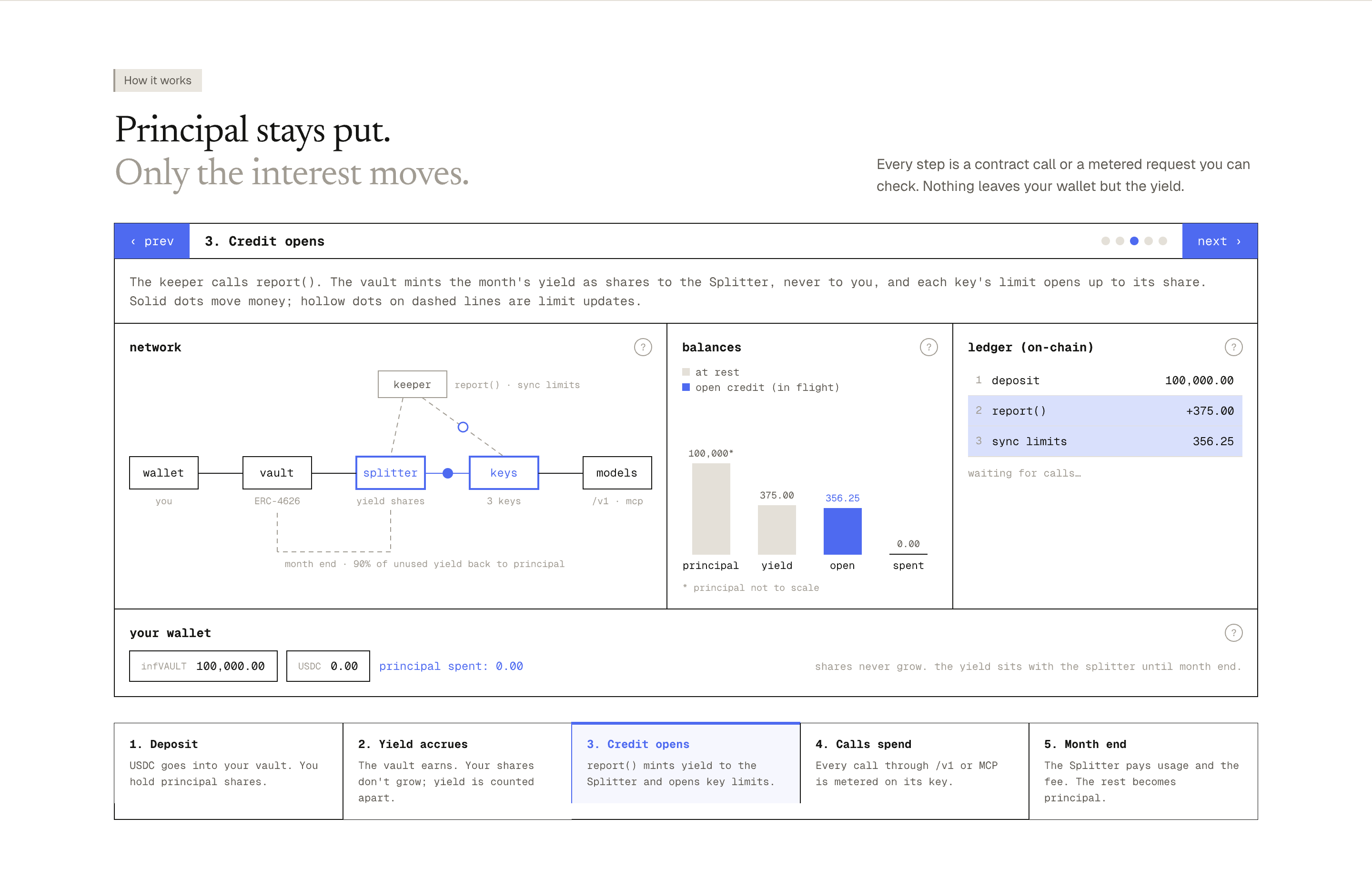
A finance lead deposits USDC into a vault that belongs to their organization. The vault puts it into Fluid USDC on Arbitrum One, and the shares stay in the organization's own wallet. As the vault earns, we open spending limits on API keys, one per developer or one per agent. A limit only ever covers yield that has already been earned, so spending can't reach the principal. Developers keep their tools: they change the base URL in any OpenAI-compatible client and get OpenRouter's models, and the same key pays for web tools over MCP. Once a month the Splitter contract settles. Usage goes to the provider, we keep 10% of the yield that went unused, and the rest goes back to the customer as vault shares.
We started here because our own developers kept asking for more LLM credits, and every request meant someone approving it and someone topping up a card. Teams that hold their treasury on-chain have it worse. To pay an AI bill they sell or off-ramp, move the fiat to an operating account, and then pay by card, while the USDC they already hold earns yield that never gets near the bill.
The first customers we're going after are crypto foundations, crypto-native startups, and companies that have started holding crypto on their balance sheet. The same engine works for agents. An agent with its own wallet can park part of its funds in a vault and pay for its own model calls out of the yield, and we built one to show it.
We started on September 24 with a research note and an empty repo. Here is what exists now, across 267 commits:
Three contracts on Arbitrum One mainnet. There's a factory that gives each customer its own Octant ERC-4626 vault over an allowlisted yield source, and a Splitter that settles each period and can only pay usage to our float and the fee to our fee address. A pilot vault is live with a tiny test deposit.
21 contract tests, plus fork tests that run against real Arbitrum One state.
A ledger module that every number in the product comes from: accrued yield, credit limits, settlement.
An OpenAI-compatible proxy. It checks a key's remaining budget before each call and meters the cost after. The same key opens paid web tools over MCP, which we pay for in USDC over x402.
A keeper that reports each vault daily, keeps limits in step with yield, and settles at month end.
The Treasury page. You sign in with an email code or a wallet through Dynamic, deposit, create keys with copy-paste snippets, settle, and see the activity. We walked through the whole flow in a real browser.
A hosted agent with its own wallet. Half of its book sits in its vault, and that yield is its thinking budget. A fence it can't change checks every move before anything gets signed. Its trades are paper for now.
Mainnet pilot guardrails: the server only admits one customer wallet, keeper transactions can be run by hand, there's a gas reserve and a per-transaction cost cap, and total OpenRouter spending is capped.
We haven't raised any money yet.