
The first AI-powered behavioral profiling engine on Injective. Decodes raw wallet transactions into dynamic trading archetypes, cognitive scorecards, and collectible RPG cards.
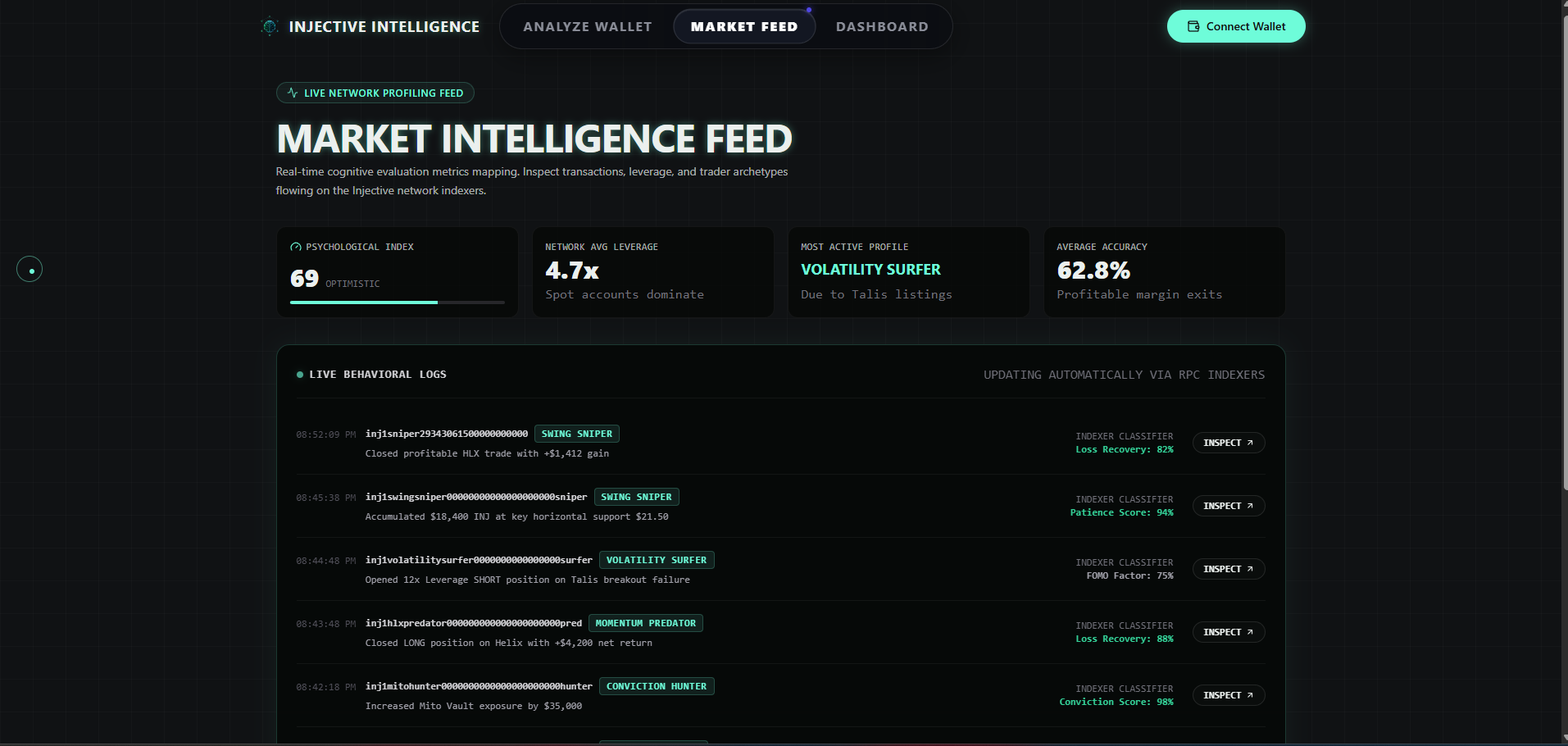
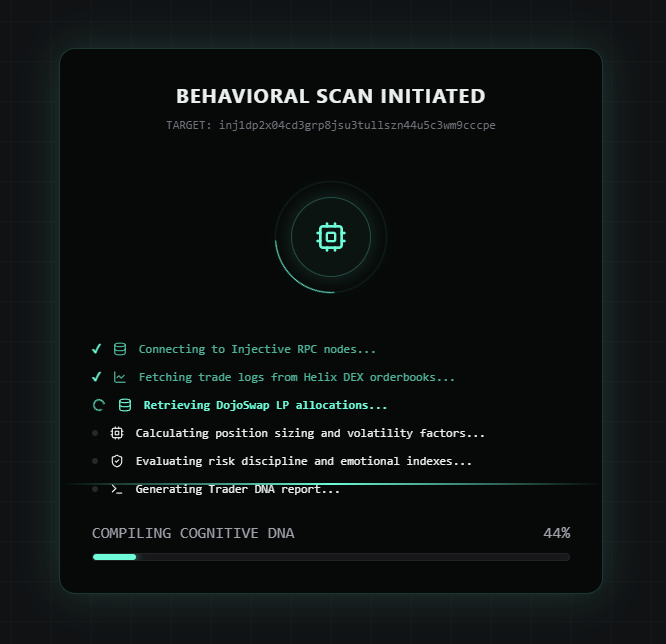
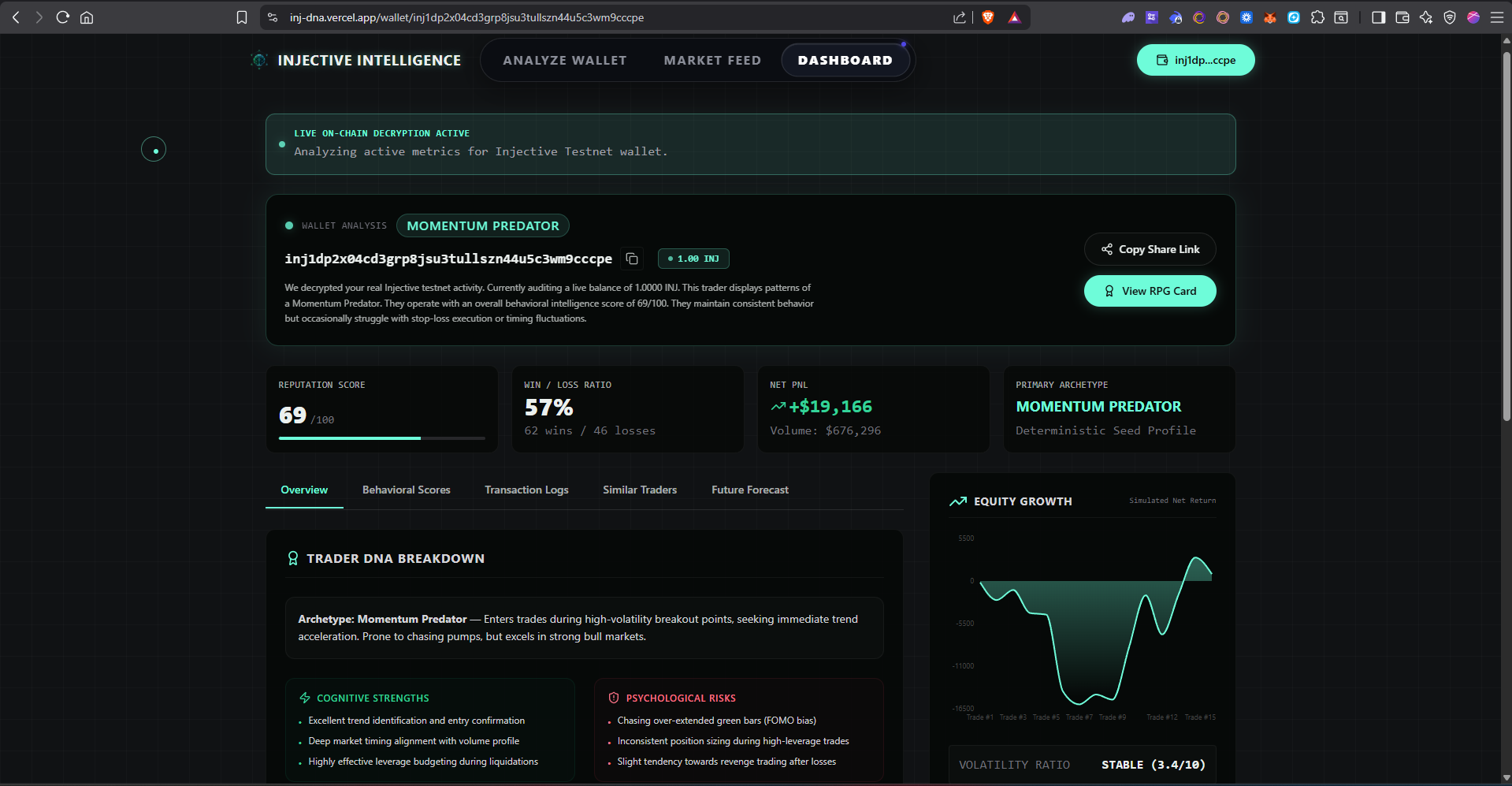
I built Injective Intelligence to bring a layer of psychological insight to decentralized finance. Standard block explorers only show raw transaction lists, gas logs, and transfer counts without any context. They do not tell you the story behind the trade. Injective Intelligence acts as a behavioral profiling engine that decodes raw address activity into a detailed psychological scorecard and a dynamic Trader DNA archetype.
Behavioral DNA & Archetypes: The engine parses historical on-chain records to classify addresses into one of six unique trading styles. These styles include Volatility Surfer (high-frequency token swaps), Swing Sniper (precise, opportunistic entries), and Conviction Hunter (long holding periods).
Psychological Scorecards: The application evaluates wallet activities to calculate scores between 0 and 100 for key behavioral traits. It rates Risk Discipline, Emotional Stability, Conviction, Patience, and FOMO Probability to help traders analyze their own habits.
Live On-Chain Node Integration: Rather than using mocked indexes or static simulations, the backend connects directly to Injective Sentry LCD nodes and explorer indexers. This allows the app to fetch live balances, verify account sequences, and pull transaction histories in real time.
Zero-State Fallback Protection: To maintain data integrity, inactive or empty wallets do not display simulated fallback metrics. The platform automatically detects these addresses and renders a clean zero state with instructions on how to activate the wallet.
Verifiable Keplr Login: Users can securely connect their Keplr wallets to persist sessions as they use the dashboard. Searched addresses are isolated from the connected wallet credentials to preserve privacy.
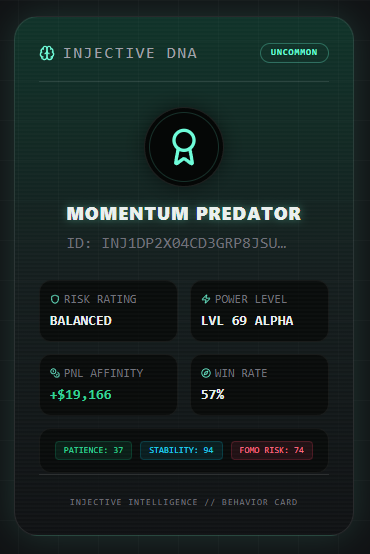
RPG Card Exporter: Traders can package their behavioral reputation scorecard into a custom-styled, collectible RPG collector card. The card can be downloaded directly from the browser with a single click, making it easy to share on Twitter or other social platforms.
The frontend is built with Next.js 15 (React 19) and utilizes Recharts for interactive equity curves and performance statistics. To bypass cross-origin restrictions, the Next.js API acts as a secure proxy to fetch blockchain data directly from Injective REST endpoints.
By analyzing the timing, frequency, and types of transactions, the profiling engine compiles metrics locally, ensuring a fast and responsive user experience.
I built Injective Intelligence completely from scratch during this hackathon timeline, moving from a blank page to a fully functioning production app.
Here is what was accomplished:
On-Chain Data Integration: Set up proxy connections to Injective Sentry LCD nodes and transaction indexers to fetch real-time wallet histories and bank balances.
Behavioral Engine Implementation: Designed and wrote the profiling algorithm (lib/engine.ts) that parses on-chain activities to output trading archetypes and dynamic psychological scorecards.
Futuristic UI/UX Design: Built a premium dark-mode interface using glassmorphism, responsive Recharts graphs, custom Outfit typography, and glowing hover states.
Keplr Wallet Connection: Integrated secure Keplr authentication, including persistent state management that updates the dashboard dynamically when wallets change.
RPG Card Exporter: Wrote a custom HTML5 canvas rendering script that dynamically paints the user's trading statistics and archetype badge onto an RPG-style collector card, ready for browser download.
Zero-State Fallbacks: Implemented fallback state checks to ensure fake or inactive addresses render correct zero-state views rather than simulated profiles.
Production Deployment: Configured and successfully deployed the entire application to Vercel under the custom domain inj-dna.vercel.app.
Currently bootstrapped and focused on product development, community feedback, and refining the profiling engine.