
Kipio is a decentralized vault for permanent, private ownership of personal content, built to give people lasting control over their digital memories.
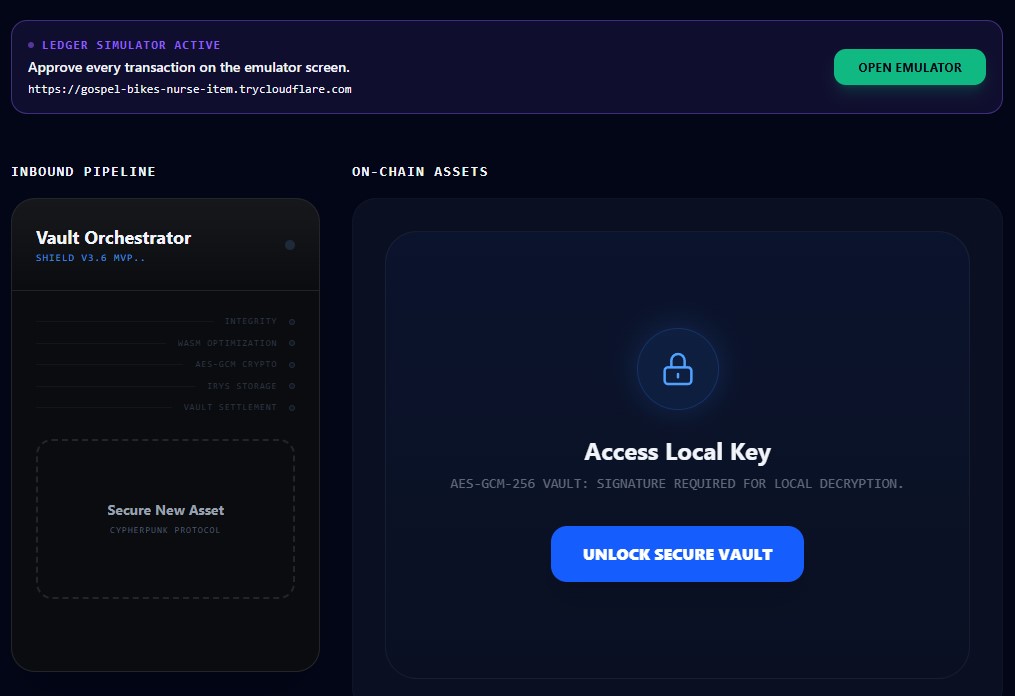
Kipio is a decentralized protocol and consumer application for permanent, private ownership of digital content. It is designed to give users long-term control over their memories and personal data without depending on centralized platforms or recurring subscriptions.
Loss of digital ownership: Personal memories are increasingly dependent on centralized platforms, accounts, subscriptions, and proprietary services.
Centralized storage: Users often have little control over how their content is stored, accessed, or preserved over the long term.
Platform dependency: Moving between services can mean losing access, metadata, or continuity of personal data.
Client-side encryption: Content is encrypted before leaving the user's device.
Permanent decentralized storage: Encrypted content is preserved through decentralized permanent storage infrastructure.
On-chain ownership layer: Arbitrum provides the blockchain layer for user-specific state and content metadata without storing the actual files on-chain.
Open protocol: The underlying infrastructure is designed so other applications and services can interact with Kipio rather than being locked into a single consumer application.
Broader content support: Photos and family memories are the initial use case, but the protocol is designed to support personal content more generally.
Kipio is currently being developed on Arbitrum using Rust and Arbitrum Stylus. Core domain logic is being formally specified and verified with Dafny before being translated into Rust and integrated into the on-chain implementation.
Kipio is designed to support both B2C and B2B use cases. Organizations could integrate with the open protocol or subsidize access for their users, while protocol-level usage fees and other economic mechanisms can provide sustainable infrastructure economics.
The long-term goal is not simply decentralized storage, but infrastructure that gives individuals and organizations stronger control over the ownership, preservation, and portability of their digital content.