
Rent everyday items without leaving your ID. Rentra uses Ethereum escrow, rental usage rights, and settlement-based reputation to manage deposits, handovers, returns, and disputes.
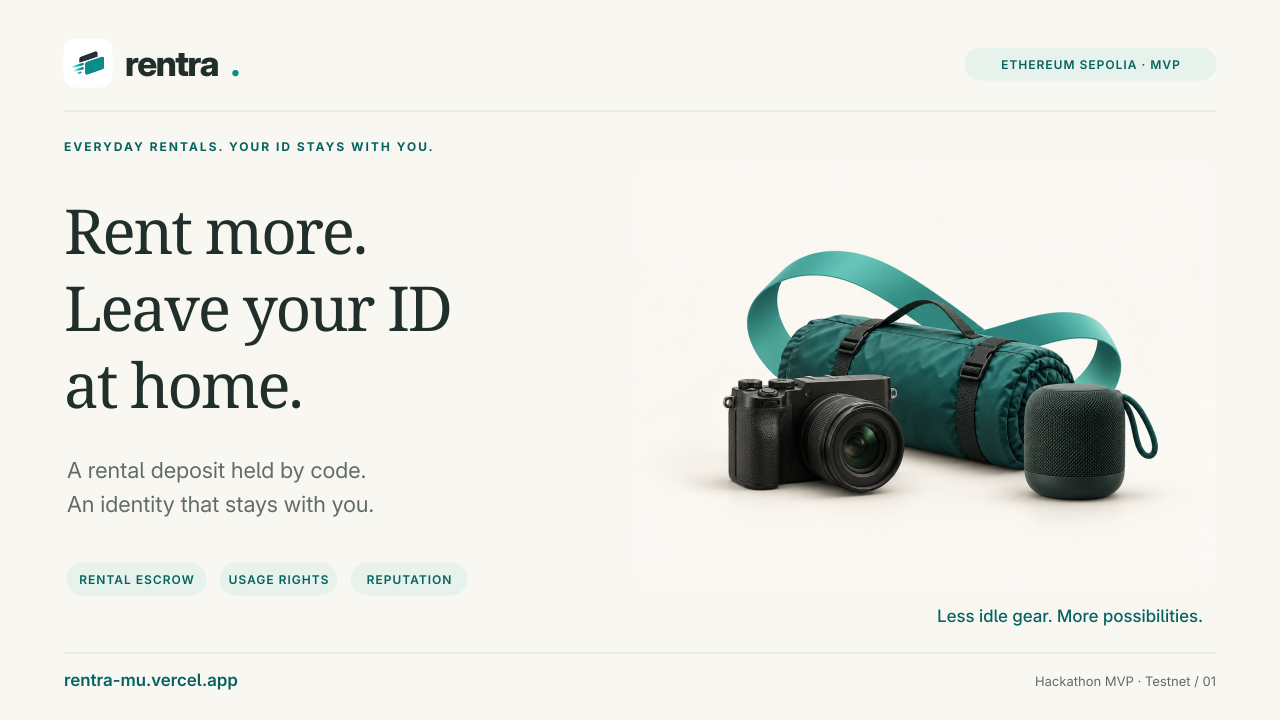
Rentra is a peer-to-peer rental application that helps people rent physical items without leaving their identity documents as collateral.
Owners list items such as cameras and camping equipment, declare rental terms, and choose a minimum deposit requirement. Renters lock the rental payment and deposit in an Ethereum smart contract, giving both parties a shared record of the agreement and explicit rules for releasing funds.
ERC-721 identifies each listed item, while ERC-4907 records its temporary renter and usage expiry. Pickup and return use EIP-712 wallet signatures and photo hashes to record the parties’ acknowledgements. Original photos remain on the user’s device.
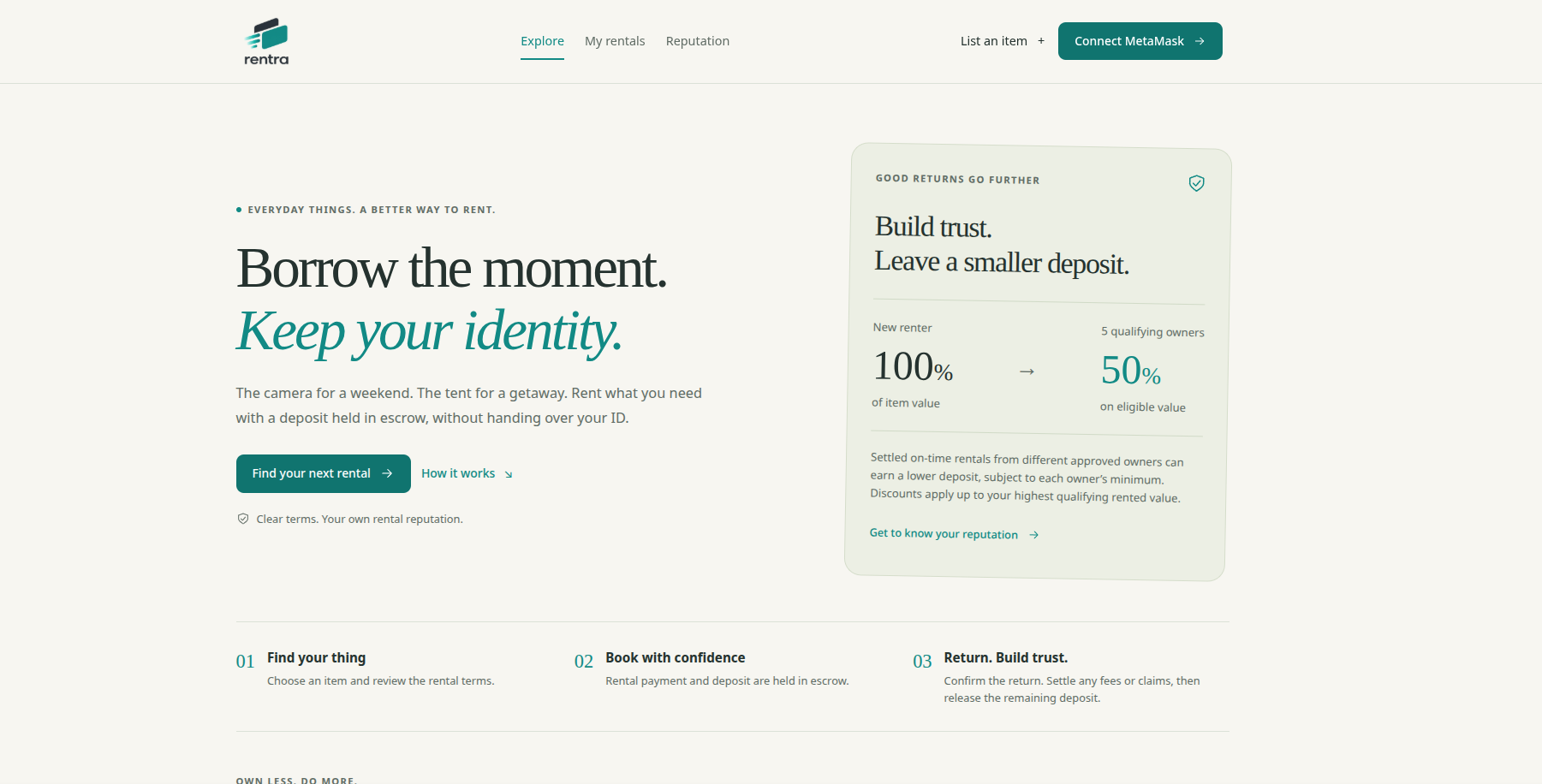
Reputation is recorded after settlement. Qualifying rentals from distinct approved owners can reduce future deposits, subject to the listing’s minimum and the renter’s eligible value cap.
Rentra also supports cancellation, capped late fees, non-return claims, and bonded damage claims. An acknowledged return opens a 24-hour claim window. Disputes require an exact agreement between the parties or a ruling from a mediator accepted before pickup. Unresolved disputes can keep funds locked.
The MVP runs on Ethereum Sepolia using test mIDR tokens. It is built with Solidity, Foundry, OpenZeppelin, Next.js, React, wagmi, viem, and RainbowKit with MetaMask.
During the hackathon, we implemented and integrated four contracts: RentalEscrow, RentalItem, Reputation, and MockIDR.
We built the wallet-connected application for item listings, permit-based booking, pickup and return acknowledgements, rental tracking, reputation lookup, damage claims, and settlement.
We strengthened the protocol with owner-defined deposit floors, approval-gated reputation discounts, mediator consent, exact settlement acceptance, and safeguards that prevent unsigned returns or silence from releasing disputed funds.
We deployed the current v2 contracts to Ethereum Sepolia and verified all four on Sourcify. We also added deployment validation, contract and frontend regression tests, ABI consistency checks, and CI builds.
The final demo improvements include claim-window countdowns, transaction feedback, clearer contract errors, refreshed onchain state after transactions, and pickup-time validation. The latest main branch passes CI and is deployed at https://rentra-mu.vercel.app.