
A game world shaped by onchain activity
We want to explore how crypto can serve a game, rather than how a game can serve crypto.
🔗 Robinhood Testnet contracts and TXs
A blockchain is a shared record of activity. Our idea is to use that activity as material for worldbuilding: something a game can interpret through its own setting, rules, and balance.
A transfer could become a valuable shipment. A token burn could bring a new threat into the world. Patterns of activity could influence scarcity, prosperity, or the events players encounter. These connections would be designed to fit each game, giving onchain activity a meaningful role in the experience.
We are exploring three names that describe different sides of this idea:
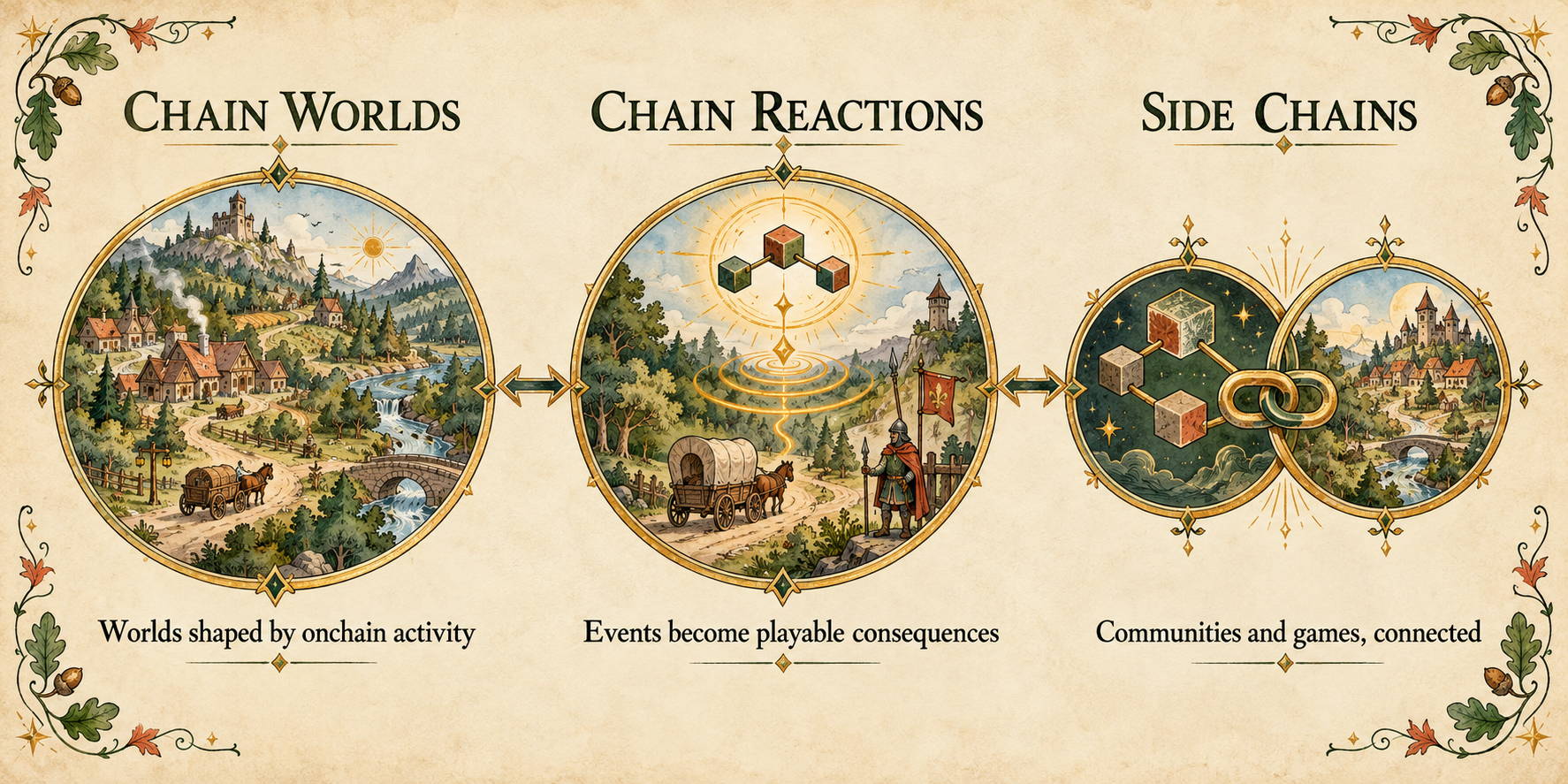
• Chain Worlds: The game worlds that players inhabit, where onchain activity helps shape what happens around them.
• Chain Reactions: The connections between an onchain event and its consequences inside a game.
• Side Chains: The blockchain ecosystems, and participating contracts, that are used to generate Chain Reactions. Here, the name is just to describe the relationship to a Chain World game.
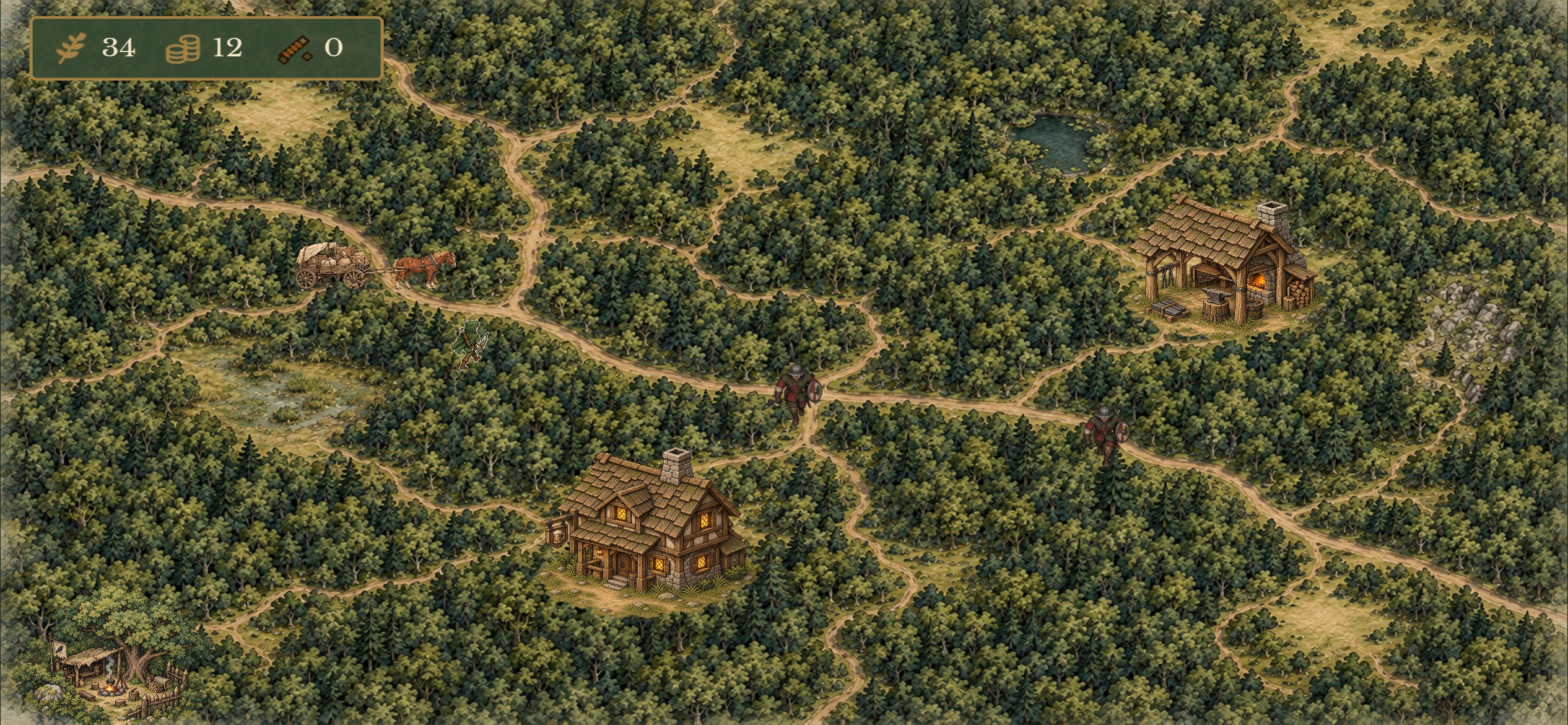
Sherwood Forest applies the concept to a familiar, and obvious, fantasy where onchain activity shapes life in the realm. The current Chain Reactions are,
Large native transfers trigger armored wagons filled with gold from the royal coffers
token burns from registered ERC20s spawn gaurds to patrol the forest and hunt bandits
The frequency of registered token transfers sets the ratio of resources being transported through the forest for that day
These are a starting point for phase 1 of the game: The Lone Outlaw. Each phase has the player engaging with a different loop which is supported by a new set of Chain Reactions.
The Lone Outlaw: personally conduct raids and build wealth
The Crew Boss: recruit bandits and plan heists
The Benefactor: build a network with the locals and gain influence
The Outlaw King: Open war with corrupt officials while appealing to the crown for aid
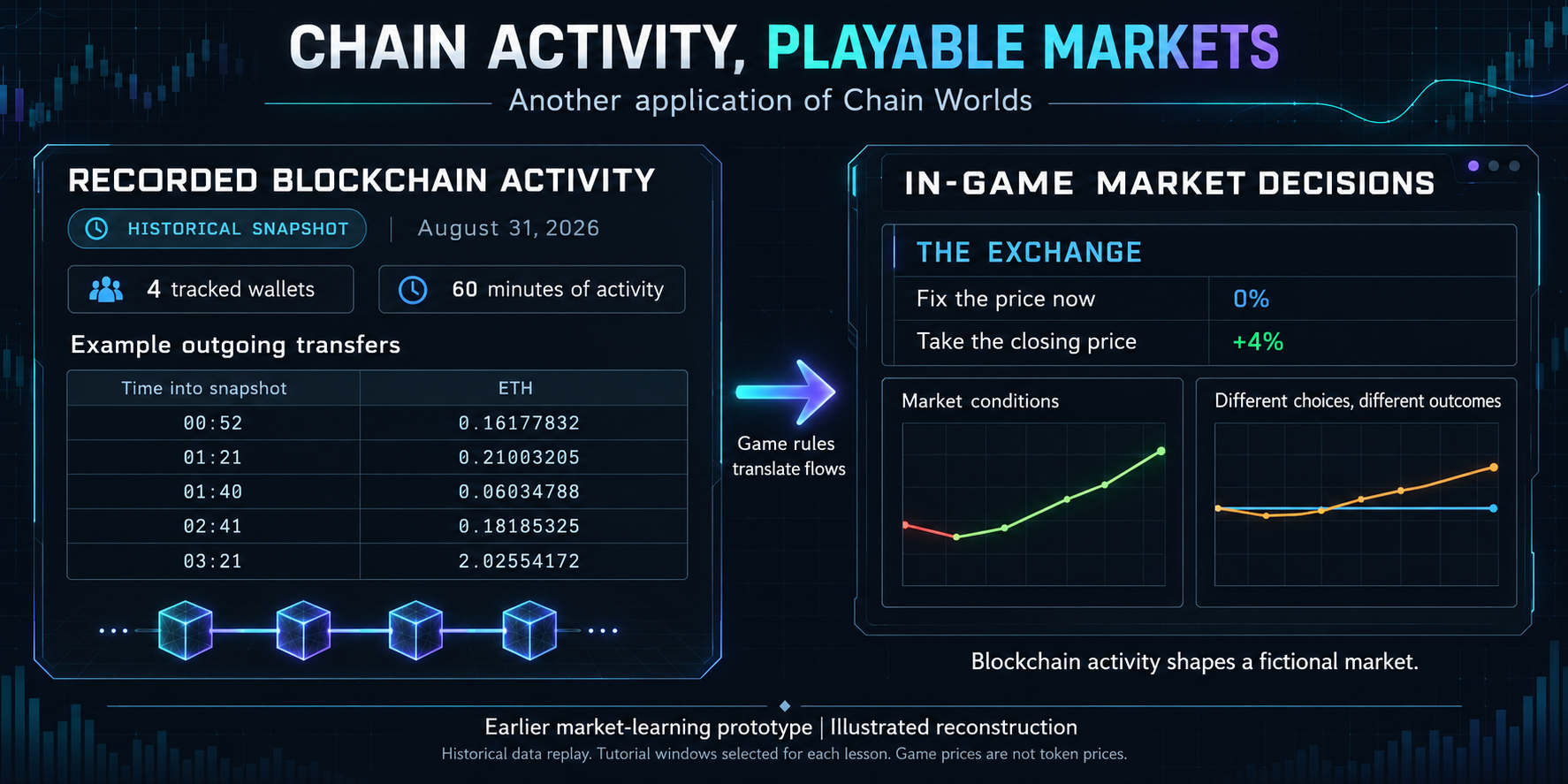
Our first idea for Chain Worlds was an educational game about financial markets. Players learned how different financial instruments worked by making decisions and seeing the consequences.
The intended progression was from guided lessons, to an open-ended trading game which would use blockchain activity to shape the market conditions. The game translated wallet flows into fictional market movements, allowing different decisions to produce different outcomes against the same underlying activity.
Also worth noting that knowledge of blockchain activity would give an advanage in-game. This could be both a good thing and a bad thing depending on how the game is designed around that fact.
the idea was abandoned when we couldn't arrive at an entertaining game-loop to pursue.
The relationship can work in both directions. Games gain new sources of world activity, while Web3 projects gain a creative way to introduce themselves, celebrate their communities, and give people a reason to spend time together.
Potential partnerships could include:
• A recognizable presence in the world. A partner could help bring a trading outpost, festival, faction, or custom minigame to life. Players encounter the project through an enjoyable experience, with optional ways to learn more outside the game.
• Parallel events. A community celebration, protocol milestone, or ecosystem campaign could have a companion event inside the game. A coordinated launch might bring a festival to a town or an expedition to a space station, giving the community a playable occasion to share.
• An ongoing connection. Agreed contract signals could influence activity around a partner's presence over time, giving its community reasons to revisit the world beyond a single announcement.
For communities, the potential value is exposure, shared experiences, and a more approachable introduction to what they are building. For a studio, these collaborations could help fund new content that benefits the wider player base.
Participation would follow ordinary game rules, without requiring token ownership, purchases, or wallet connections. Partnerships would be clearly identified, and any optional external promotions would stay outside game progression. Event rules would bound a partner's influence and avoid rewarding manufactured transaction volume or tying player power to spending.
These are partnership possibilities we want to explore, not existing commercial agreements. MockFAKE is a demonstration token. Each integration would require deliberate content design and agreed event mappings, with its value judged by whether players enjoy it and communities find it worthwhile.
Sherwood Forest is an early proof of concept with a short playable loop. It demonstrates the connection between blockchain activity and gameplay, while substantial progression and content remain to be developed.
The setting was an obvious starting point for a project using Robinhood Chain. If the concept attracts interest, our next step would be preproduction: finding the genre, world, and core gameplay that best support it.
Our aim is to create games where the world has a connection to something happening beyond the screen, and where that connection gives players more reasons to explore, adapt, and return.