Abdulrazak iliyasu mafindi
8
Artículo
3059
Ver
1
Seguidores
🔐 Private Keys & Wallet Security: The Most Important Lesson in Web3
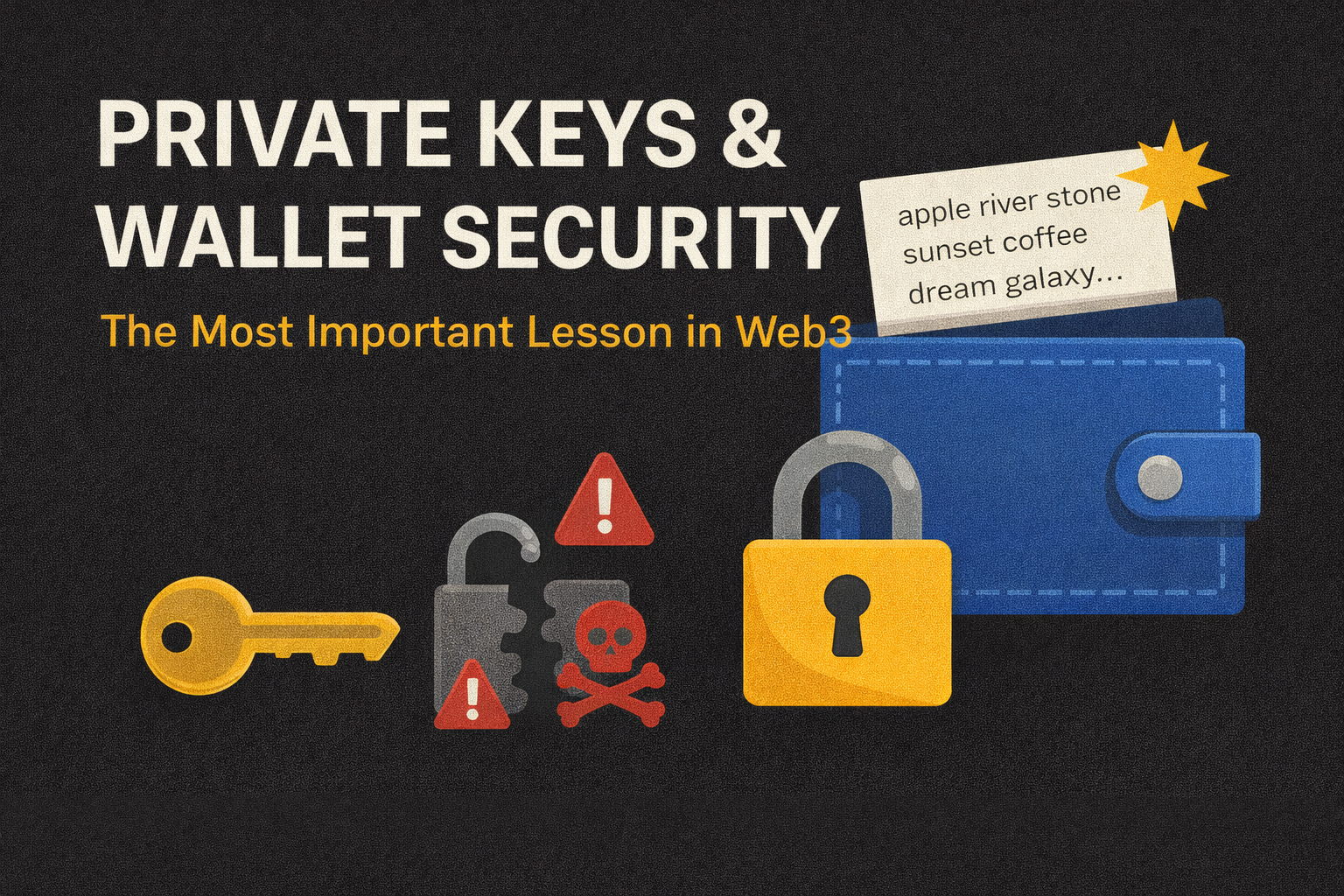
Subtitle: Why protecting your keys is the first step to becoming a responsible blockchain builder
The Moment Everything Changes
Imagine this:
You finally buy your first crypto.
You set up your wallet.
You feel like you’ve entered the future.
Then one day, you click a random link, connect your wallet… and everything disappears.
No support line.
No bank reversal.
No customer care.
Just gone.
This is the reality of Web3.
And it all comes down to one thing:
👉 Private keys.
What Is a Private Key?
A private key is a secret piece of cryptographic data that gives you control over your blockchain wallet.
If someone has your private key, they control your funds.
Simple.
From your private key comes your:
Public address (what people send funds to)
Wallet identity
Ability to sign transactions
In Web3:
Your wallet is your bank
Your private key is your password
But unlike Web2… there is no reset button
Seed Phrase vs Private Key
Most wallets don’t show you raw private keys.
Instead, they give you a seed phrase (also called recovery phrase).
Example:
apple river stone sunset coffee dream galaxy …
This seed phrase:
Generates all your wallet addresses
Can fully restore your wallet
Must be kept 100% secret
If someone gets your seed phrase, they don’t need your phone or laptop.
They can restore your wallet anywhere.
How Wallets Actually Work (Beginner View)
When you click “Send” or “Confirm Transaction”, your wallet:
Uses your private key to sign the transaction
Sends that signed transaction to the blockchain
The network verifies the signature
The transaction executes
👉 The key point:
Your private key never leaves your wallet — unless you expose it.
The Biggest Mistakes Beginners Make
Here are the most common ways people lose funds:
❌ Saving seed phrases online
Screenshots
Google Drive
Email drafts
❌ Connecting to fake dApps
Phishing websites
Fake mint pages
Airdrop scams
❌ Signing blind transactions
Clicking “Approve” without reading
Giving unlimited token permissions
❌ Sharing private keys “for support”
No legit project will EVER ask for your keys.
Real-World Losses
Billions of dollars have been lost due to:
Phishing attacks
Wallet drains
Key leaks
Malicious approvals
And the hardest truth is this:
Most Web3 losses are not hacks — they are user mistakes.
That’s why education matters.
How to Stay Safe in Web3
Here are beginner-safe practices you should adopt immediately:
🔐 1. Store Your Seed Phrase Offline
Write it on paper
Store in a safe place
Never upload it online
🧊 2. Use a Hardware Wallet (When You Can)
Devices like Ledger or Trezor keep keys offline.
🔍 3. Always Double-Check URLs
Only use official project links.
🧾 4. Revoke Unused Permissions
Use tools like revoke.cash to remove smart contract approvals.
🧠 5. Think Before You Sign
If you don’t understand it — don’t approve it.
Builder’s Mindset: Security First
As a Web3 builder or student:
Security is not optional.
It’s your first responsibility.
Before deploying contracts
Before launching tokens
Before building dApps
You must understand:
Key management
Wallet security
Safe user flows
Because one insecure system can harm thousands of users.
Why This Matters for the Future of Web3
Mass adoption of blockchain depends on trust.
And trust in Web3 comes from:
Secure wallets
Safe smart contracts
Educated users
If we want Web3 to scale globally,
we must build systems that are not just powerful…
…but safe for everyone.
Final Thought
In Web2, you trust companies to secure your data.
In Web3, you are responsible for your security.
That’s the shift.
That’s the power.
That’s the risk.
Protect your keys.
Protect your future.
Build with security in mind.
👉 Want to learn more and practice safe Web3 building hands-on?
Join the next Co-Learning Camp at hackquest.io/co-learning and start your builder journey with the Quack State.