Muhammad Ihsan
1
文章
1030
查看
0
关注者
Learning Web3 with the Right Foundation

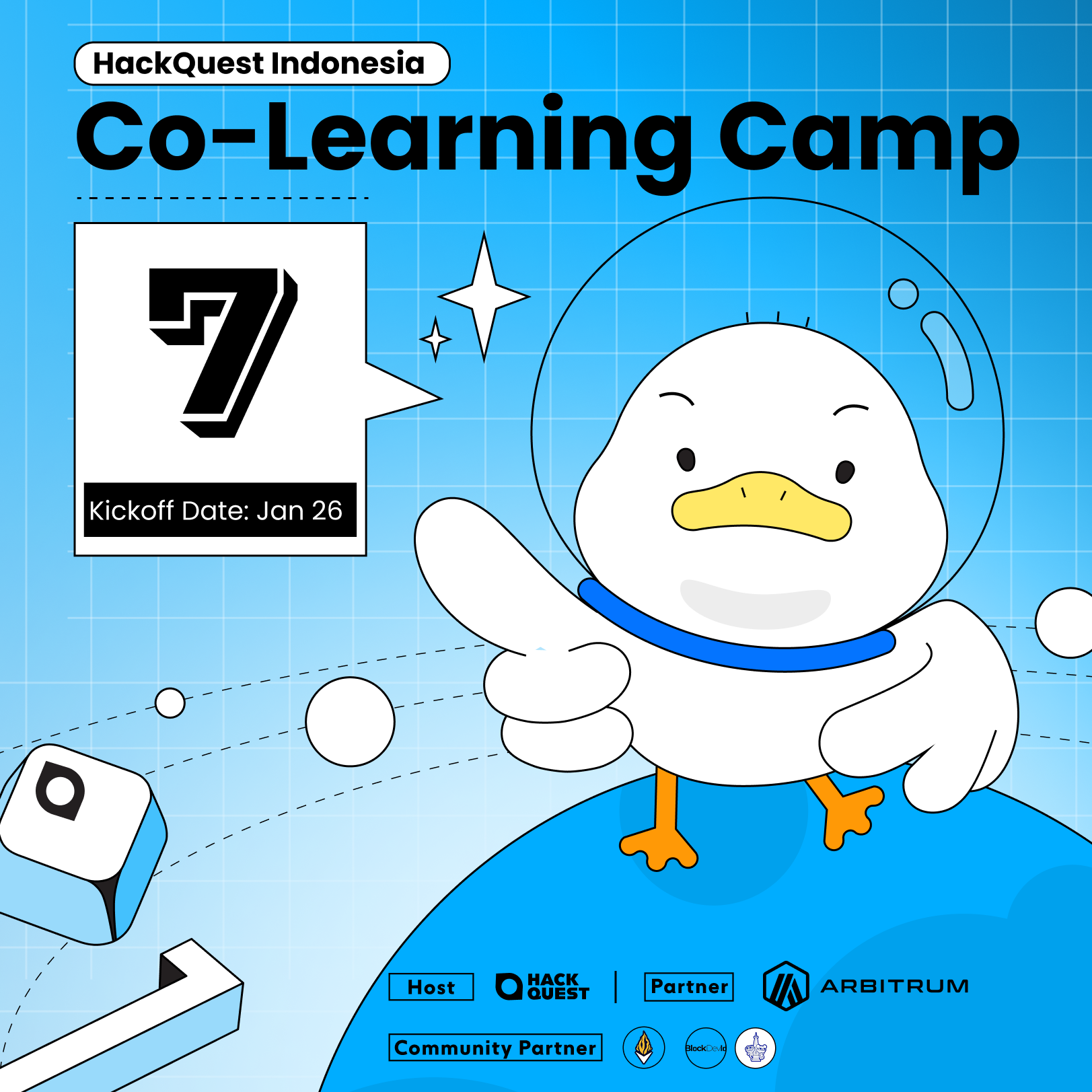
A 7-Day Learning Reflection from HackQuest Indonesia Co-Learning Camp 7
At the end of January, I had the opportunity to join HackQuest Indonesia Co-Learning Camp 7, which focuses on the Arbitrum ecosystem. After the first seven days of participating in #14DaysOfLearning at HackQuest, I felt that I had entered a learning space that was unique and genuinely different.
It was not only the high-quality material that truly pushed participants to show up and understand the concepts, but also the daily points and tasks that helped trigger motivation and encouraged more consistent learning.
Throughout this first week, I did not only learn about Web3 and Arbitrum at a conceptual level. More importantly, I began to reshape the way I think as a developer.
Not Just Consuming Content, but Building a Way of Thinking
The materials delivered during the Townhall sessions were not presented as a list of terms to memorize, but as mental models.
Topics such as the differences between Web2 and Web3, the concept of data ownership, smart contracts as autonomous programs, and the blockchain trilemma were explained in a way that helped participants understand why these technologies are designed the way they are today, not just what needs to be learned.
This context matters. Without it, learning Web3 can easily turn into nothing more than following trends.
Interactive Learning, Not One-Way Sessions
One of the aspects I enjoyed the most was the interactive Zoom Townhall sessions. Discussions did not stop at the slides. Participant questions were addressed, local Indonesian context was explored, and practical experiences were shared honestly, including real challenges within the Web3 industry itself.
Discussions around gas fees and efficiency, the differences between EOA and contract accounts, wallet and private key risks, and even local stablecoin topics such as IDRX made the material feel relevant rather than purely theoretical.
The diversity of participant backgrounds and expertise further enriched the interaction in class. This created a genuine sense of learning together, not merely listening together.
Technical Topics Introduced Gradually with Clear Direction
Although the first week mainly focused on fundamentals, the technical direction was already very clear. The introduction of Rust as the primary language for Arbitrum Stylus showed that this program does not stop at theory.
Participants were guided to understand why Rust was chosen and what advantages it offers. As a result, we became more motivated to truly grasp the fundamentals, rather than just making the code run.
Learning as a Long-Term Process
One statement from the Townhall session that stayed with me was when the instructor emphasized that Web3 is a long game. These seven days reinforced the idea that consistency matters far more than speed.
Daily missions, daily reflections, and blogging are not merely point-based gimmicks. They are tools that force us to pause and ask ourselves a simple but important question:
what did I truly understand today?
Closing
These first seven days have convinced me that HackQuest is not just a learning platform, but a learning ecosystem. With a clear structure, interactive sessions, and a strong emphasis on fundamentals, I feel that I am on the right path to understanding Web3 more holistically.
There are still seven days ahead. If the first week served as the foundation, I am optimistic that the second week will bring deeper learning aall progress.
#LearnwithHQ #14DaysOfLearning