
DeFine is an early-warning system for EVM wallets. It shows what needs attention now and why, across the wallet or specific DeFi positions, and alerts users when risk appears or changes.
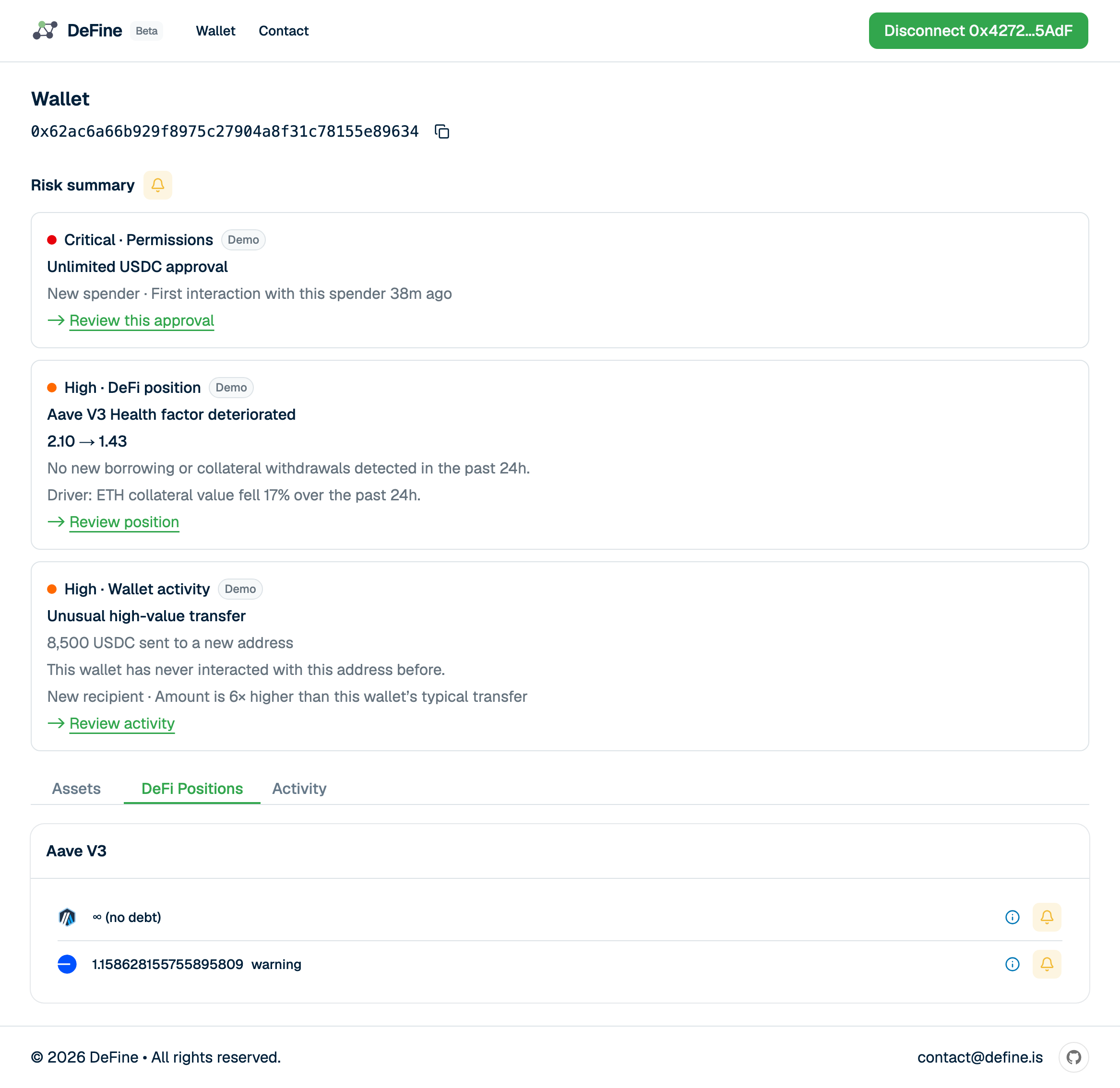
DeFine is building a wallet-level Risk Summary for self-custodial EVM users, designed to answer one question: “What in this wallet needs my attention right now?”
Self-custody users can already access balances, protocol dashboards, transaction history, permissions and risk alerts. The harder job is determining whether a change is meaningful, why it happened, how it relates to other signals, and what should be addressed first. The relevant information and decision workflow remain fragmented across wallet and DeFi tools, leaving the user to make those decisions.
DeFine’s product direction is to organize supported risk changes into a single attention workflow: identify what changed, add context on why it matters, connect related signals where possible, and prioritize the items that merit review. The intended result is a clearer order of attention across supported DeFi positions and wallet risks, with enough context to decide what to review first.
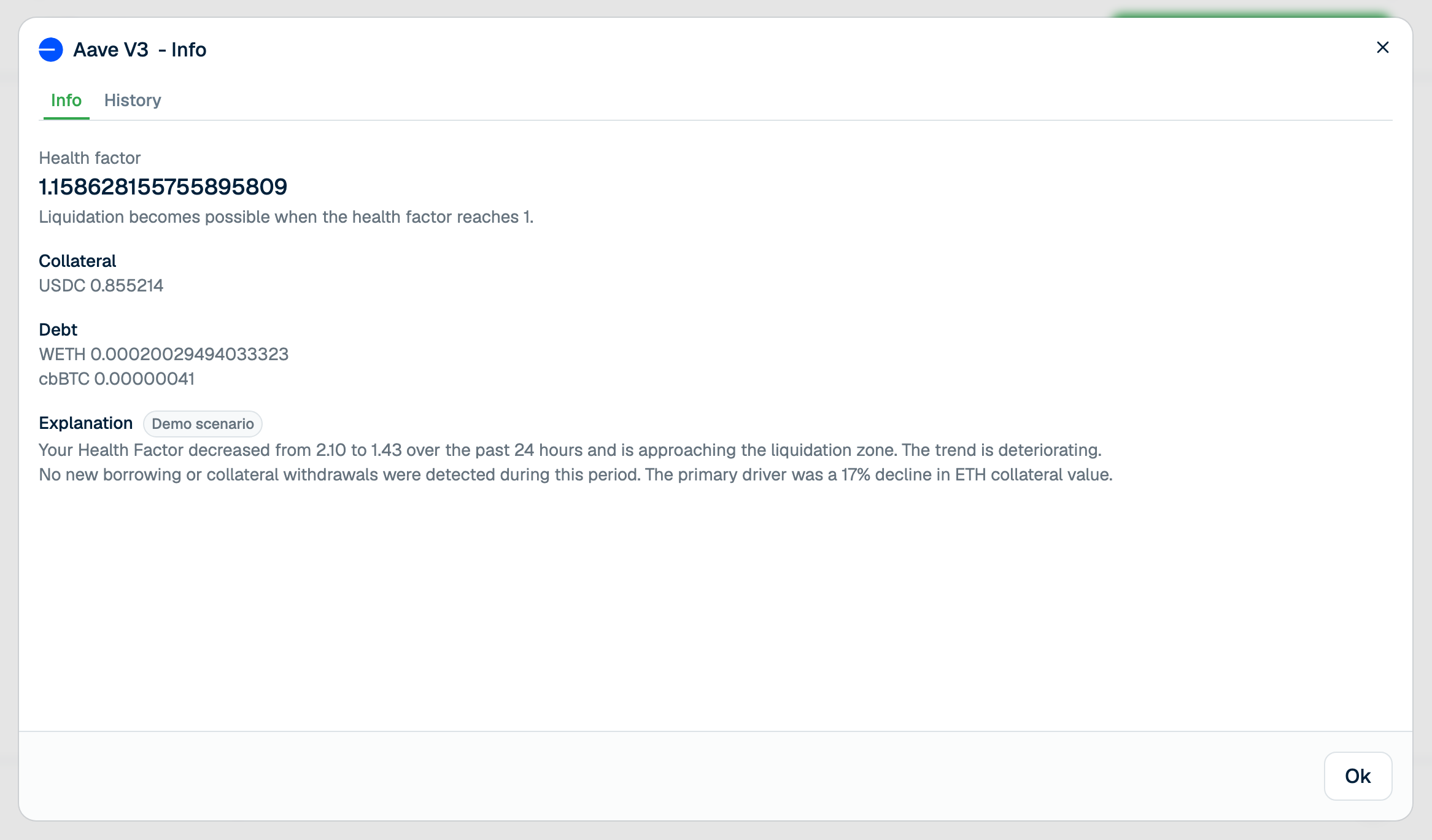
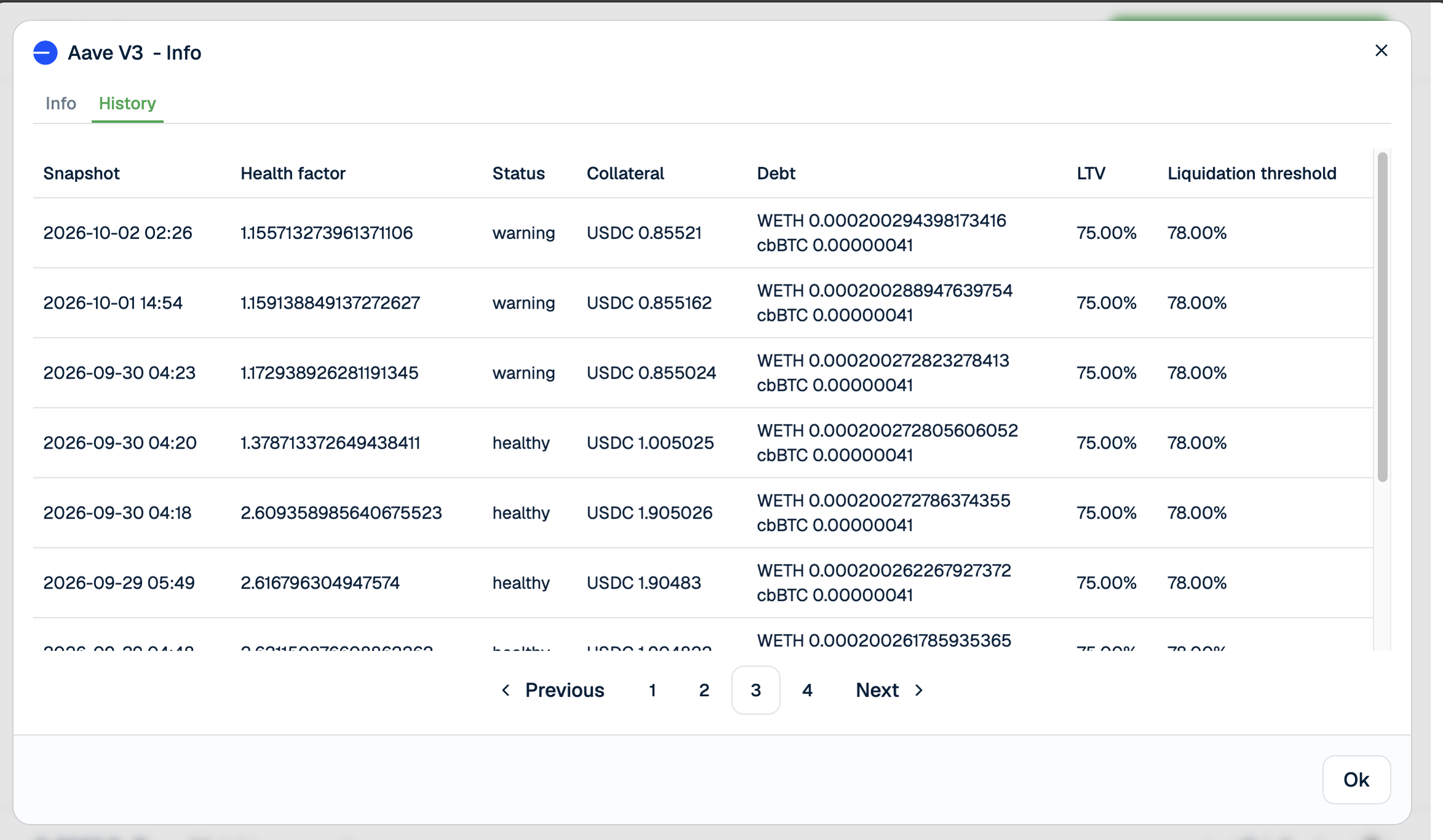
Today, DeFine analyzes real Aave V3 positions on Arbitrum, evaluates Health Factor risk deterministically, stores block-pinned historical snapshots, tracks previous-versus-current risk state, and supports configurable scheduled monitoring with persisted state.
Part of DeFine’s reusable risk infrastructure is open source through define-kit: EVM infrastructure and protocol-risk components that developers can inspect, reuse and extend.
Try the demo: https://app.define.is/address/0x62ac6a66b929f8975c27904a8f31c78155e89634
During the Buildathon, DeFine evolved from an existing Aave V3 risk-analysis foundation into a stateful risk-monitoring system on Arbitrum.
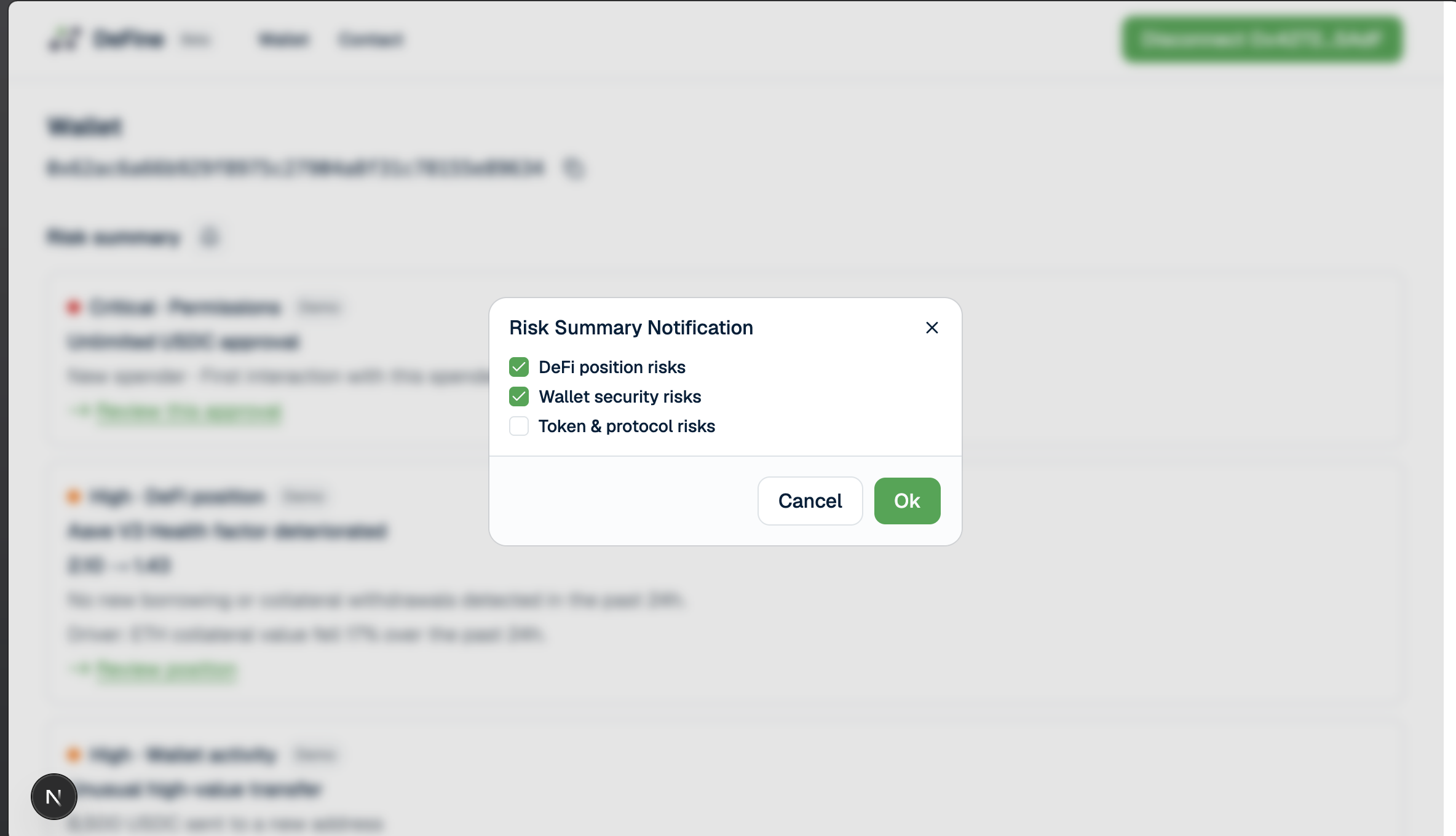
I added historical risk snapshots and position history, allowing users to inspect how an Aave V3 position and its risk change over time. Alongside this stateful history, DeFine continuously monitors Health Factor risk: users can configure the risk threshold they want monitored, while the system automatically re-evaluates the position on a schedule, tracks whether the condition is met, and persists the monitoring state over time.
The monitoring architecture is modular: position-specific risk modules produce normalized risk state that can use the same persistence, history and monitoring pipeline. Aave V3 Health Factor is the first working module, while the architecture is designed to extend to additional DeFi positions and risk types without rebuilding the monitoring system for each one.
I also developed and prototyped the wallet-level product flow around a clearer question: “What in this wallet needs my attention right now, and why?” The new Risk Summary, Activity view and risk-change explanations demonstrate the product direction: identify meaningful changes, add context on why they matter, and help prioritize what needs review first.
Cross-risk, unusual-activity and risk-attribution scenarios in the current UI are synthetic and explicitly marked Demo. The underlying Arbitrum Aave V3 data, Health Factor evaluation, historical snapshots and monitoring state are real.