
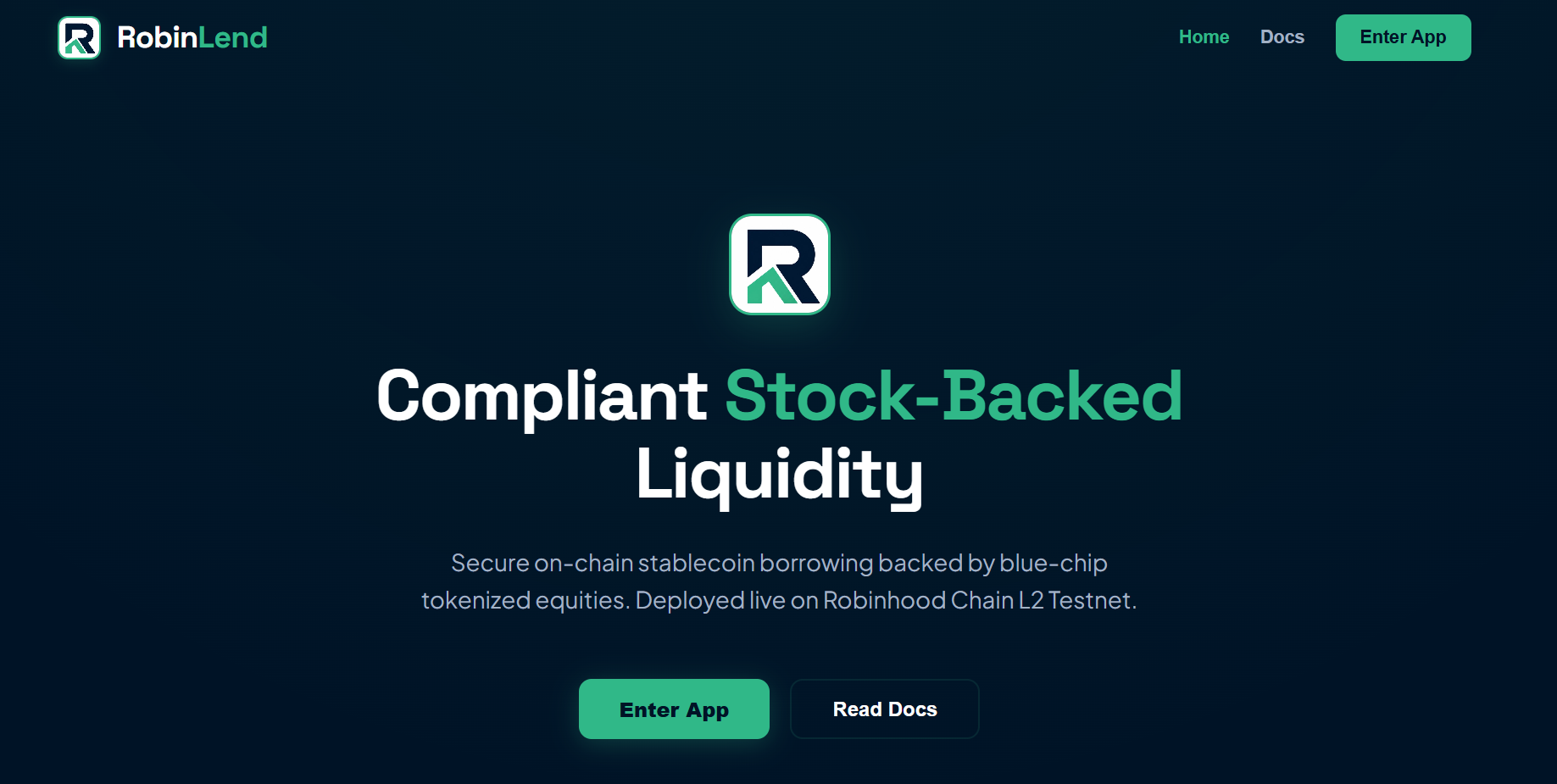
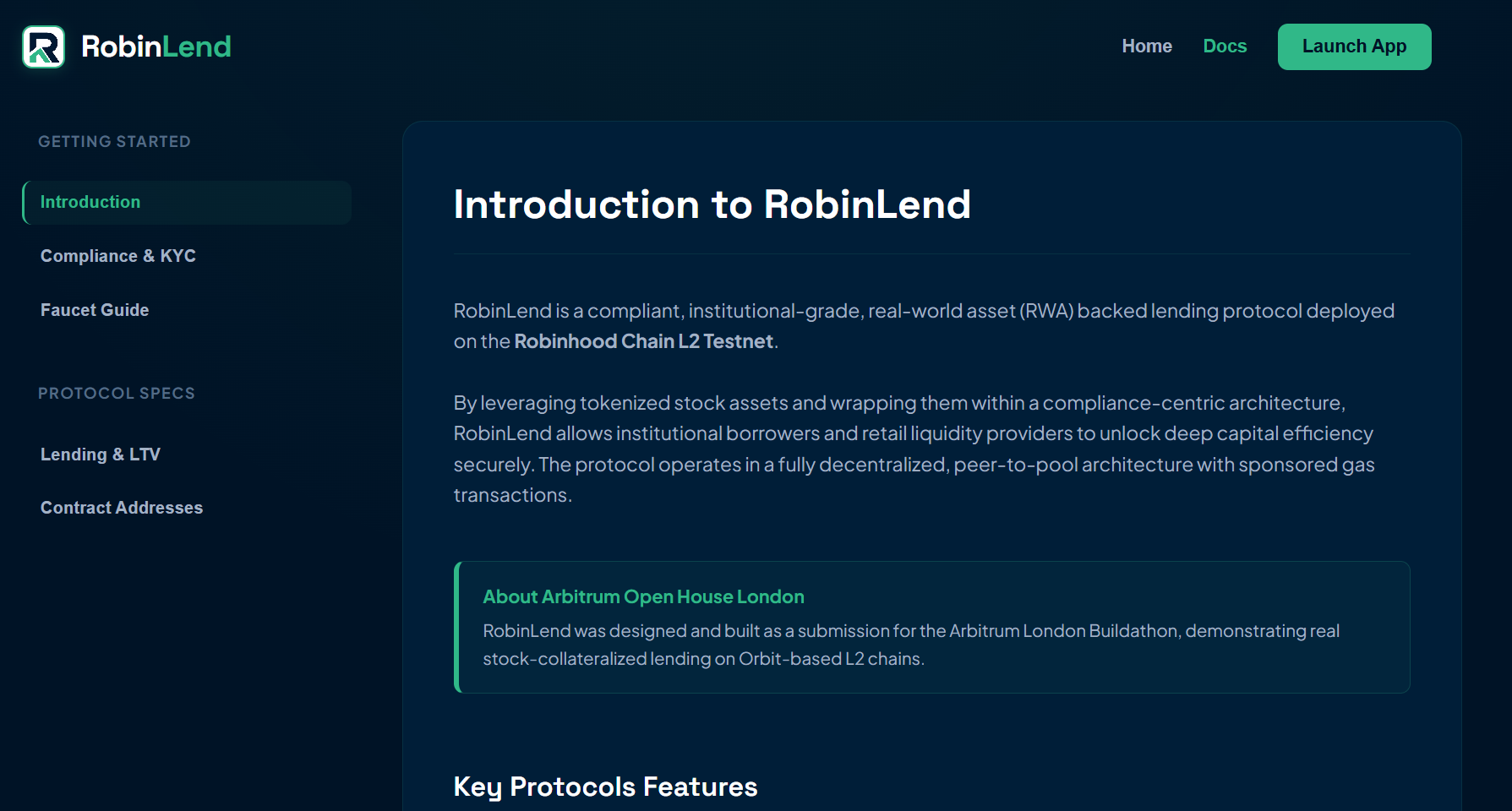
A compliant, institutional-grade lending protocol deployed on Robinhood Chain L2 using tokenized real-world equities as collateral.
Traditional finance and Web3 are converging, but institutions remain hesitant to participate in DeFi due to compliance risks, volatile gas fees, and the lack of institutional-grade collateral. We built RobinLend to bridge this gap. By combining tokenized real-world equities (like stock assets) with an on-chain KYC verification registry, we created a compliance-first, high-efficiency borrowing and lending market deployed on the Robinhood L2 Testnet.
RobinLend allows whitelisted participants to deposit tokenized stock assets as collateral to borrow stablecoins securely.
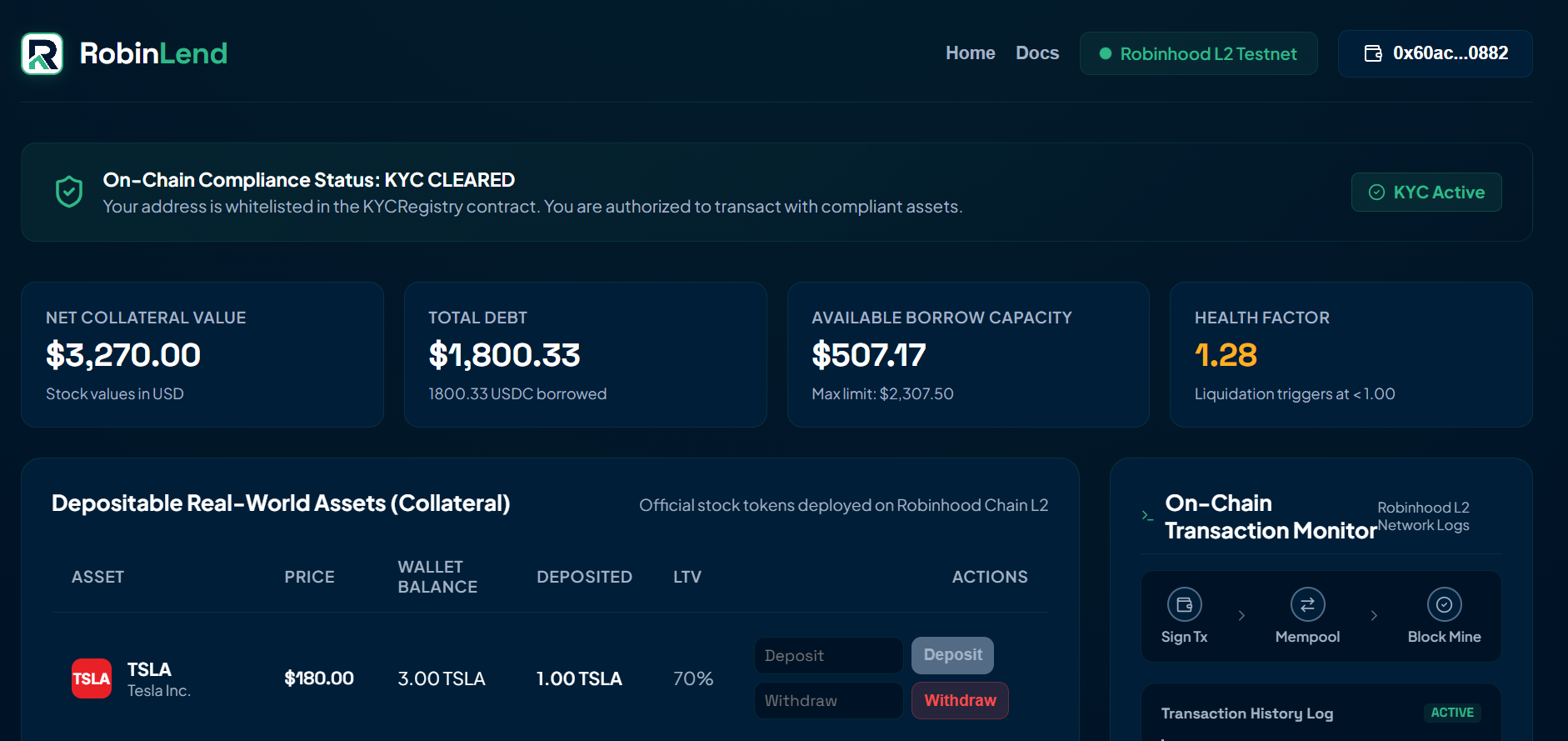
On-Chain KYC Gateway: Users must pass a decentralized identity whitelisting check in the KYCRegistry contract before depositing or borrowing.
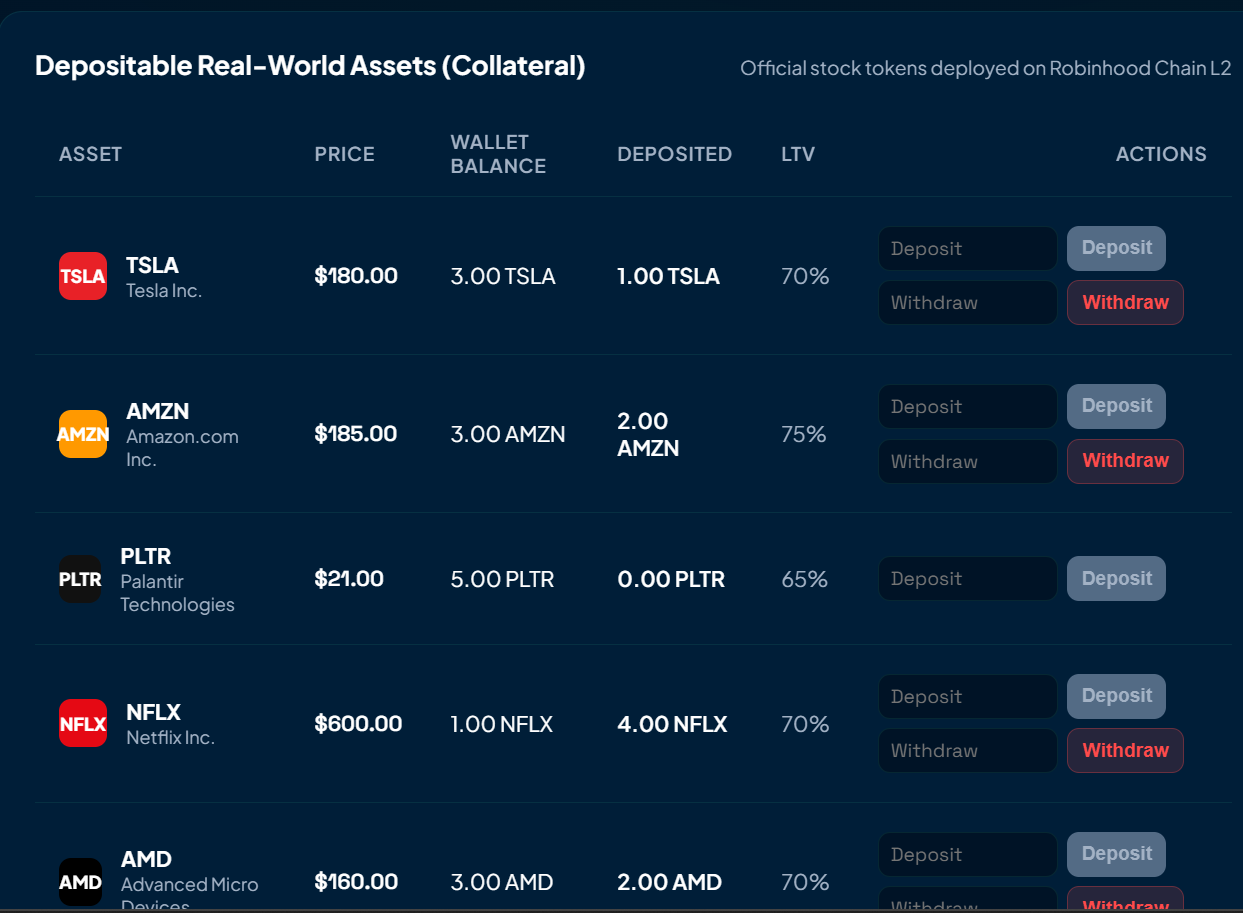
RWA Collateral: Supports tokenized equities (TSLA, AMZN, PLTR, NFLX, AMD) with asset-specific Loan-to-Value (LTV) limits.
Dynamic 6.12% APY Stability Fee: Implements a time-based interest model that accrues dynamically per second. Upon repayment, the contract automatically splits the transaction, routing 100% of the interest directly to the Protocol Treasury.
2% Liquidation Protocol Fee: If a borrower's Health Factor drops below 1.00, liquidations trigger automatically. The protocol automatically captures a 2% fee cut on the liquidated collateral to generate protocol revenue.
Live Transaction Monitor: Tracks transaction confirmations and gas usage on-chain with direct links to the Robinhood Explorer.
Smart Contracts: Written in Solidity and managed with Hardhat. We utilized OpenZeppelin contract standards for secure ERC20 tokens and access control.
Frontend: Built using React, Vite, and styled with Vanilla CSS (Midnight Navy & Mint Green brand identity).
Web3 Integration: Connected via Ethers.js to read and write directly to the deployed contracts on the Robinhood Chain L2 Testnet (Chain ID 46630).
We designed, coded, tested, and deployed RobinLend entirely from scratch during this buildathon. Our chronological progress includes:
Architecture Design: We chose to deploy on the Robinhood Chain L2 Testnet to leverage its gas efficiency and alignment with traditional finance. We designed a compliance-first RWA framework combining a whitelist registry with a debt pool.
Smart Contract Development (Solidity):
Developed KYCRegistry.sol for secure user verification.
Built LendingPool.sol supporting deposits, stablecoin borrowing, LTV-guarded accounts, and real-time interest generation.
Coded on-chain interest splitting: Repayments automatically route the 6.12% APY stability fee to a dedicated treasury wallet.
Programmed a 2% protocol fee cut during liquidations.
Hardhat Testing & Validation:
Wrote and executed a suite of 9 comprehensive unit tests in Hardhat, achieving 100% test coverage for all edge cases including interest accrual math and compliance restrictions.
On-Chain Deployment:
Successfully deployed the contract suite to the live Robinhood Chain Testnet.
Upgraded and connected the official faucet contract to easily distribute mock stock collateral.
Frontend Dashboard & UX (Vite, React & CSS):
Crafted a custom landing page displaying dynamic TVL and borrows calculated directly from on-chain balances.
Built the main dApp dashboard featuring wallet network checks, transaction confirmations, and a Live Transaction Monitor that details block validation and explorer links.
Fixed a critical capacity display bug to show the true available borrow power (capacity minus debt) and added a quick "Max" pre-fill helper.
Documentation:
Integrated a full, GitBook-style developer documentation panel directly into the web interface for user onboarding.
RobinLend is currently bootstrapped, created from scratch during the Arbitrum Open House London Buildathon, and has not raised any external capital or funding.