
ArbiLoop is an Arbitrum-native DeFi app for lending, borrowing, and loop strategies.It is non-custodial, automation-first, and focused on safer, more efficient DeFi management.
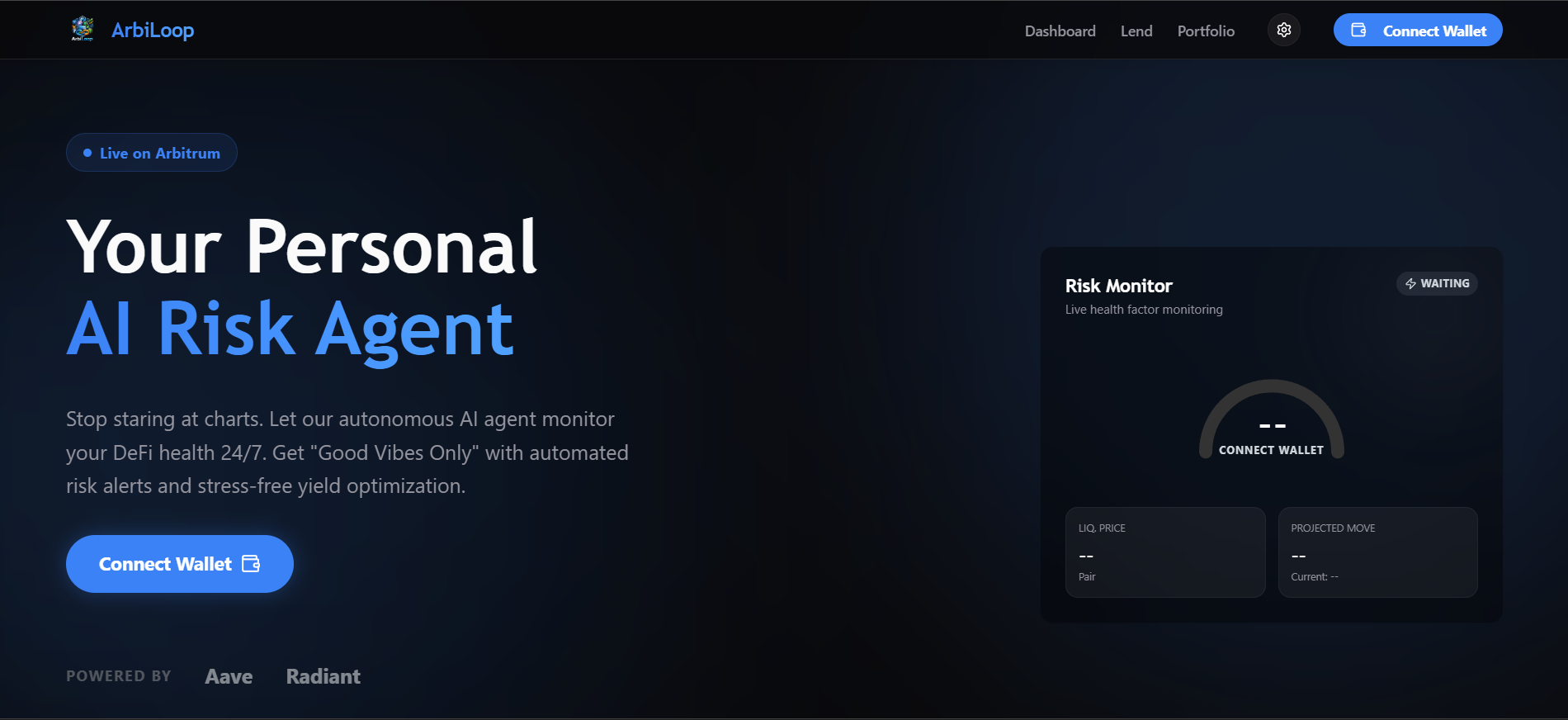
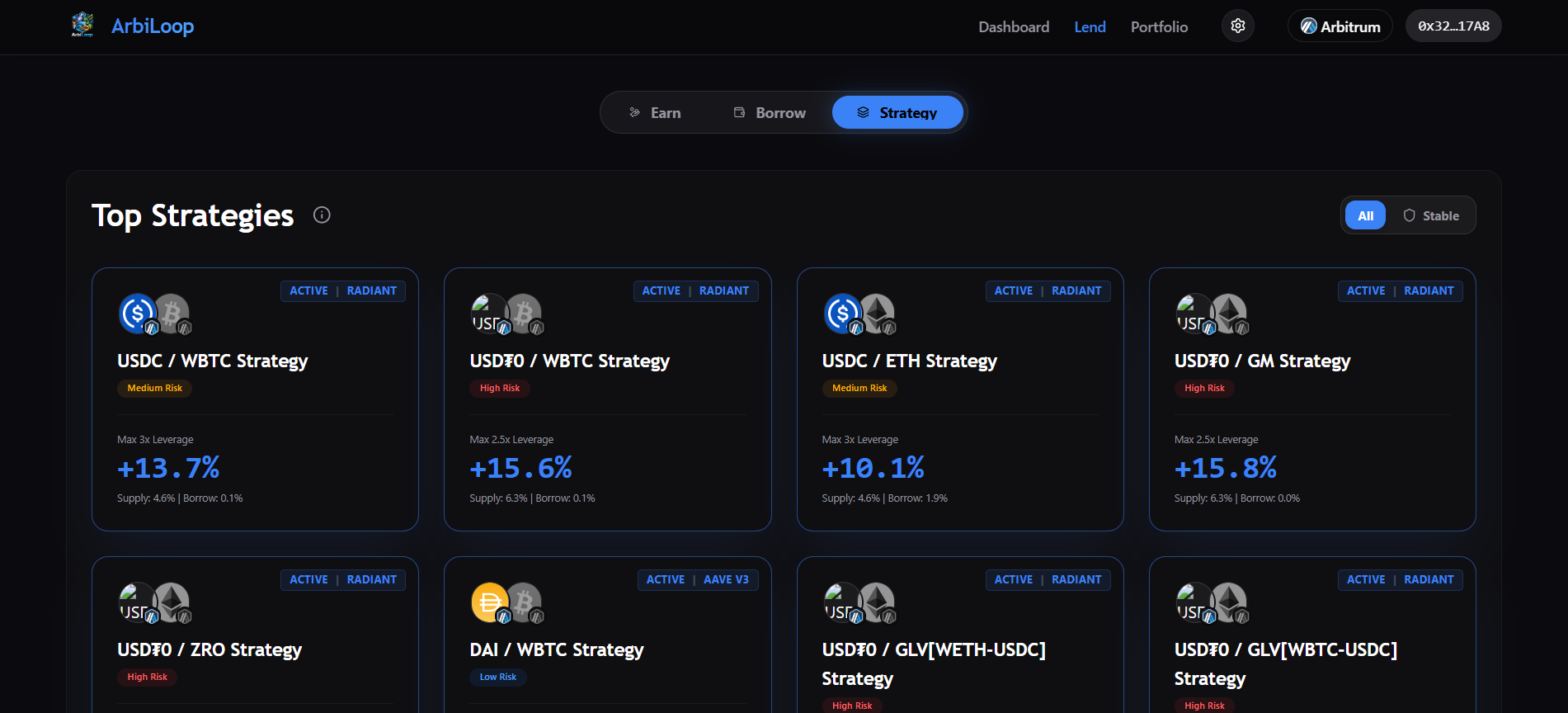
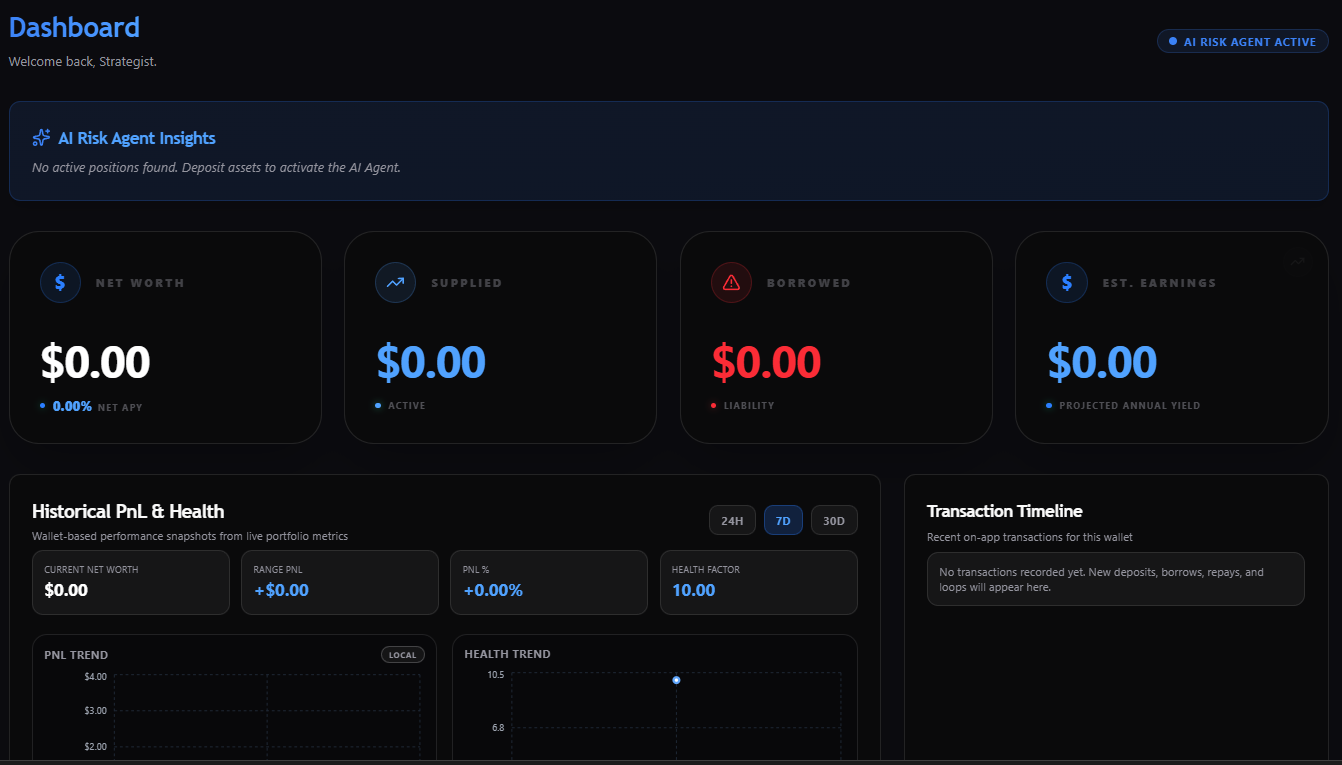
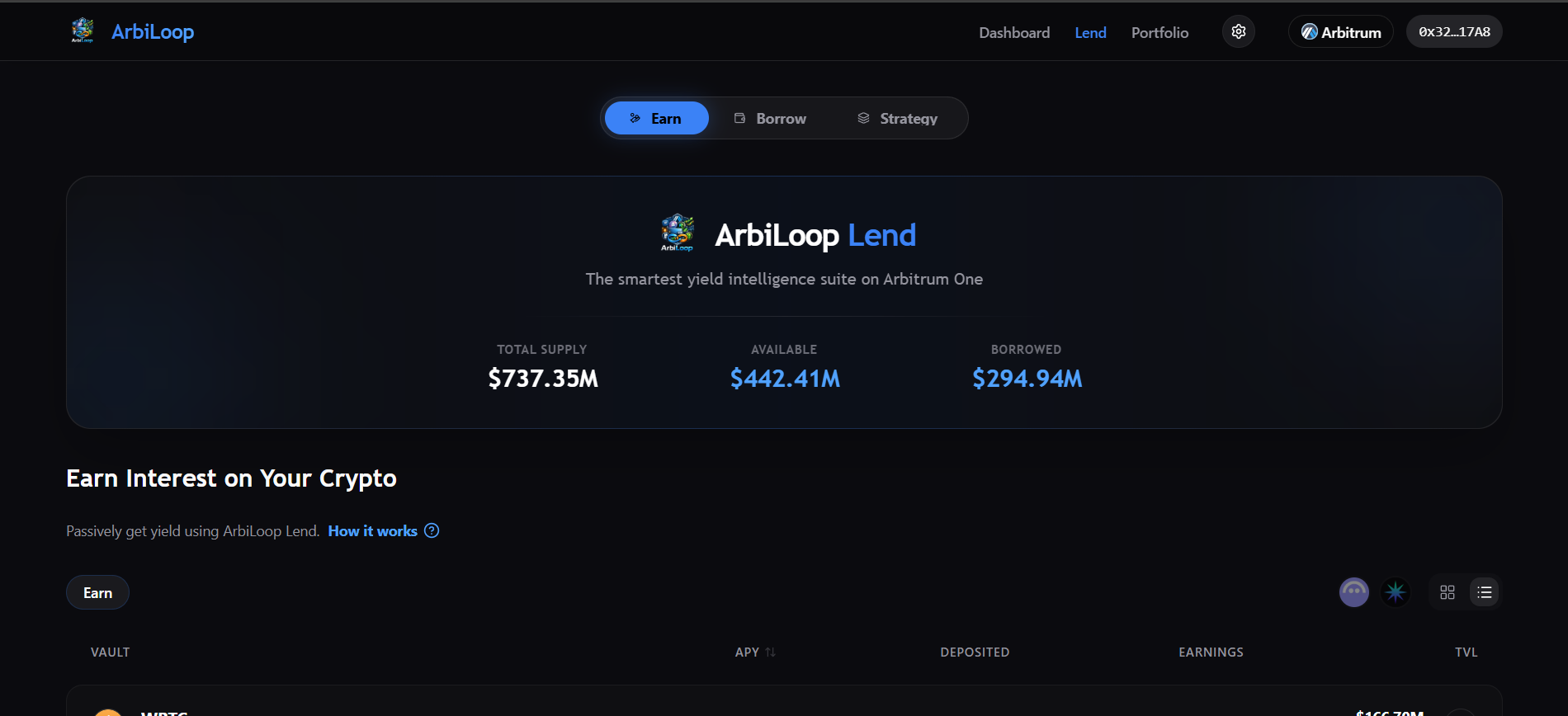

ArbiLoop is a full-stack DeFi execution and risk intelligence platform built for Arbitrum users who actively lend, borr ow, and run leveraged loop strategies across Aave and Radiant.
DeFi users are typically forced to split decision-making across multiple protocol interfaces, manually track health factors, and react too late when liquidation risk rises. ArbiLoop eliminates this fragmentation by turning isolated protocol interactions into a continuous control system that integrates execution, monitoring, analytics, and automated alerts.
ArbiLoop provides a single interface where users can:
Discover protocol-aware yield opportunities
Execute lending and loop strategies
Monitor real-time health factors
Take immediate corrective actions (repay debt, add collateral)
The system is built around actionable safety. It does not just display data — it reduces the time between risk detected and risk mitigated, which is the critical operational gap in leveraged DeFi.
ArbiLoop uses a dedicated on-chain execution vault (ArbiLoopVaultArbitrum) as the strategy orchestrator.
The vault architecture enforces:
Deterministic Aave and Radiant execution routes
Strict parameter validation
Guarded external protocol interactions
Explicit approval management
Reentrancy protection
Execution flow:
validate inputs
→ pull user assets
→ approve protocol contracts
→ execute supply/borrow loop
→ settle balances
→ return execution outputs
This explicit call structure reduces unsafe behavior surface area and keeps strategy execution predictable for users and auditors.
ArbiLoop combines live on-chain reads with indexed historical analytics.
Real-time layer:
Health factor tracking
Immediate UI risk states
Monitoring triggers
Historical indexer:
Processes Aave/Radiant events (Supply, Withdraw, Borrow, Repay)
Normalizes token metadata and USD values
Builds wallet-level realized PnL state
Stores persistent analytics tables
This enables:
Historical PnL charts
Activity timelines
Trend-based strategy refinement
Users move beyond temporary wallet snapshots to persistent performance intelligence.
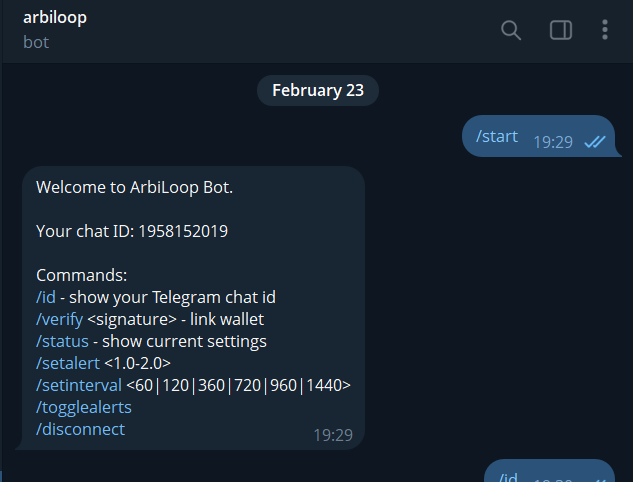
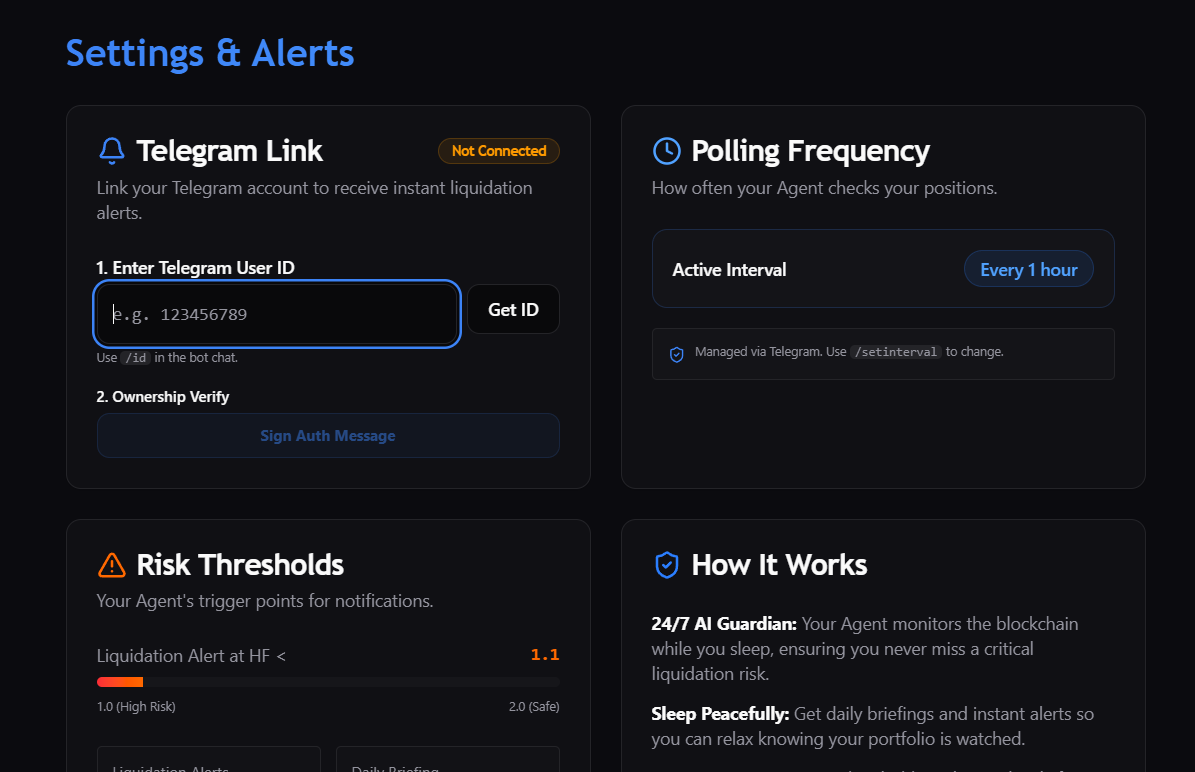
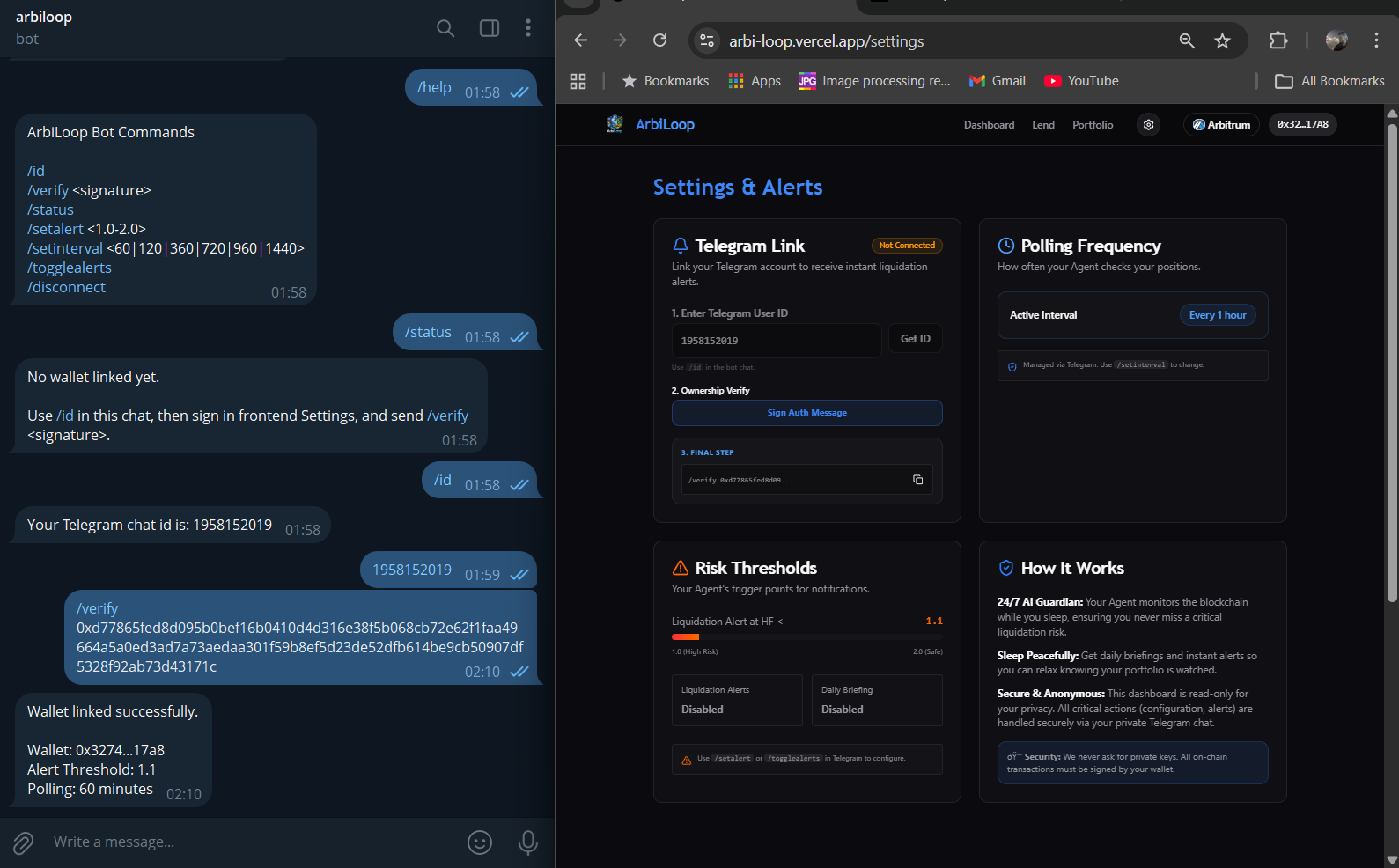
ArbiLoop integrates Telegram for always-on monitoring.
Users:
Verify wallet via signed-message authentication
Configure alert thresholds
Set polling intervals
Backend worker:
Continuously evaluates wallet health
Applies cooldown logic to prevent alert spam
Sends liquidation-risk alerts
Publishes optional daily portfolio summaries
Records alerts in Supabase for traceability
Frontend and messaging remain synchronized and auditable.
Next.js – execution UX, analytics dashboards, risk controls
Solidity Vault – deterministic protocol orchestration
Supabase – users, alerts, event indexing, PnL state
Telegram Worker – monitoring and automation backend
Arbitrum-native protocol integrations
ArbiLoop is not a dashboard.
It is a closed-loop control system:
Wallet action
→ On-chain execution
→ Indexed state
→ Risk engine evaluation
→ Alert trigger
→ User remediation
→ Back to execution
This transforms passive monitoring into an active risk operating system.
Arbitrum’s low fees and fast confirmations make frequent risk adjustments economically viable. Small collateral top-ups, debt repayments, and strategy rotations are practical — not cost-prohibitive.
Combined with deep lending liquidity and mature infrastructure, Arbitrum enables both capital efficiency and operational safety.
NOTE- Due to the unavailability of a VPS or background hosting service such as Render, I am currently hosting the Telegram bot ArbiLoopBot locally on my own laptop.

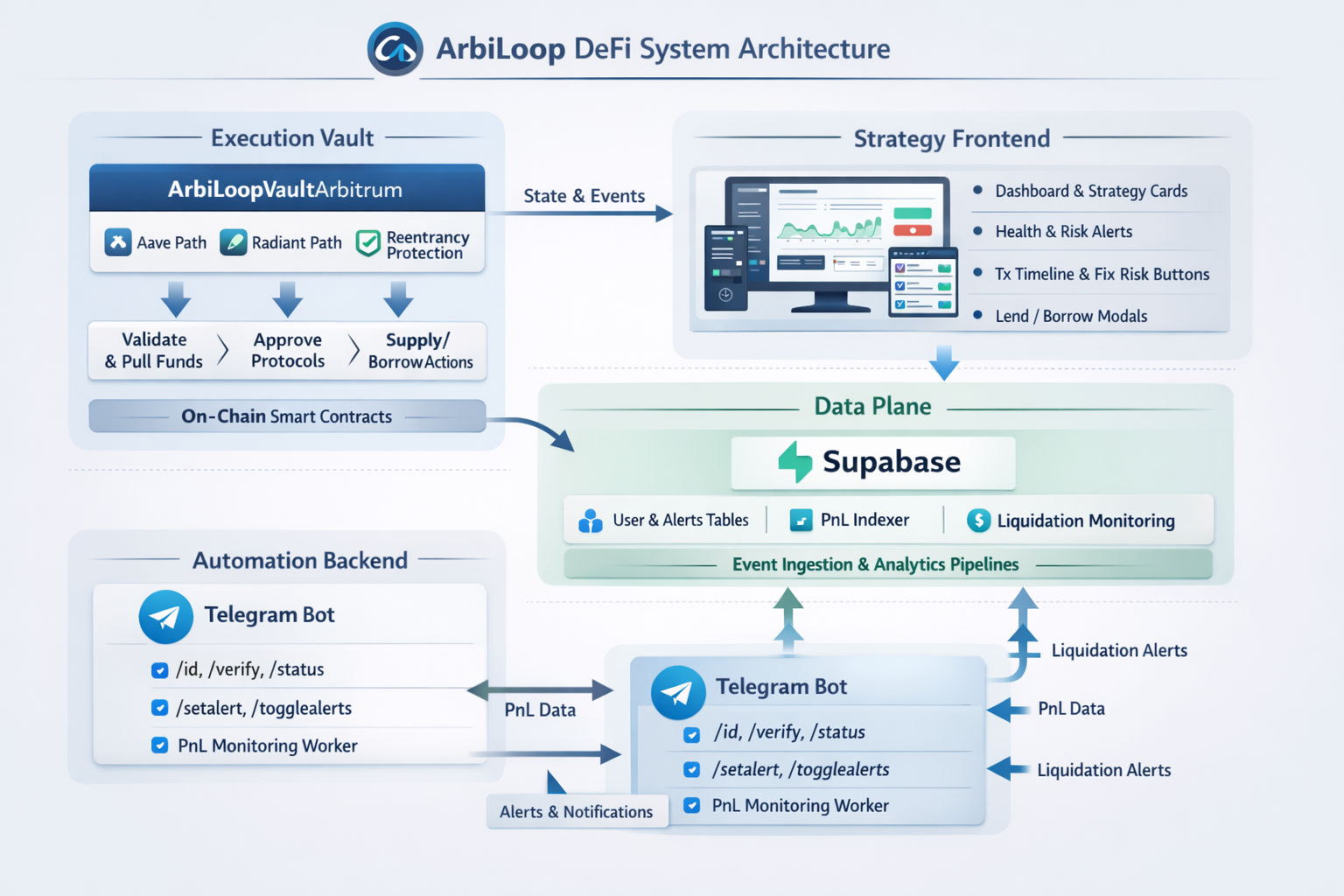
We built ArbiLoop as a complete DeFi execution and risk system with four layers:
An on-chain execution vault, a strategy/risk frontend, a Supabase data plane, and a Telegram automation backend.
At the smart contract layer, we designed and deployed ArbiLoopVaultArbitrum as the transaction orchestrator for leveraged lending flows. The vault architecture
is centered on protocol-specific execution entrypoints (Aave and Radiant paths), strict parameter validation, approval management, and guarded external calls. The
control model follows a deterministic sequence: validate route and amounts, pull user funds, approve protocol contracts, execute supply/borrow loop actions, then
settle remaining balances and emit stateful outcomes for the UI. We implemented reentrancy protection and updated value-transfer patterns to avoid deprecated
transfer/send behavior and reduce execution risk.
On the frontend, we built end-to-end user control surfaces for dashboard monitoring, lending/borrowing views, strategy discovery, execution modals, and risk intervention actions. Strategy cards are fully actionable, not placeholders, and route users into execution flows tied to the deployed vault.
We added health/ risk visualization, transaction timeline UX, and actionable “fix risk now”buttons (repay/add collateral) to shorten reaction time when positions deteriorate.
For data architecture, we implemented Supabase schemas and policies for users, alerts, event indexing, and PnL tables. We created live liquidation_alerts
ingestion and polling so the landing and risk modules show real feed data instead of static UI content
For analytics, we implemented a historical indexer pipeline that scans Aave/Radiant events (Supply/Deposit, Withdraw, Borrow, Repay) in block ranges, normalizes token
metadata and USD values, stores canonical activity rows, and rebuilds wallet-level realized PnL state (wallet_pnl_positions, wallet_pnl_daily). This powers charted historical
PnL and health analytics directly in the app.
For automation, we built Telegram bot flows for /id, /verify, /status, /setalert, /setinterval, /togglealerts, and /disconnect. Wallet linking uses signed-message verification and
address recovery before writing user settings. We then implemented a continuous monitoring worker that periodically reads on-chain account health, evaluates per-user
thresholds/cooldowns, sends risk alerts, and stores every alert event in Supabase for both telemetry and frontend rendering. A periodic PnL indexer runner was integrated into
backend operations so historical analytics stay updated without manual intervention.
End result: ArbiLoop now runs as an integrated system where execution,monitoring, alerting, and analytics are connected by a clear control flow from wallet action -> contract execution -> indexed state -> risk evaluation -> user notification -> UI feedback loop.
Bootstrapped project. Current focus is product validation, user onboarding, and reliability at low operating cost.