
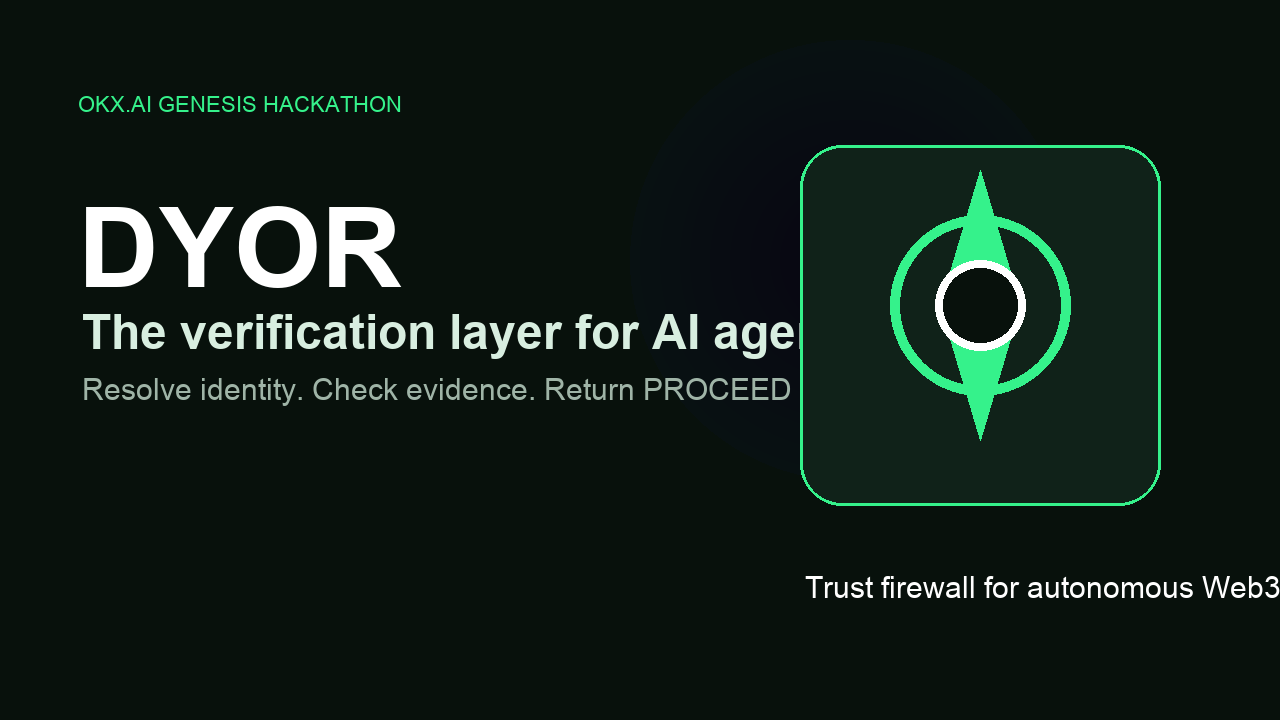
DYOR
DYOR is a verification API for AI agents that resolves Web3 identities, validates live evidence across trusted sources, analyses project risk, and returns machine-readable decisions before an agent in
Videos
Tech Stack
Description
Problem
Today's AI agents can search, trade, and automate workflows, but they often trust user input without verifying whether a Web3 project, token, contract, or repository is actually the intended entity.
That creates serious risks:
interacting with fake tokens
using phishing domains
analysing the wrong repository
executing trades on malicious contracts
making financial decisions using incomplete information
Existing research tools generate reports.
They do not act as a verification layer for autonomous agents.
Solution
DYOR is a trust infrastructure layer for AI agents.
Before an agent performs a financial or blockchain action, it asks DYOR:
"What exactly is this?"
DYOR:
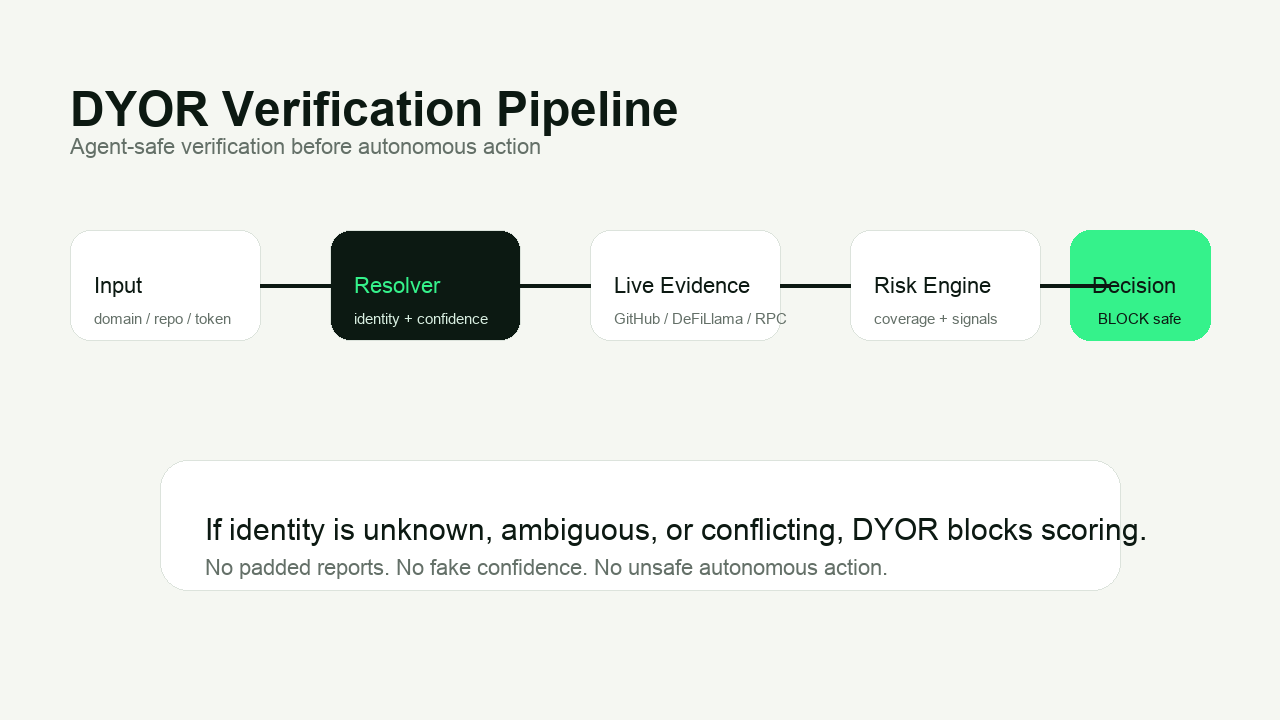
resolves canonical identity
validates the entity across multiple trusted providers
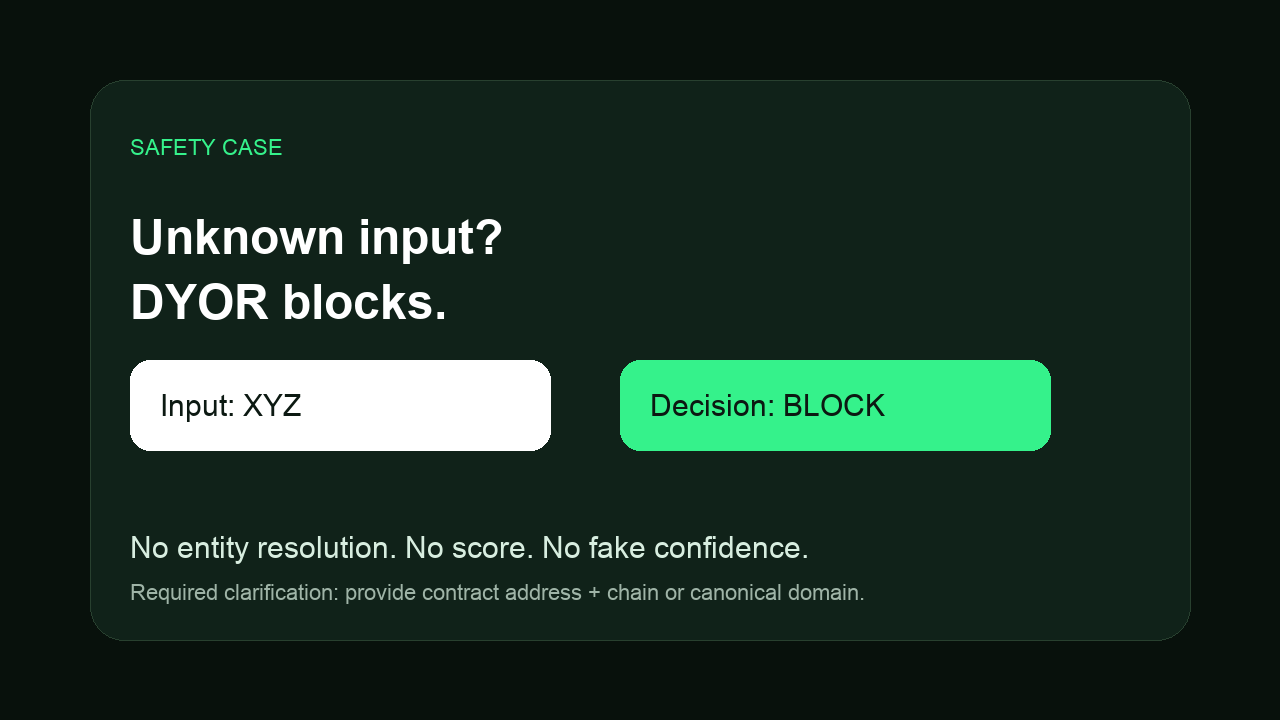
detects ambiguous identities
blocks unknown projects
gathers live evidence
evaluates risk
returns structured machine-readable decisions
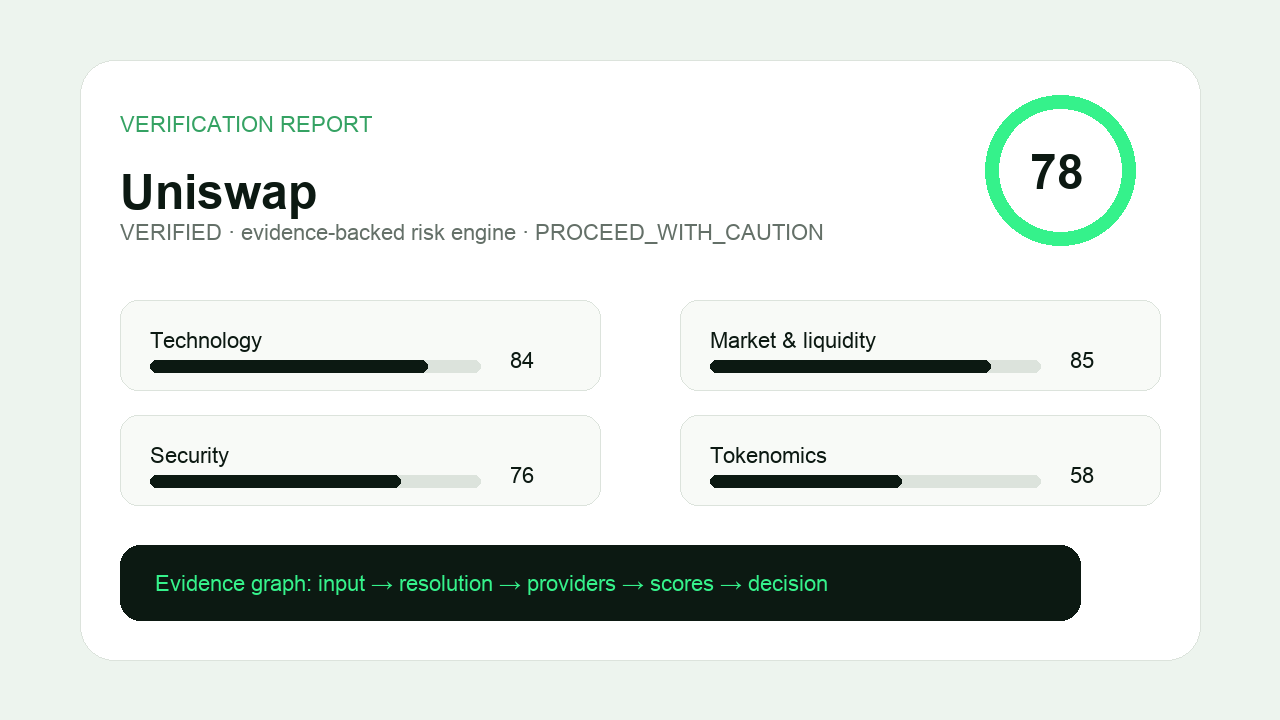
Instead of long AI-generated reports, agents receive deterministic outputs such as:
VERIFIED
RESOLVED
AMBIGUOUS
UNRESOLVED

PROCEED
REVIEW
BLOCK
Key Features
Canonical Entity Resolution
Maps domains, GitHub repositories, token symbols and contract addresses into a single canonical project identity.
Confidence Engine
Every resolution includes explainable confidence rather than blind assumptions.
Ambiguity Detection
Instead of guessing, DYOR blocks ambiguous inputs and requests clarification.
Live Multi-source Evidence
Collects evidence from trusted Web3 providers.
Structured Risk Engine
Returns structured data for AI agents rather than human-only reports.
Agent-native API
Designed for autonomous agents rather than traditional dashboards.
Why it matters
The next generation of AI agents will manage wallets, execute trades, deploy contracts and move capital.
DYOR ensures they verify before they act.
Progress During Hackathon
Week 1
Designed architecture for an AI-native Web3 verification engine.
Implemented canonical entity resolution.
Week 2
Built deterministic input classification.
Implemented confidence scoring.
Added canonical identity graph.
Week 3
Implemented ambiguity detection.
Blocked unresolved entities before provider execution.
Added explainable confidence.
Week 4
Integrated live provider evidence.
Built structured API responses.
Optimised repository and contract resolution.
Current
Completed a production-style verification pipeline capable of resolving known identities while safely blocking ambiguous or malicious inputs.