
A transparent lost-and-found platform using AI and blockchain to match items, verify ownership, and prevent false claims, ensuring items are securely returned to their rightful owners.
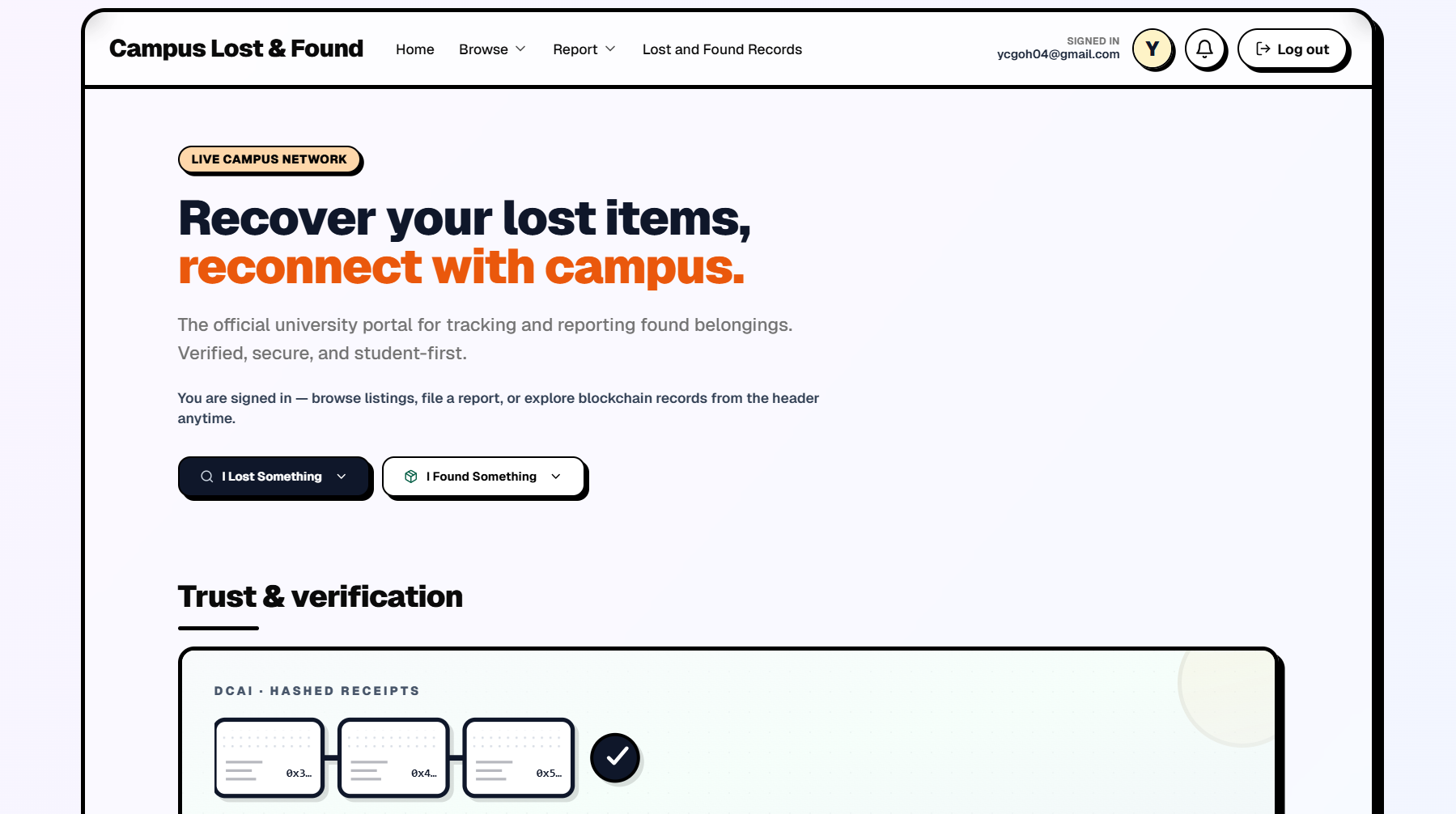
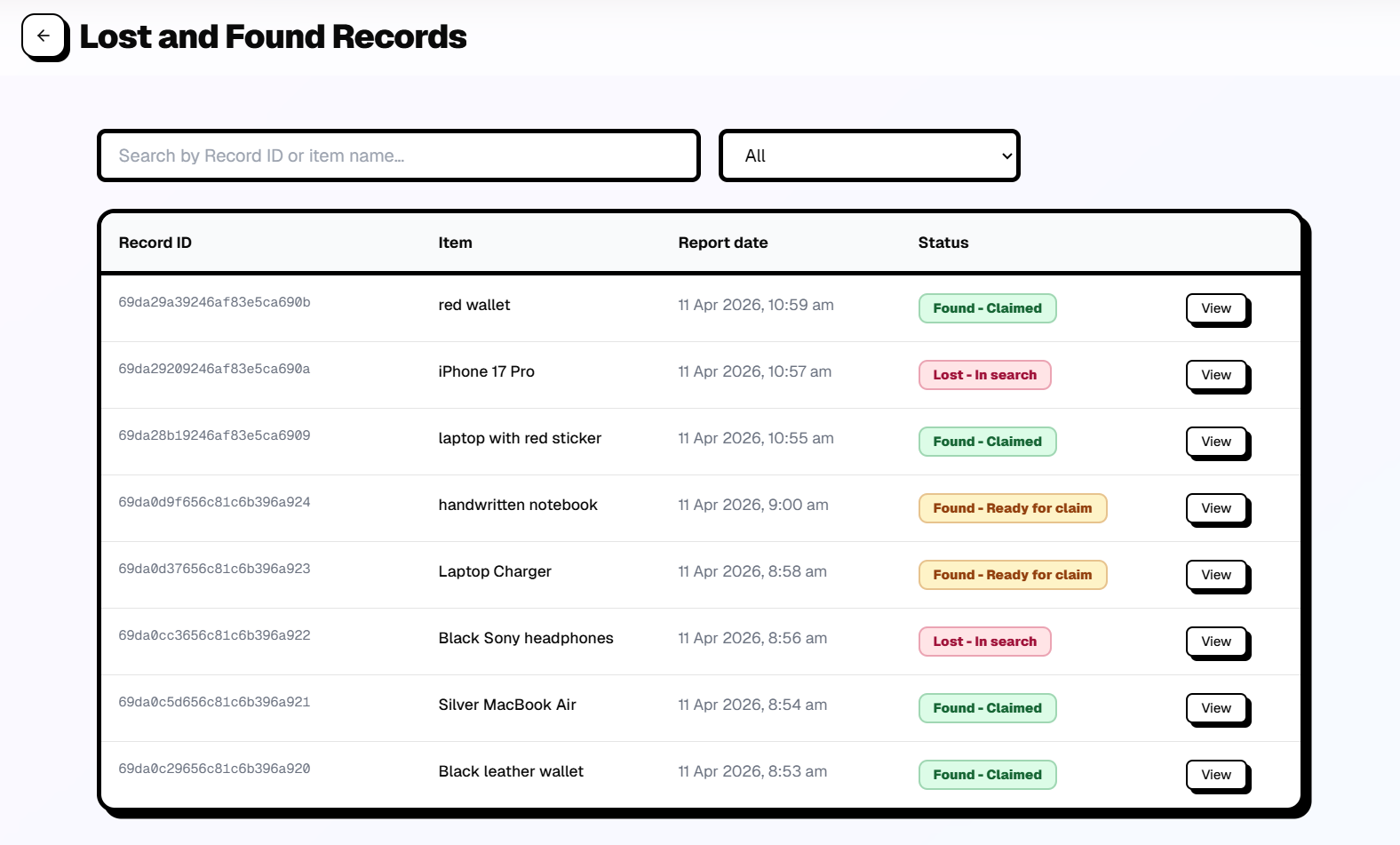
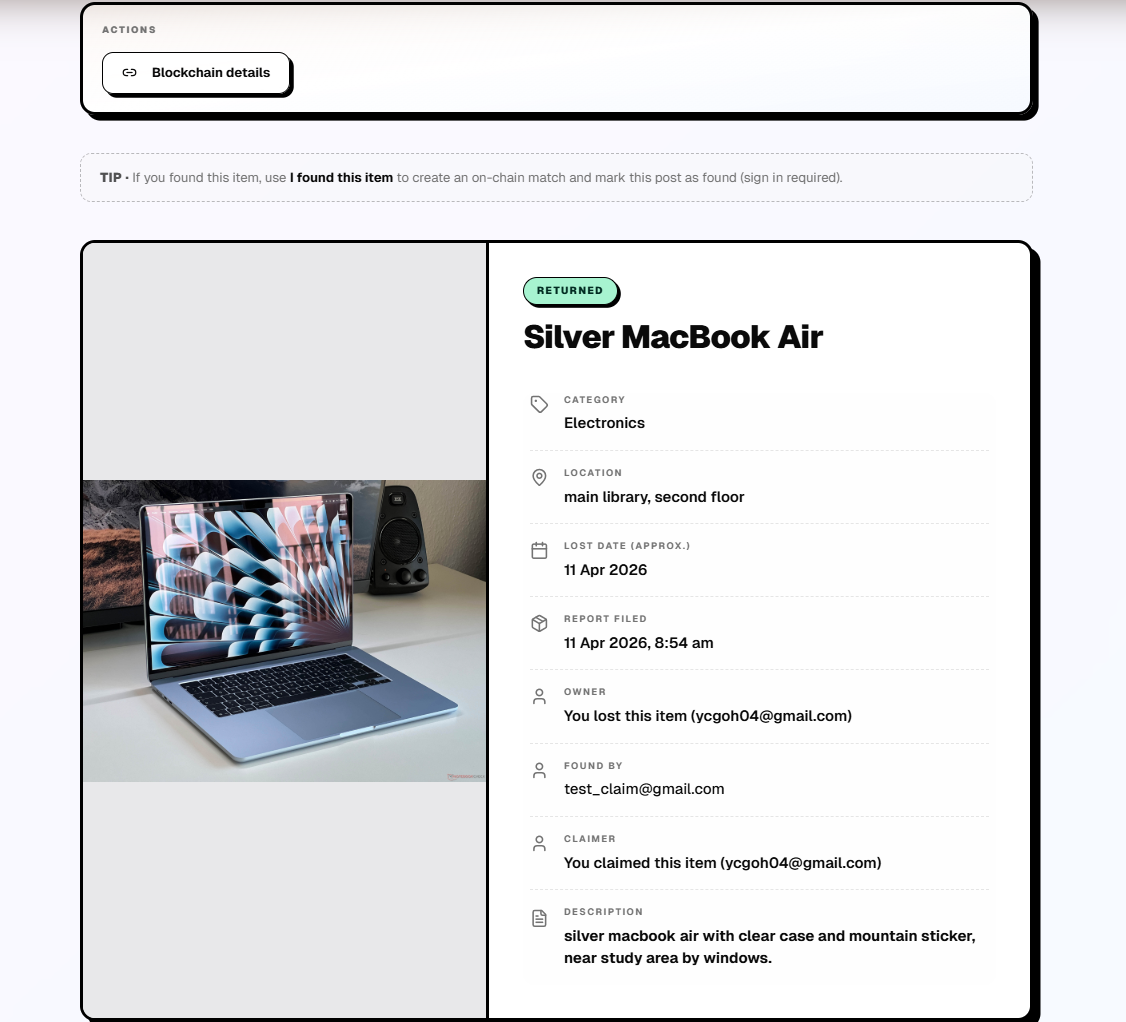
The Problem: Every year, campuses manage thousands of high-value lost items (laptops, phones, wallets). Current systems rely on centralized Web2 databases or spreadsheets, creating critical trust gaps and exposing universities to liability if records are altered by a rogue employee or fraudster.
This results in real-world issues: disputed ownership, lack of accountability, and no reliable way to verify who rightfully owns an item. Ultimately, campuses lack a transparent and verifiable system of record for lost property.
The Solution: We built a frictionless Web2.5 application (Next.js, FastAPI, MongoDB) designed for real-world deployment. Students simply log in with their university email — no wallets, no crypto knowledge required.
When an item is reported, our system tracks its physical lifecycle through a simple state machine:
Lost → Found → Claimed
We also support the inverse Found → Claimed flow for direct claims.
Each action is tied to an authenticated university identity, ensuring:
- Accountability for every interaction
- Reduced fraud through identity linkage
- A seamless user experience accessible to non-technical users
This design prioritizes usability and practicality, ensuring adoption by real campus communities.
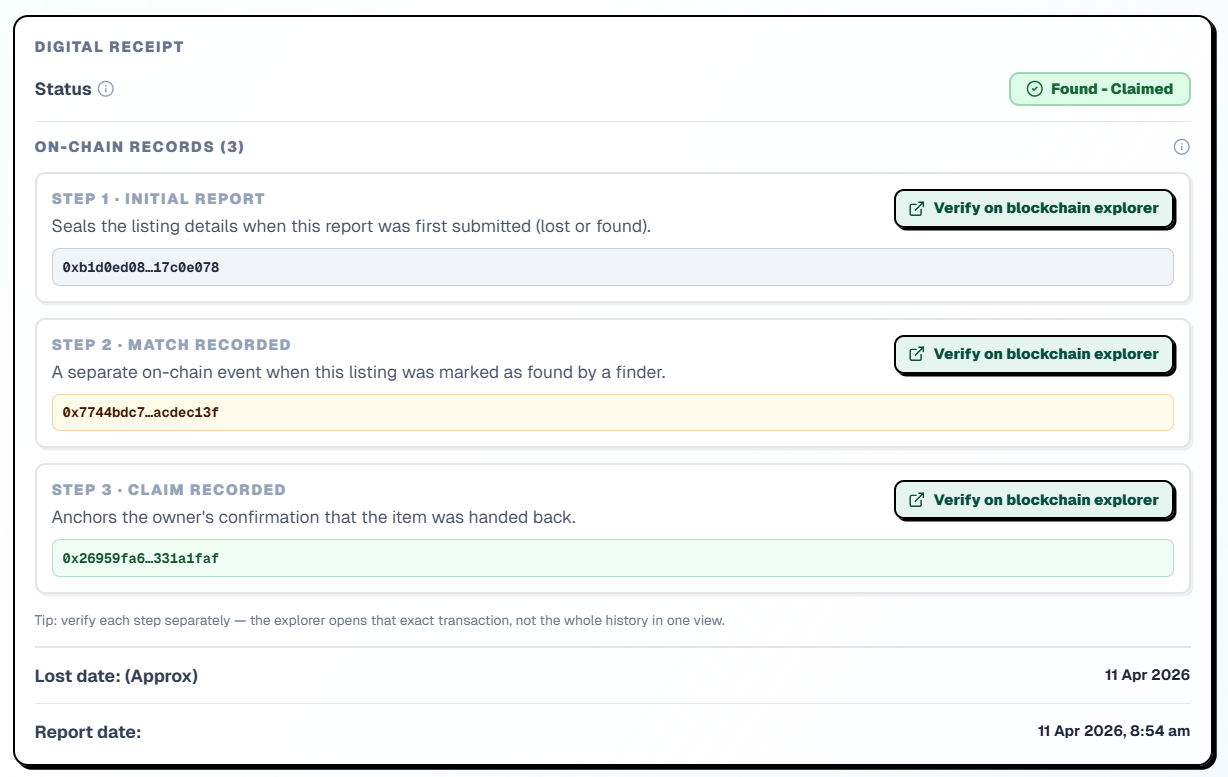
The DCAI L3 Integration: To ensure these records can never be silently altered, we implemented an on-chain notarization architecture.
Every time an item changes hands, our backend:
- Hashes the event payload
- Sends a JSON-RPC call to the DCAI L3 testnet
This anchors each state transition to the blockchain, creating a tamper-proof, timestamped record.
Blockchain is used selectively and meaningfully — not exposed to users, but strengthening trust, transparency, and coordination behind the scenes.
Why it Matters: We aren't just tracking items; we are building digital trust infrastructure for real-world assets.
While no system can physically prevent bad actors, our architecture ensures they cannot act anonymously or erase evidence. Every claim is permanently tied to a verified identity and recorded on an immutable ledger.
This creates:
- A cryptographic chain of custody
- Strong deterrence against fraud
- A reliable audit trail for dispute resolution
By combining real-world identity with blockchain-backed immutability, we improve outcomes for students and institutions while maintaining ease of use.
This aligns with BGA’s vision of blockchain for real-world impact by delivering:
- Transparent and accountable systems
- Practical, deployable solutions
- Improved trust in everyday processes
Every state transition is hashed and anchored to DCAI L3 via the OperatorRegistry contract, creating a permanent, verifiable record tied to authenticated identities — immutable by design, auditable by anyone, and built for real-world adoption.
-
-