
ROSA digitises rotating savings circles (Sou-Sous) on-chain using Arbitrum Stylus & ZeroDev Passkeys: features gasless onboarding, multi-chain support, and smart collateral default protection.
ROSA (Rotating On-chain Savings Association)
Inspiration
Collaborative finance is a ancient, battle-tested concept. Globally, over a billion people rely on Rotating Savings and Credit Associations (ROSCAs)—known as Sou-Sous in West Africa, Tandas in Latin America, Esusus in Nigeria, and Partnerhands in the Caribbean—to collaboratively pool capital, save, and access interest-free credit.
However, traditional savings circles are severely limited:
1. The "Runner" Problem (Default Risk): If an early recipient of the pot stops contributing in subsequent rounds, the group loses its capital.
2. Geographical Boundaries: Circles are limited to local cash-based communities.
3. Innovation: Payments systems are adopting onchain
We built ROSA to move this global $100B+ peer-to-peer saving custom onto the blockchain, resolving the trust bottleneck with smart incentives while keeping onboarding as frictionless as Web2.
What it Does
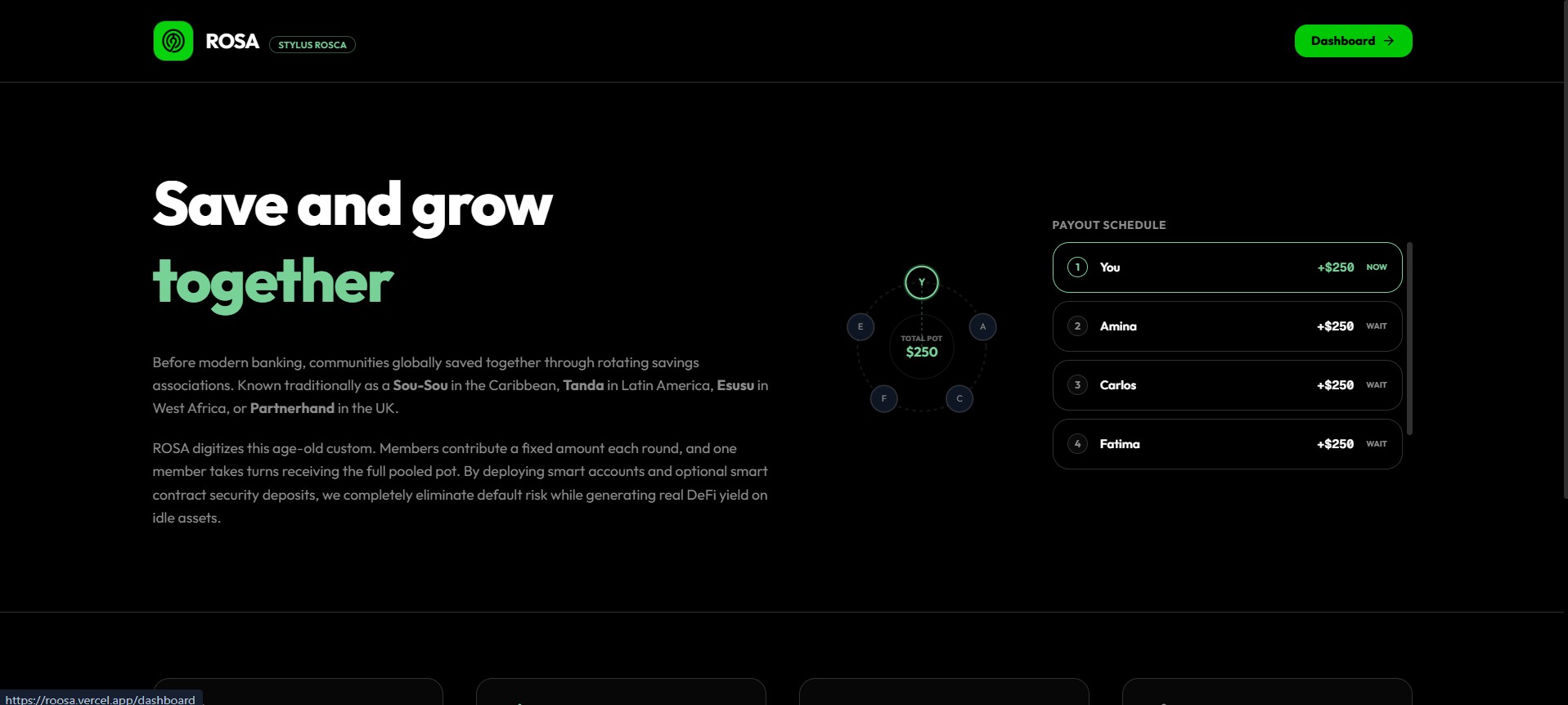
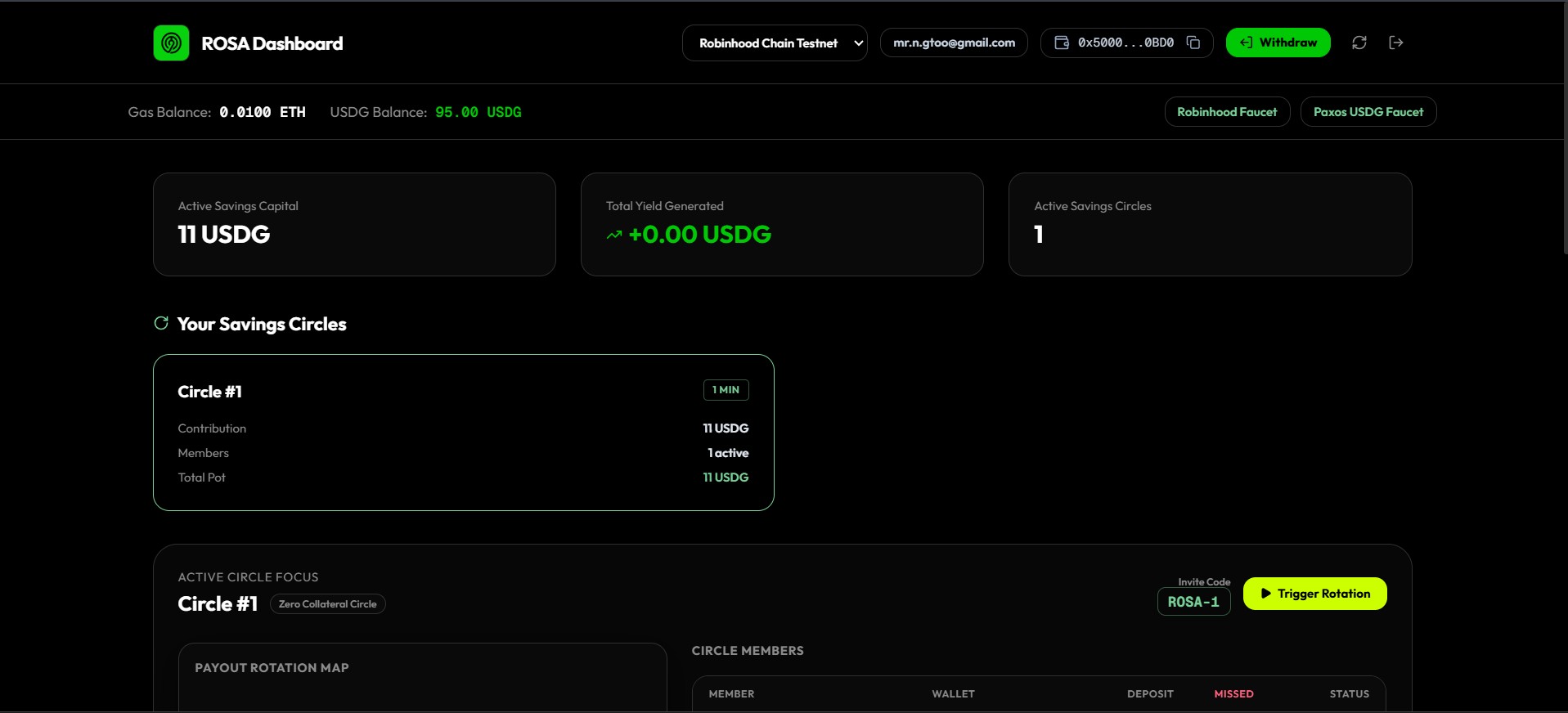
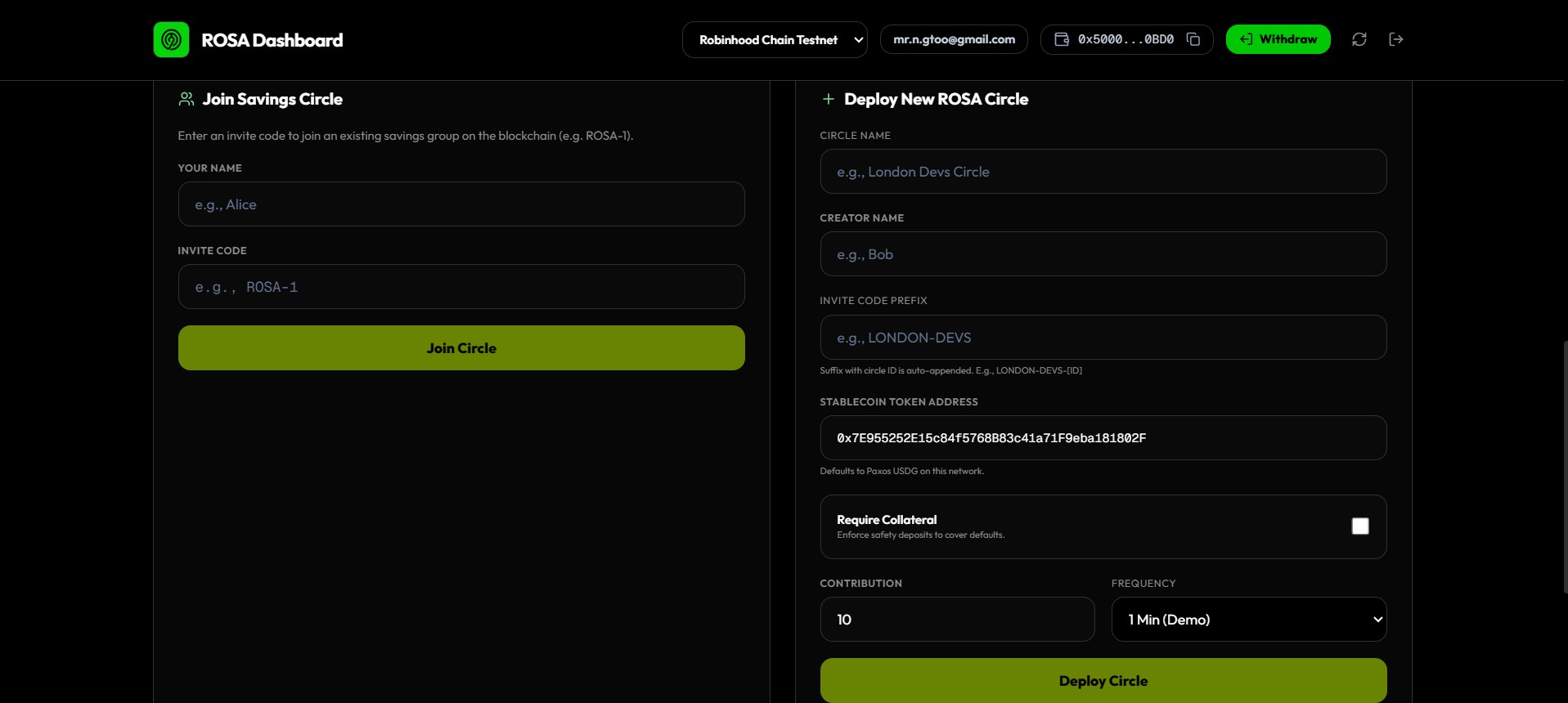
ROSA enables users to deploy, join, and execute Rotating Savings Circles directly on-chain.
* On-Chain Pools: Members join a circle and commit to contributing a fixed stablecoin amount per period.
* Dynamic Rotation: Each round, the full pooled pot is disbursed to one member in turn.
* Smart Default Protection (Collateral Staking): Creators can require members to lock a security deposit (collateral) upon joining. If a member defaults, the Stylus contract automatically slashes their collateral to cover the payout, guaranteeing the pot for the active recipient.
* Exit Option: Members who have not yet received the pot can exit the circle early, refunding their staked collateral.
* Multi-Chain Support: Connects to the Robinhood Chain Testnet (using Paxos USDG) or Arbitrum Sepolia (using Circle USDC).
How We Built It (Technical Stack)
We engineered a premium, production-ready stack from the ground up:
* Arbitrum Stylus Smart Contracts (Rust): The core pool manager is written in Rust using the stylus-sdk. This allows high-performance state transitions, custom default slashing logic, and gas-efficient EVM logging with a compile-optimized WASM target.
* ZeroDev Kernel v3 (Smart Accounts): Implemented ERC-4337 Account Abstraction to establish gasless transactions and session-key integrations, allowing the contract to auto-pull contributions without manually prompt signing every round.
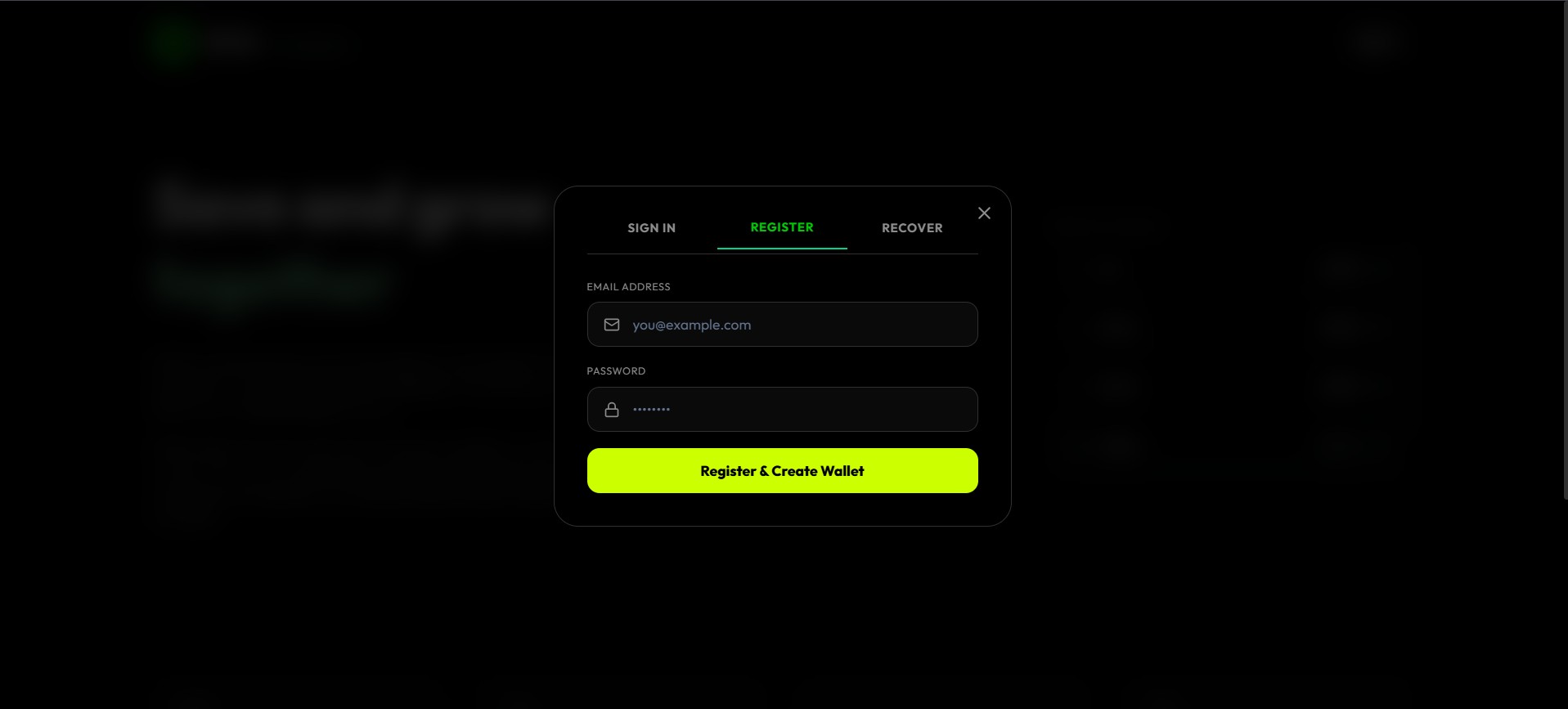
* WebAuthn Passkeys: Created a biometric login modal (fingerprint/face recognition) that deterministically maps a user's device key to their on-chain smart account, removing the need for seed phrases.
* Premium Obsidian UI/UX: Developed a Next.js/React frontend stylized with glassmorphic cards, Outfit typography, an animated circular SVG payout rotation map, a transaction logging console, and custom responsive layouts.
Challenges We Ran Into
* EVM-WASM Memory & Storage Layouts in Stylus: Writing re-entrant storage mapping checks for nested maps in Rust required strict adherence to lifetime structures and memory alignment. We resolved this by modularizing structural checks and validating storage slot outputs via the Stylus SDK.
* Passkey Recovery Syncing: Linking biometric logins with deterministic recovery options across device resets can be complex. We built a password-secured local recovery registry to bind smart accounts securely without compromising seed-phrase-free accessibility.
---
What's Next for ROSA
* Yield-Bearing Reserves: Integrating Aave or Compound to supply idle pool contributions to yield protocols, using the generated interest as a secondary backup fund against defaults.
* Decentralized Attestations: Integrating Ethereum Attestation Service (EAS) to issue on-chain credit scores based on payment history, allowing users to join high-value circles without needing upfront collateral.
Completed
No current funding at the moment