
ArbiTrace is a focused debugging tool for Arbitrum developers that explains exactly why retryable transactions and Stylus/WASM contracts fail, with permanent onchain telemetry anchors.
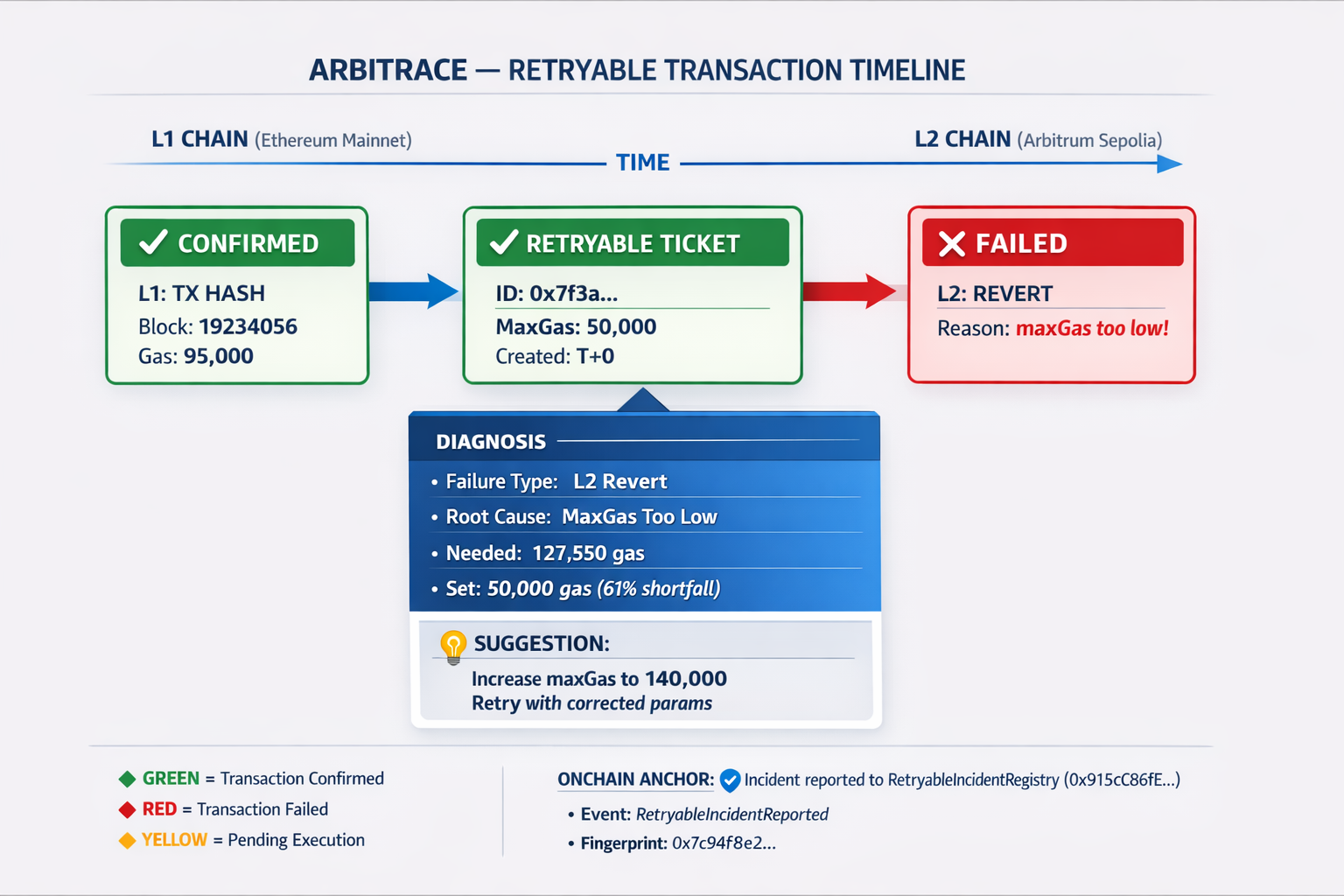
ArbiTrace turns Arbitrum transaction failures into actionable insights. Input a transaction hash and get a visual timeline with root cause and fix suggestions, anchored onchain. ArbiTrace eliminates guesswork in Arbitrum retryable and Stylus failures. Paste a tx hash, instantly see where it failed (L1, retryable, L2), why it failed (maxGas too low, L2 revert, etc.), and how to fix it. Visual timeline, color-coded statuses, and optional onchain fingerprinting for ecosystem telemetry make debugging fast and reliable.
One-Liner for UI or Sidebar
Debug Arbitrum failures in seconds. Fix them in minutes.
Image Captions
Image 1 — Timeline Visualization
Shows L1 → Retryable → L2 flow with color-coded nodes for confirmed, pending, or failed states, plus diagnostic hints.
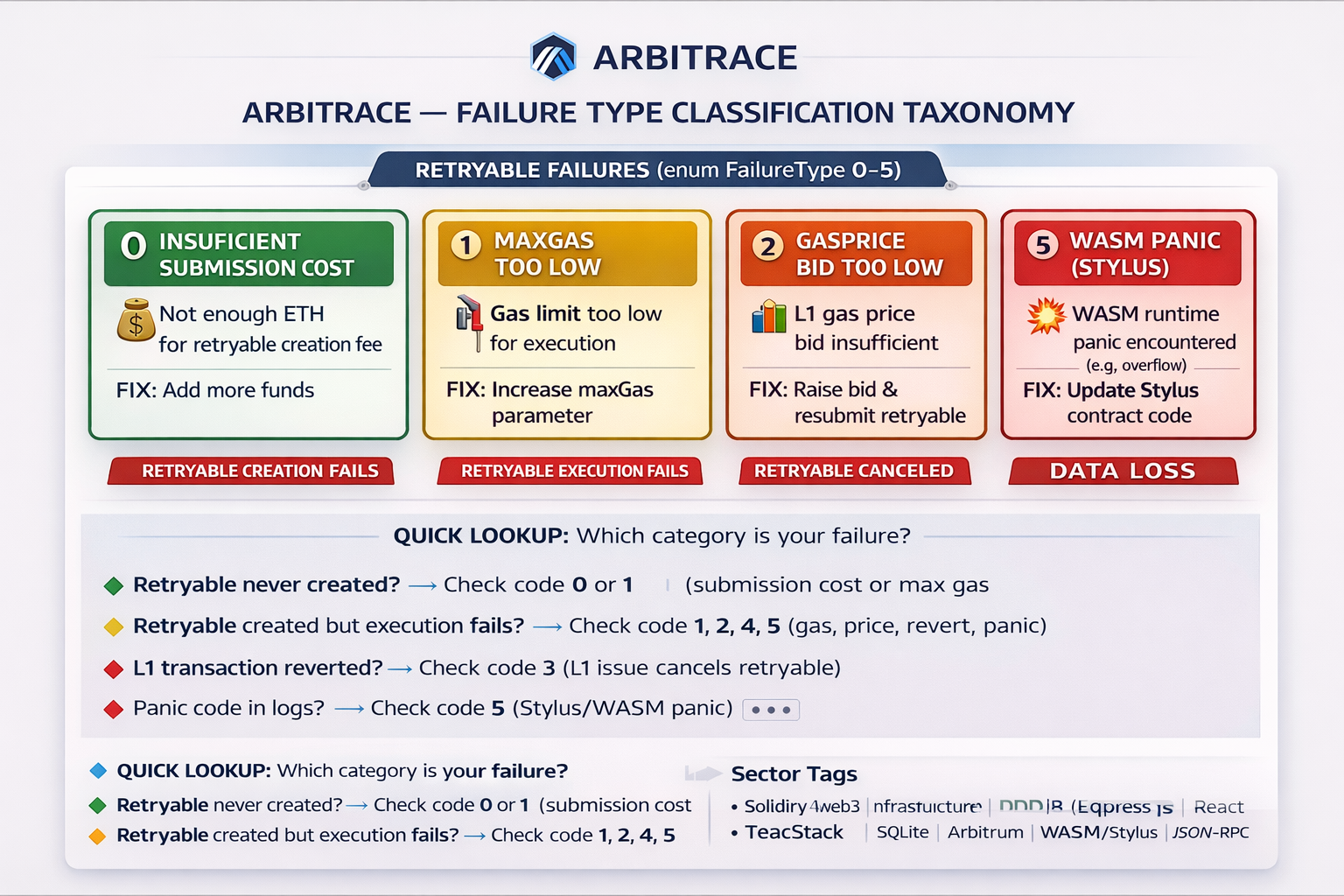
Image 2 — Failure Classification Chart
Six failure types for instant identification: Insufficient Submission Cost, MaxGas Too Low, GasPrice Bid Too Low, L1 Revert, L2 Revert, WASM Panic.
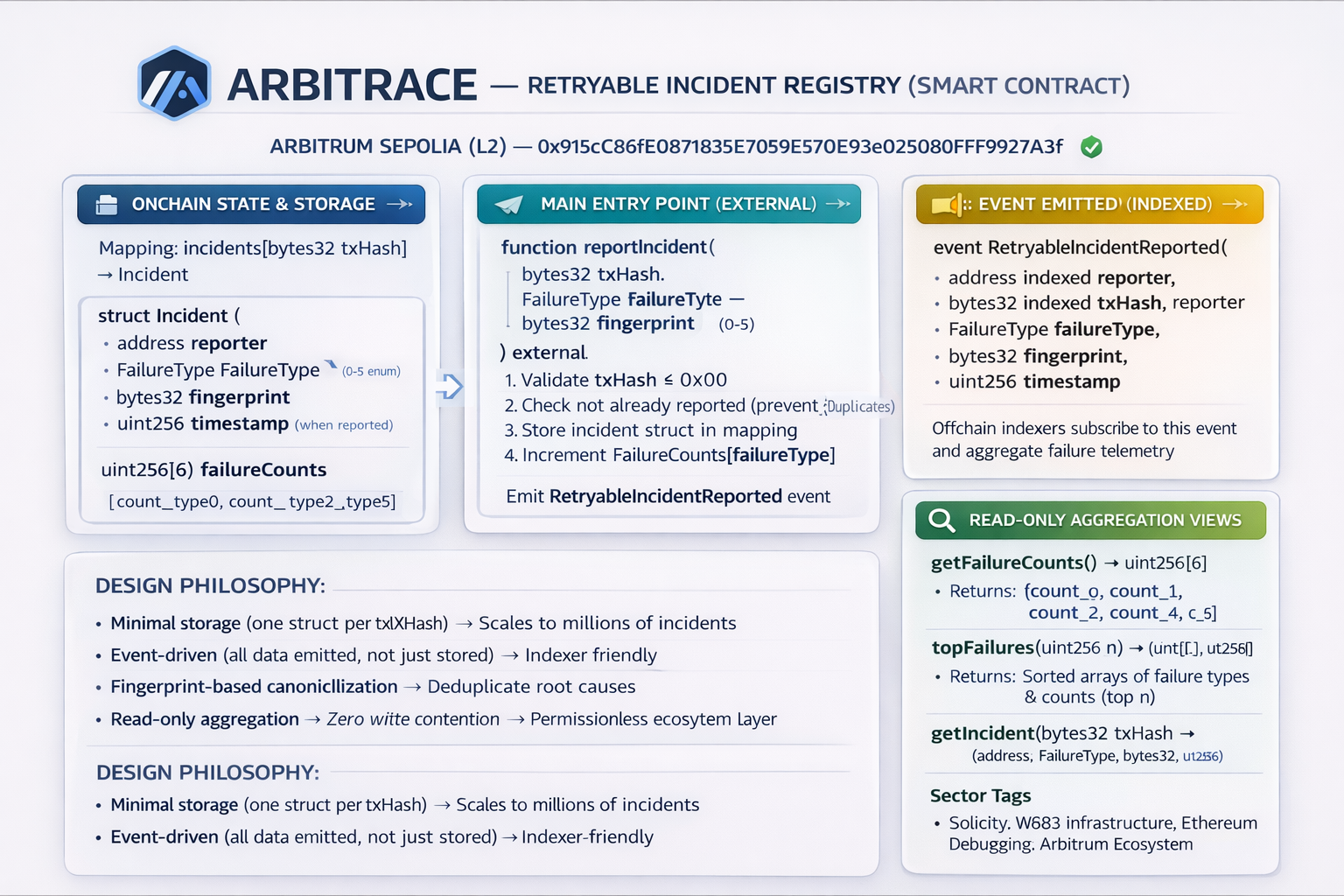
Image 3 — Onchain Registry Architecture
Minimal storage smart contract emits structured events for ecosystem-wide telemetry and read-only aggregation.
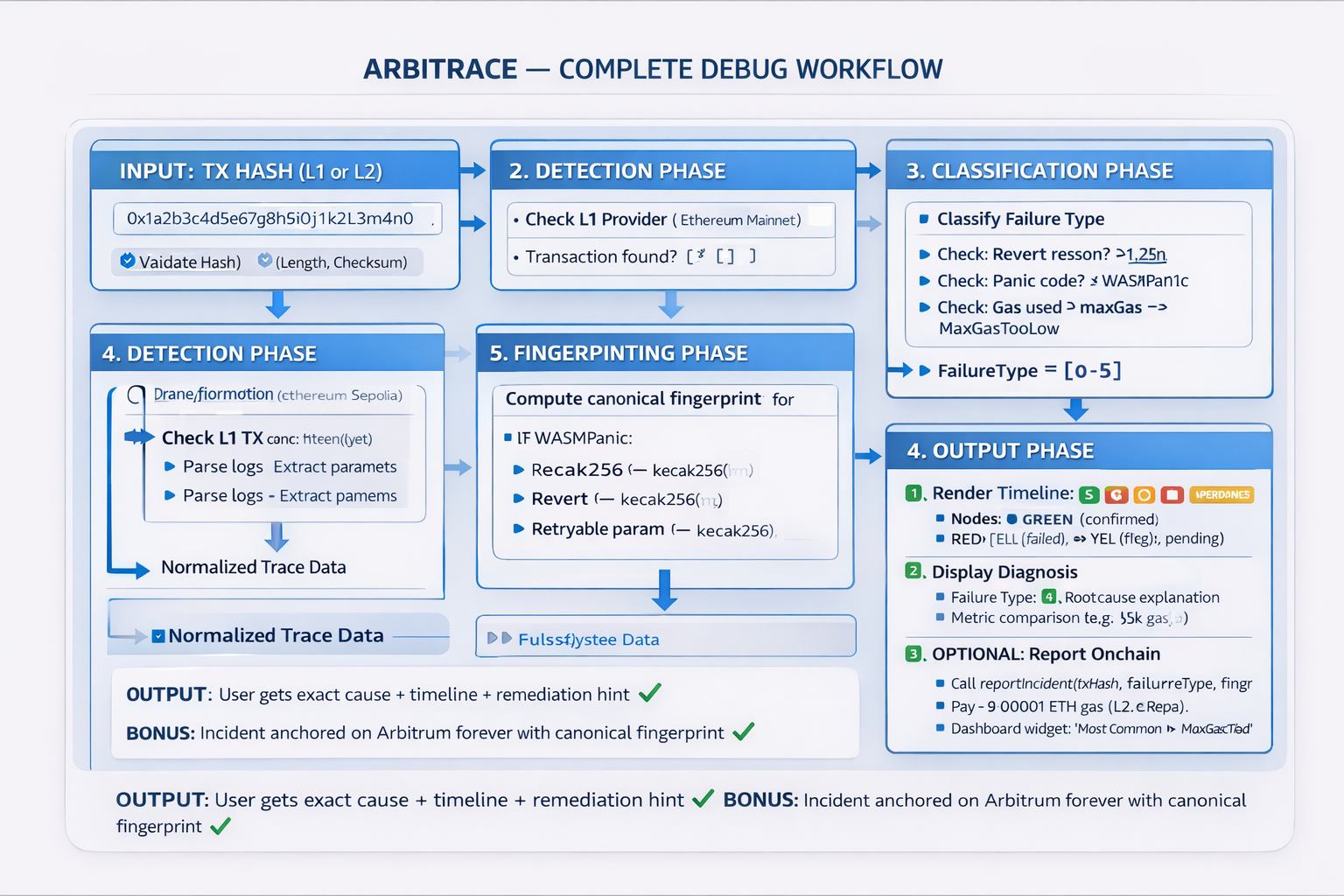
Image 4 — Debug Flow Diagram
End-to-end: tx hash input → failure classification → timeline visualization → diagnosis → optional onchain reporting.
Sector Tags
Solidity, Web3 Infrastructure, Ethereum Debugging, Arbitrum Ecosystem, Smart Contracts, Transaction Analytics
Tech Stack Tags
Solidity 0.8.19, Foundry, ethers.js, Node.js, Express.js, React, TypeScript, SQLite, Arbitrum, WASM/Stylus, JSON-RPC
We have built the core of ArbiTrace, a web-based, REST API, and CLI tool for analyzing Arbitrum transactions, focusing on retryable lifecycle tracking, L1↔L2 detection, failure classification, and Stylus/WASM execution analysis.
We have a fully functional front-end with timeline visualization, color-coded failure categories, and raw data outputs.
During the hackathon, we have also designed and planned the onchain component — the RetryableIncident Registry — which will anchor failure metadata on Arbitrum, providing a shared, event-driven layer for developers to track and analyze incidents in a standardized way.
This combined off-chain analysis and on-chain registry positions ArbiTrace as a first-of-its-kind Arbitrum-native debugging and incident logging solution.”
ArbiTrace is currently in the pre-funding stage. We have developed a working prototype and validated the technical feasibility of our solution. We are open to strategic partnerships, mentorship opportunities, and grant support to accelerate product development, expand our onchain infrastructure, and reach Arbitrum developers more effectively