
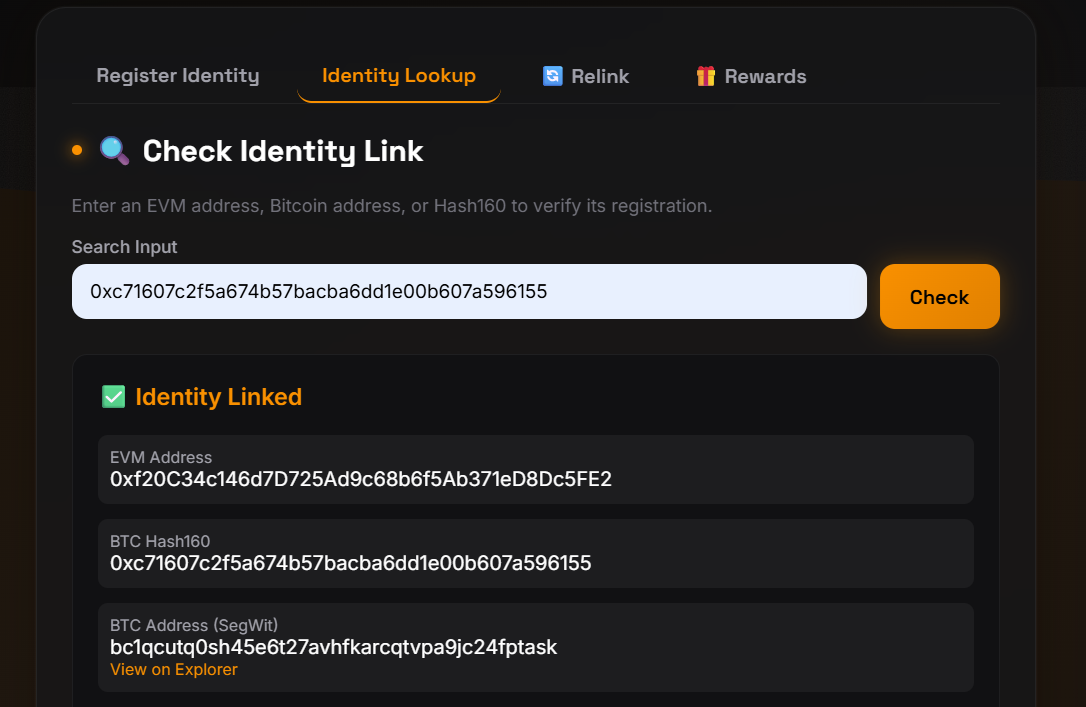
Proof160/Hash160 — a permanent, cryptographic mapping between Bitcoin Hash160 identities and EVM addresses, verified entirely on-chain.
FastPath Protocol
No bridges. No oracles. Pure cryptography.
Why It's Different
Every "Bitcoin bridge" is a multisig with a press release.
FastPath is native cryptographic verification. No validators. No relayers. No committees. No trust assumptions beyond the math.
The contract doesn't believe you own a Bitcoin address. It verifies it — the same way Bitcoin does.
That's the only kind of trustless that actually means anything.
Deployed. Verified. Working.
What It Is
A protocol that lets you prove ownership of any Bitcoin address directly on an EVM chain — then use that identity everywhere.
One signature. One hash160. Infinite applications.
The Core — FastPathIdentity
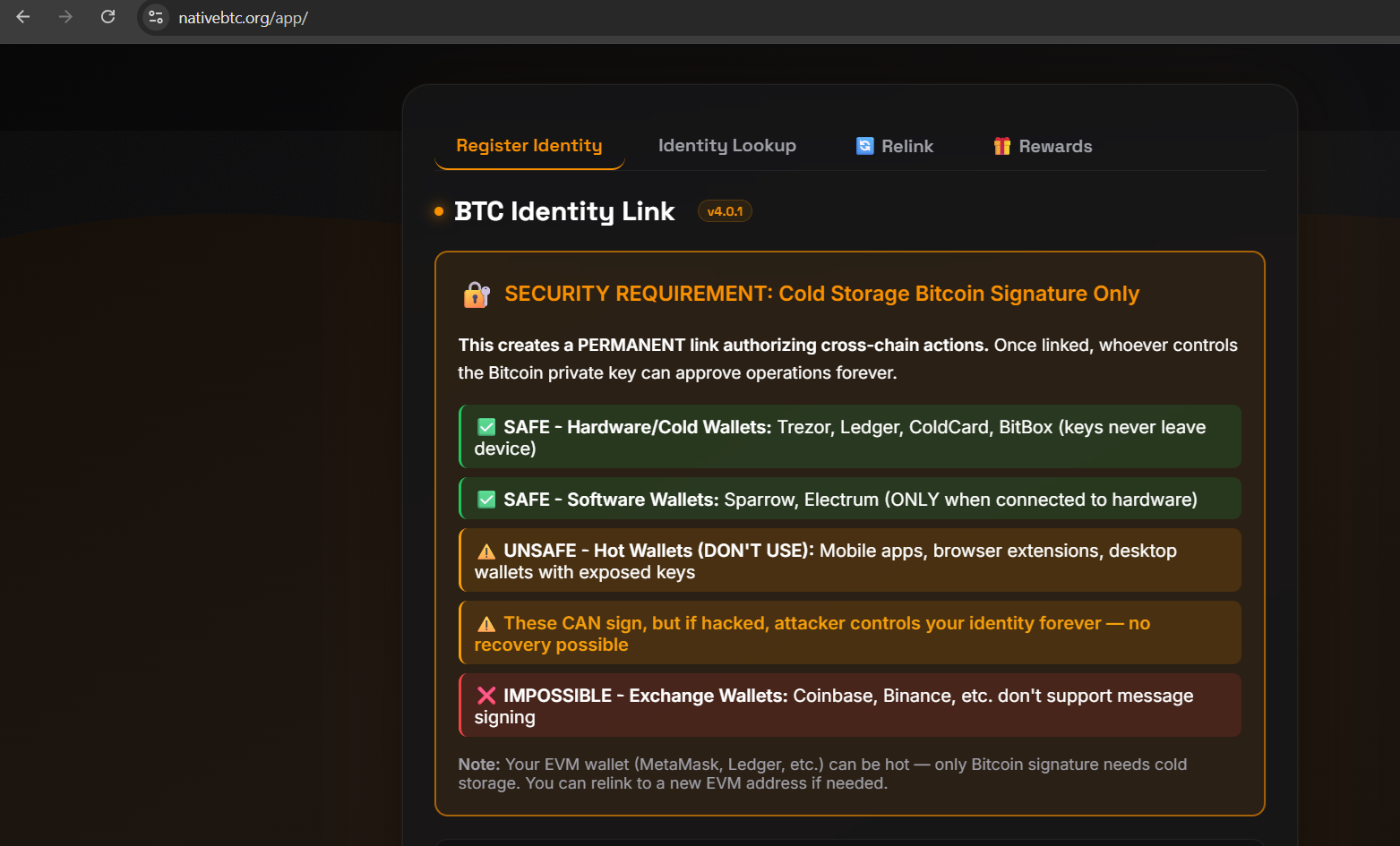
Sign a message with your Bitcoin private key. The contract verifies it on-chain, derives your hash160, and binds it to your EVM address.
No intermediaries. No oracles. No trust.
Your identity is permanent. Your control isn't. Relink to a new wallet anytime — your hash160 stays yours, and everything built on top moves with you.
Verified entirely on-chain:
Secp256k1 decompression — compressed pubkeys work
Bitcoin Signed Message format with CompactSize
RIPEMD-160 after SHA-256 — real Bitcoin hash160, not keccak
Two-phase relink with cooldown — can't race you out of your own identity
The Applications
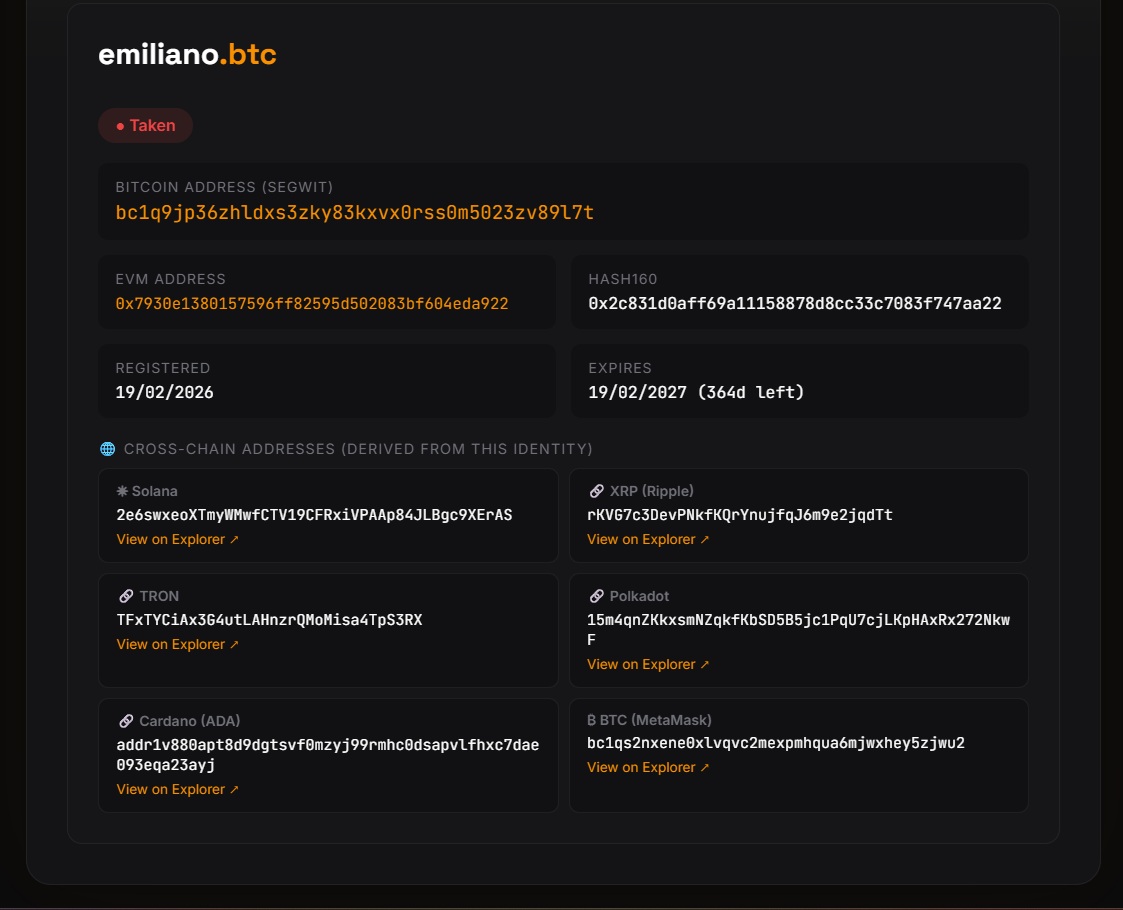
BNS — Bitcoin Name Service
Human-readable names for Bitcoin identities.
satoshi.btc → hash160 → EVM address.
Forward resolution. Reverse resolution. Text records. Subdomains. 1-year renewals.
Names survive relinks. Change wallets? Your name stays. Switch chains? It follows.
More building on this primitive:
Reputation tied to a Bitcoin identity, not a throwaway wallet
Cross-chain identity with no oracles
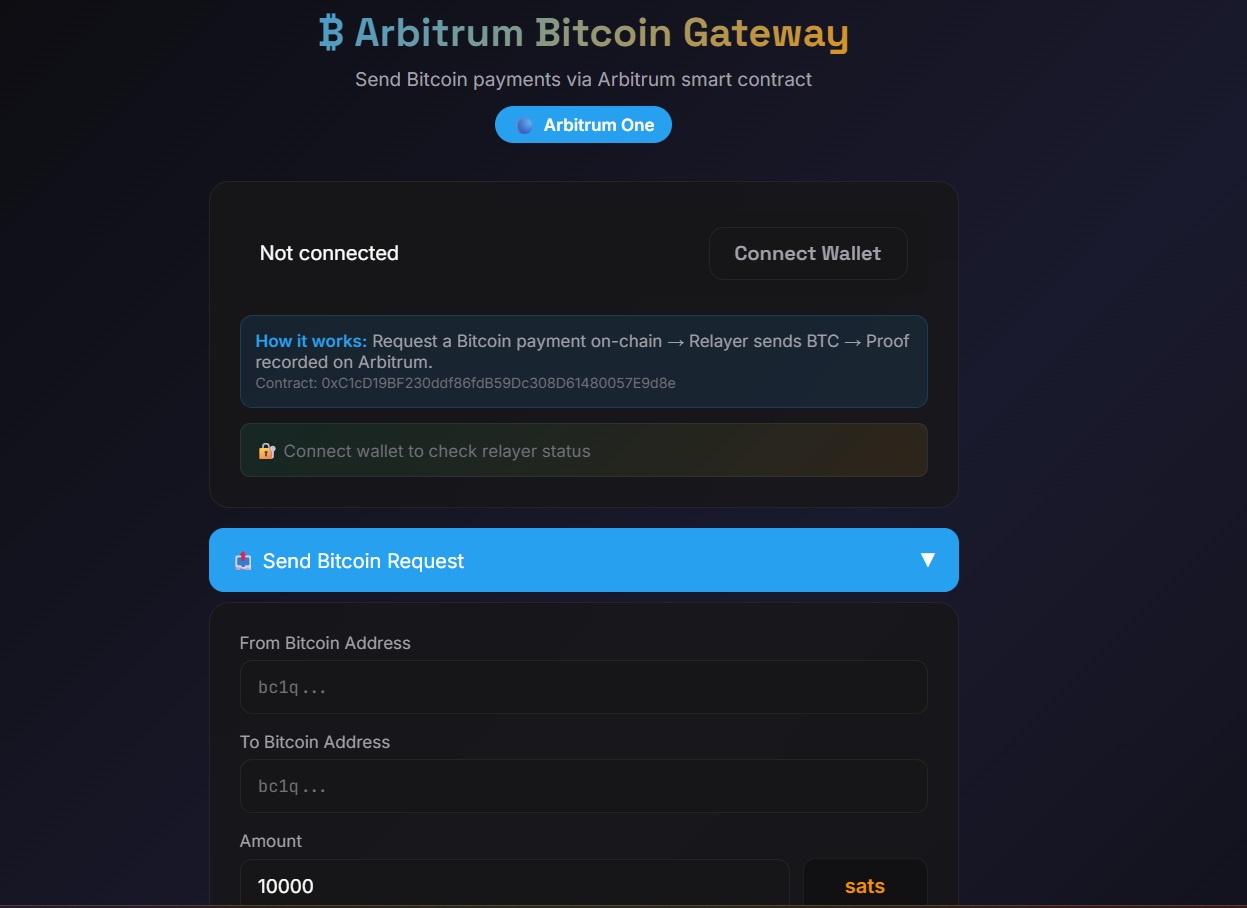
Payment routing to hash160s
Whatever builders build — the primitive is open
FastPath Protocol — 2026
One signature. Eight+ chains. No bridges.