
Lexifi
Lexifi: compliance for Uniswap v4 pools. Each pool sets its own rules - jurisdiction, KYC level, trade size - enforced in the contract, so no frontend can bypass them. Live on Robinhood Chain (4663).
视频
技术栈
描述
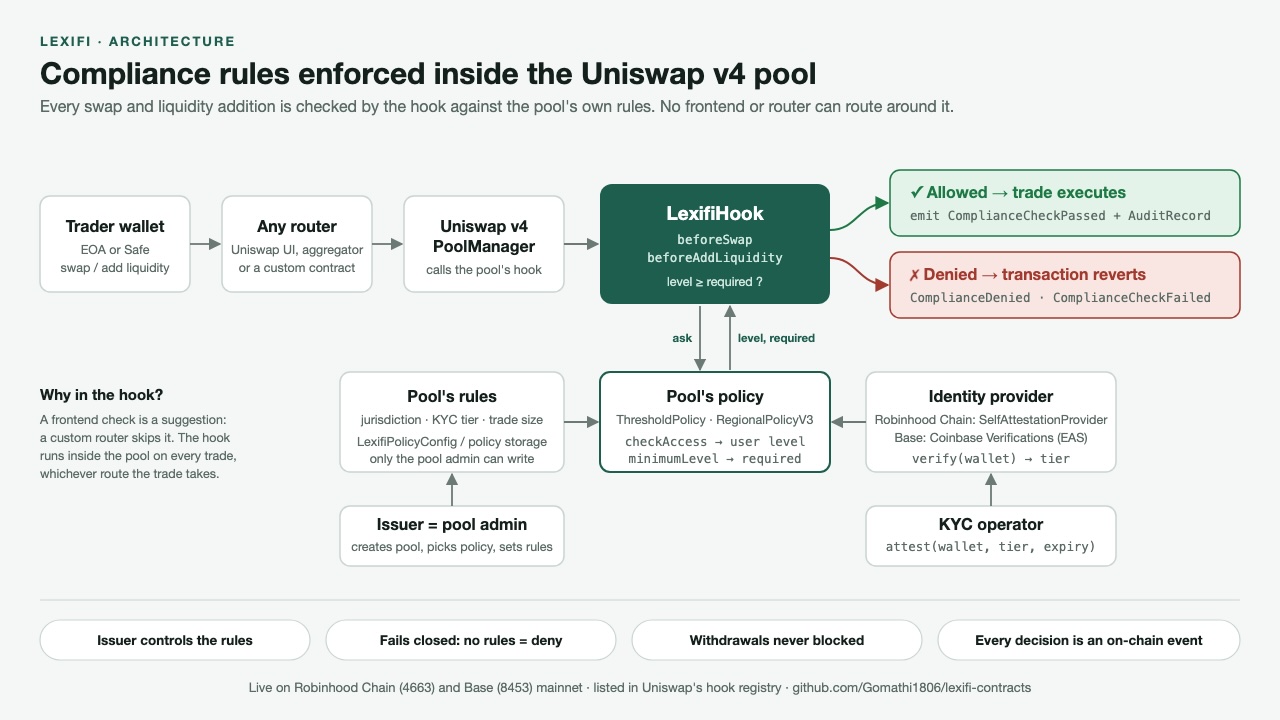
Lexifi is compliance infrastructure for Uniswap v4. Each pool sets its own eligibility rules — jurisdiction, KYC level or trade size — and the hook enforces them on every swap, inside the contract, where no frontend can route around them. Live and enforcing on Robinhood Chain, with the issuer, not Lexifi, in control of the rules.
Lexifi is the compliance layer the other stock-token apps on Robinhood Chain need.
Built on USDG. Our live Robinhood Chain pool pairs ETH with Paxos' USDG, so compliant trading of stock tokens settles in USDG.
The problem. Robinhood Chain exists to trade assets that carry real transfer restrictions: tokenized stocks, regulated stablecoins, RWAs. Those restrictions are legally binding, but on a DEX they're usually checked in a frontend — and a frontend is a suggestion. A custom router ignores it.
What we built. Lexifi is a Uniswap v4 hook that routes every swap and liquidity addition to the policy registered for that pool. Policies today cover jurisdiction, verification level and trade size. Identity comes from on-chain attestations, and the whole stack is live on Robinhood Chain: LexifiHook, SelfAttestationProvider, LexifiPolicyConfig, RegionalPolicyV3 and ThresholdPolicy — all five verified on Blockscout and exact matches on Sourcify.
A finding worth flagging. Coinbase Verifications don't exist on chain 4663. We probed it directly: the EAS predeploy, the Coinbase indexer and the Coinbase attester all have no code there. Any compliance stack that assumes Base's identity infrastructure fails closed on Robinhood Chain and denies every wallet. Ours reads from an operator-run attestation provider instead, so it works on any EVM chain.
The demo, live on mainnet. An ETH/USDG pool requiring accredited verification above 0.0001 ETH. An unattested wallet reads DENIED at 1 ETH. The operator attests it at tier 2 — transaction
0xf164ec13…— and the same wallet, same pool, same size, reads ALLOWED. Anyone can reproduce both reads against the public RPC.Status: no third-party audit yet, and no external issuer in production yet. Everything above is verifiable on-chain.
Why the issuer stays in control. Whoever registers a pool becomes its admin, recorded permanently in the
PoolPolicySetevent. Lexifi cannot change an issuer's rules, pause a pool or touch funds, and the configuration store has no global owner by design. Unconfigured pools deny everyone, and withdrawals are never gated — a wallet that loses its credential can always exit.Getting started takes 15 minutes. The repo ships a runbook and a one-command script. An issuer whose treasury is in a Safe never touches a private key: we generate a Safe Transaction Builder batch their existing signers approve, and the Safe becomes the pool admin. The whole deploy on Robinhood Chain cost under 0.001 ETH.
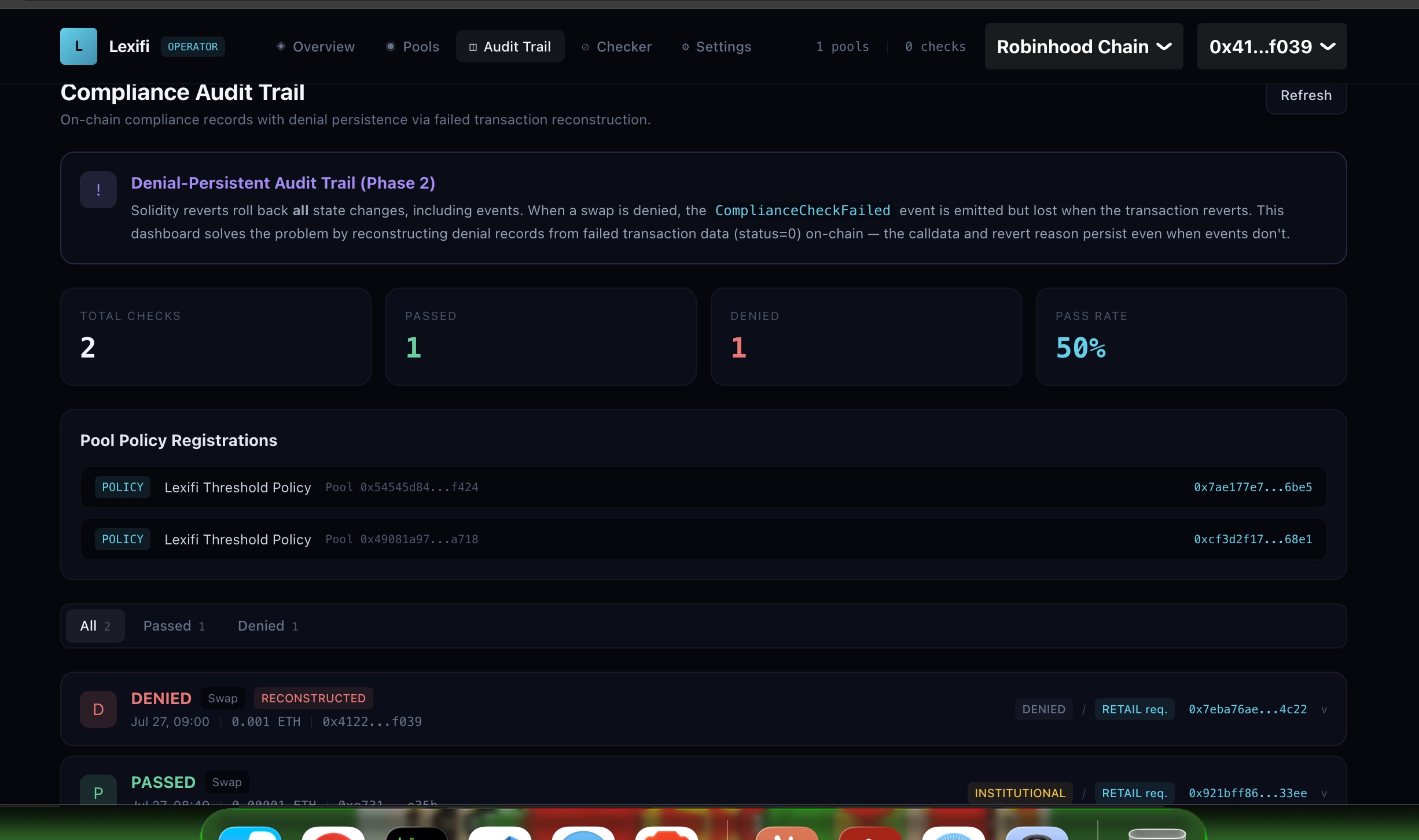
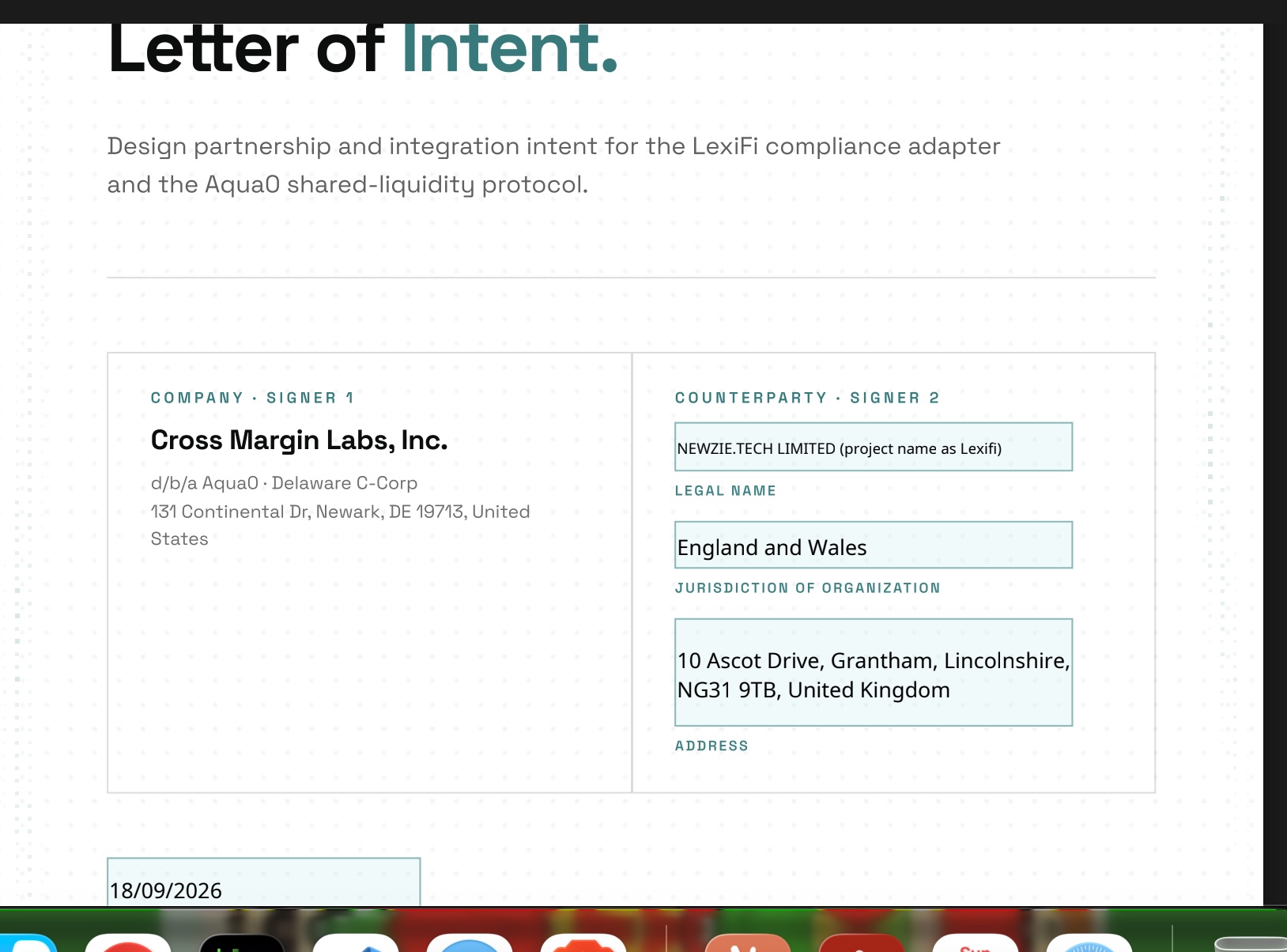
Traction. Aqua0 (Cross Margin Labs), a JIT liquidity protocol for stablecoin issuers live in private beta on seven chains including Robinhood Chain and Arbitrum, has agreed to a design partnership with Lexifi. For it we built LexifiComplianceAdapter, a one-call compliance check an external v4 hook makes in beforeSwap. It is live on Base mainnet, and 13 of 13 end-to-end tests pass against a model of Aqua0's adapter flow. Next step: testing against Aqua0's production contracts.
Links. Code: github.com/Gomathi1806/lexifi-contracts · Try it: lexifiio.vercel.app/checker · Demo: youtu.be/mzuR8xcNbhU · Also live on Base mainnet and listed in Uniswap's official hook registry.
本次黑客松进展
Before the Buildathon: Lexifi was live on Base mainnet — nine contracts, listed in Uniswap's official hook registry, with one pool enforcing. Nothing existed on Robinhood Chain or any Arbitrum chain.
During the Buildathon we took the whole stack to Robinhood Chain and proved it enforces there.
Week 1 — research. Probed chain 4663 directly and found Uniswap v4 fully deployed (PoolManager, PositionManager, Universal Router, Quoter, StateView, Permit2), but the identity layer missing: the EAS predeploy, the Coinbase attestation indexer and the Coinbase attester all have no code there. That ruled out a straight port from Base — a Base-style deployment would deny every wallet on the chain — and set the architecture for everything after.
Week 2 — build and deploy.
Wrote
DeployRobinhood.s.sol, a one-command deploy of the policy stack against operator-run attestations instead of Coinbase Verifications.Rehearsed the entire deploy on a fork of 4663 before spending anything, and caught two bugs in the process: a CREATE2 salt that predicted a different address than it deployed to, and a stale environment value that silently gave contracts an owner with no code on the target chain. Both are fixed in the repo.
Deployed five contracts to Robinhood Chain mainnet: LexifiHook, SelfAttestationProvider, LexifiPolicyConfig, RegionalPolicyV3 and ThresholdPolicy. Total cost under 0.001 ETH.
Verified all five on Blockscout and as exact matches on Sourcify.
Created a live ETH/USDG pool on Robinhood Chain's own Uniswap v4 PoolManager and configured it: swaps above 0.0001 ETH require accredited verification.
Proved the gate end to end on mainnet — an unattested wallet denied at 1 ETH, the operator attesting it at tier 2, the same wallet then allowed.
Week 3 — make it usable by someone else.
A 15-minute issuer guide with a single script, so a third party can run their own compliant pool.
A Safe Transaction Builder generator, so an issuer whose treasury is in a Safe never touches a private key — their existing signers approve the batch, and the Safe becomes the pool admin.
Added chain 4663 to the
@lexifi/sdkand to the operator dashboard, so the live compliance checker at lexifiio.vercel.app/checker now works on Robinhood Chain.Recorded the demo and documented the deploy in a public runbook.
Still open, stated plainly: no third-party audit, and no external issuer running a pool yet. But Aqua0 has agreed to a design partnership, and the integration adapter is live on Base. Everything above is checkable on-chain or in the repo's commit history. This deployment is the reference implementation an issuer can copy.
Next: first issuers. We presented Lexifi to Robinhood Chain's partnerships team on 29 September, and they pointed us to the Open House as the route to teams and issuers building on Robinhood Chain.
融资状态
Bootstrapped. No outside funding raised to date — the founder has self-funded all development and mainnet deployments. Incorporated in England and Wales as NEWZIE.TECH LIMITED (trading as Lexifi).
We have applied to the Uniswap Foundation Security Fund for a third-party audit subsidy, which is the main unlock for issuers adopting us in production. Open to pre-seed conversations, and Founder House is one of the reasons we're here.