
AI-powered DeFi liquidation-risk monitor. Scans Aave v3 & Compound v3 positions across Ethereum, Base & Arbitrum health factors, liquidation prices, and plain-language action plans per wallet.
DeFi borrowers get liquidated because monitoring positions is hard: health factors live in protocol dashboards, liquidation math is opaque, and by the time you've noticed, it's too late.
My project LiquiScope solves this. Give it any wallet address and it scans Aave v3 and Compound v3 positions across Ethereum, Base, Arbitrum, and Optimism, then returns a complete risk report: health factor per position, total collateral vs. debt in USD, a risk tier (safe → liquidatable), the exact liquidation price of the dominant collateral asset, the % price drop that triggers it, a portfolio-wide risk score, and concrete mitigation steps — the exact amount to repay or add as collateral to reach a safe health factor — plus an optional stress test showing what a 20% price drop would do to the whole picture.
On top of the numbers, an AI layer generates a plain-language summary and action plan, e.g. "Health factor 1.04, critical. Liquidation begins if WETH falls 3.5% to $1,822. Act immediately: repay debt or deposit collateral."
Beyond one-shot reports, LiquiScope now does recurring monitoring: for a couple of cents a day, register a wallet and get alerted the moment its health factor crosses a threshold you set — checked continuously by a scheduled job, delivered by webhook or straight through a Telegram bot conversation. A historical replay mode also reconstructs a wallet's health-factor trajectory over its recent on-chain history, flagging any point it would already have been liquidatable — proof the risk signal is real, not just a snapshot.
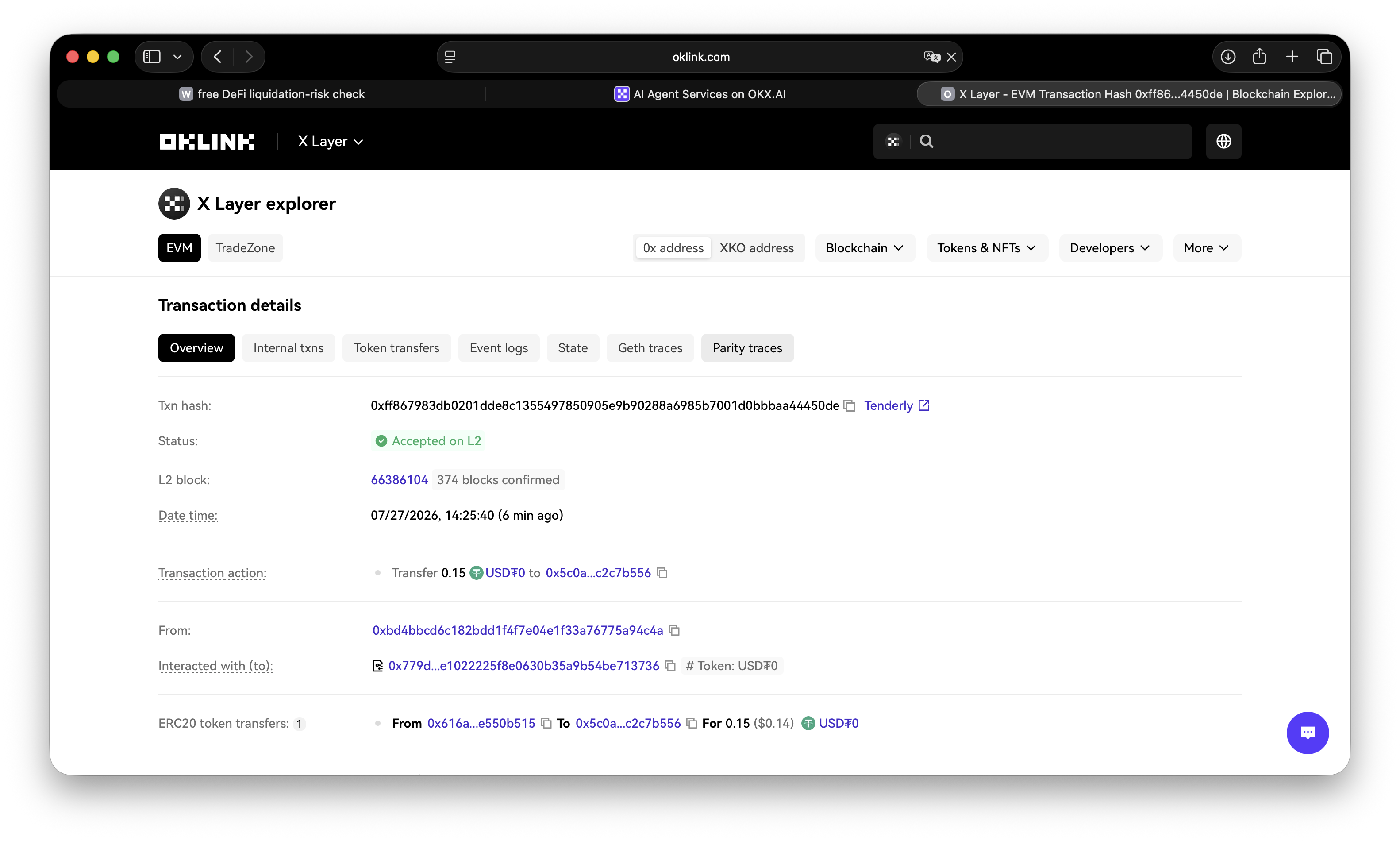
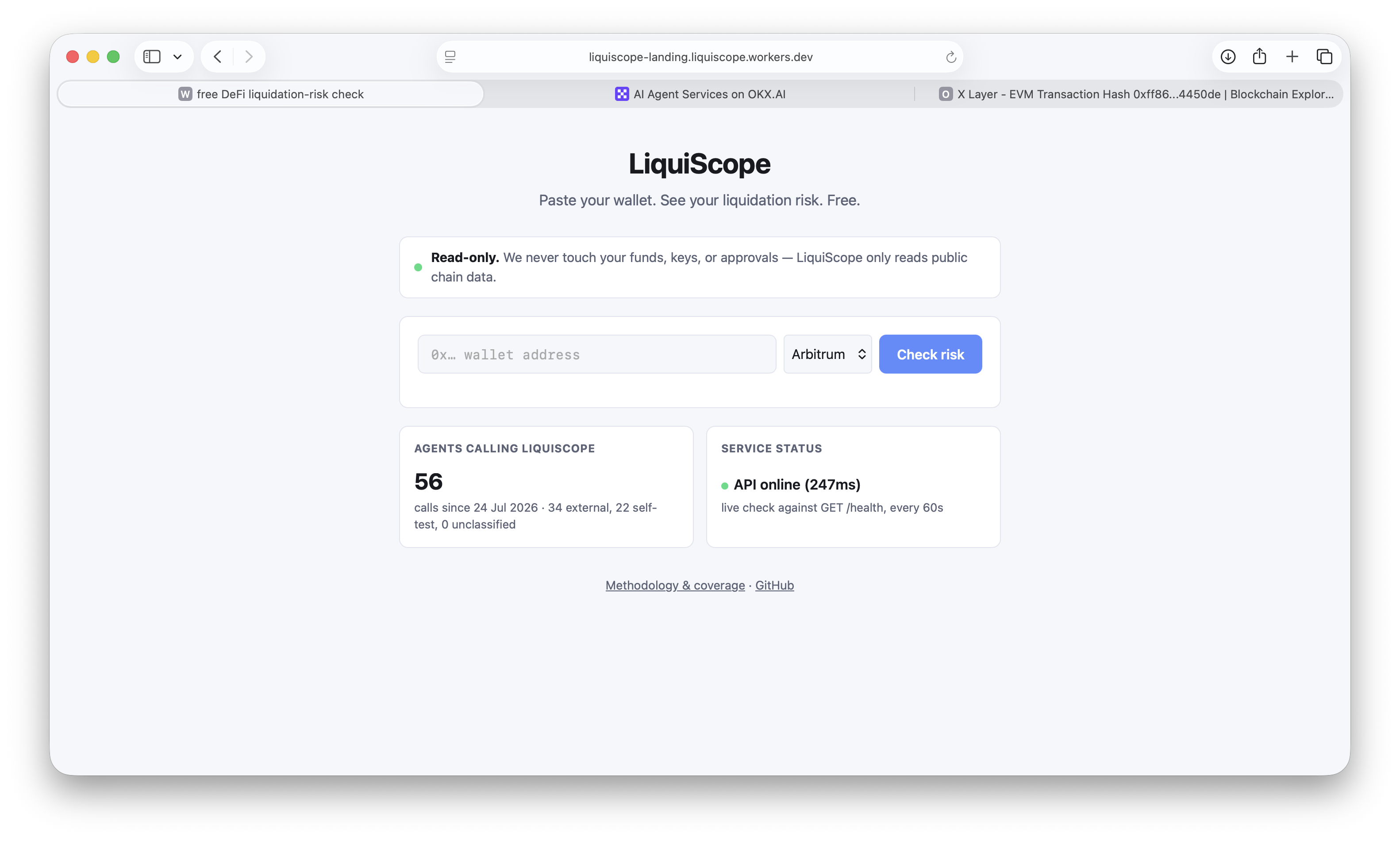
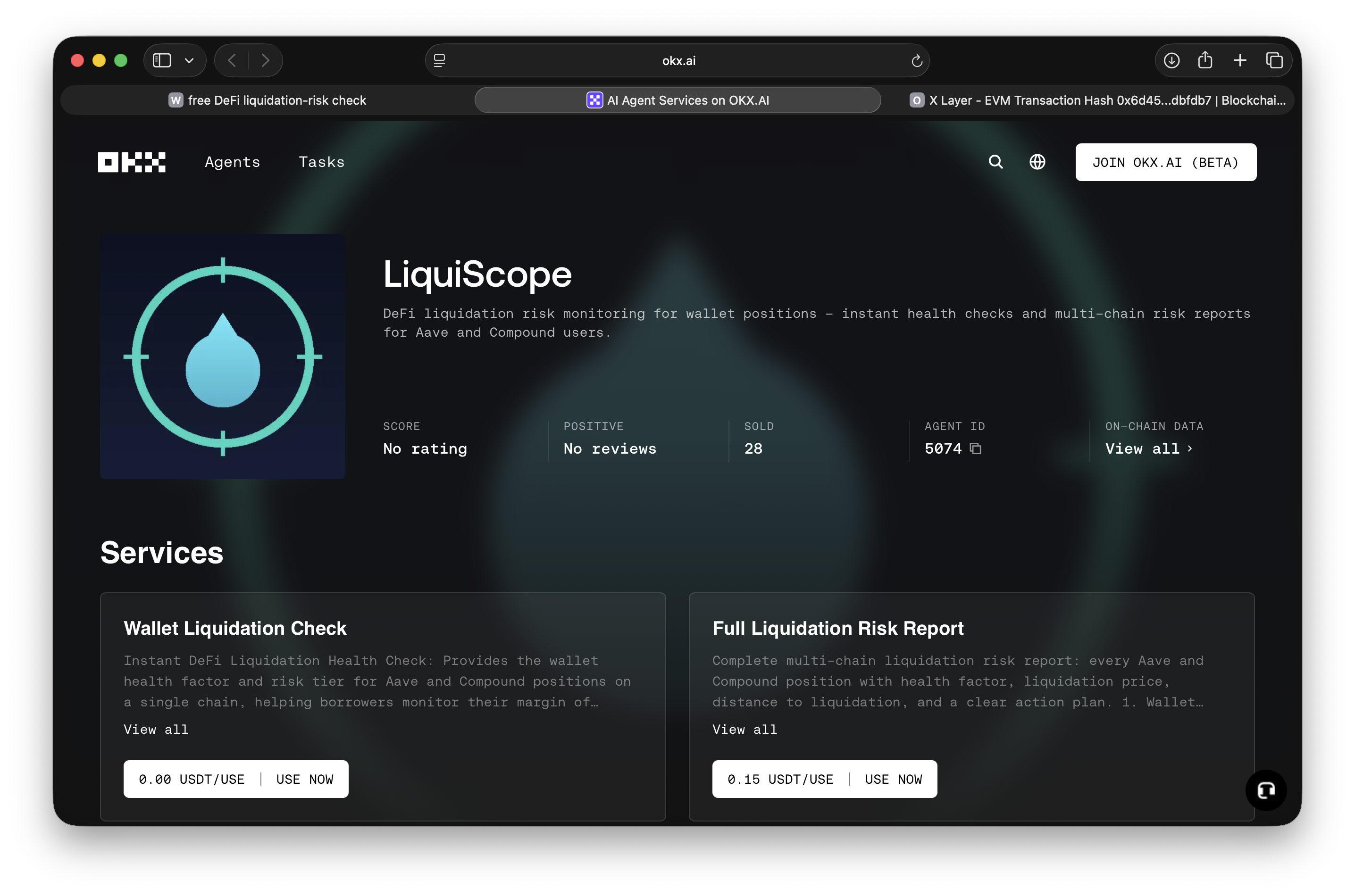
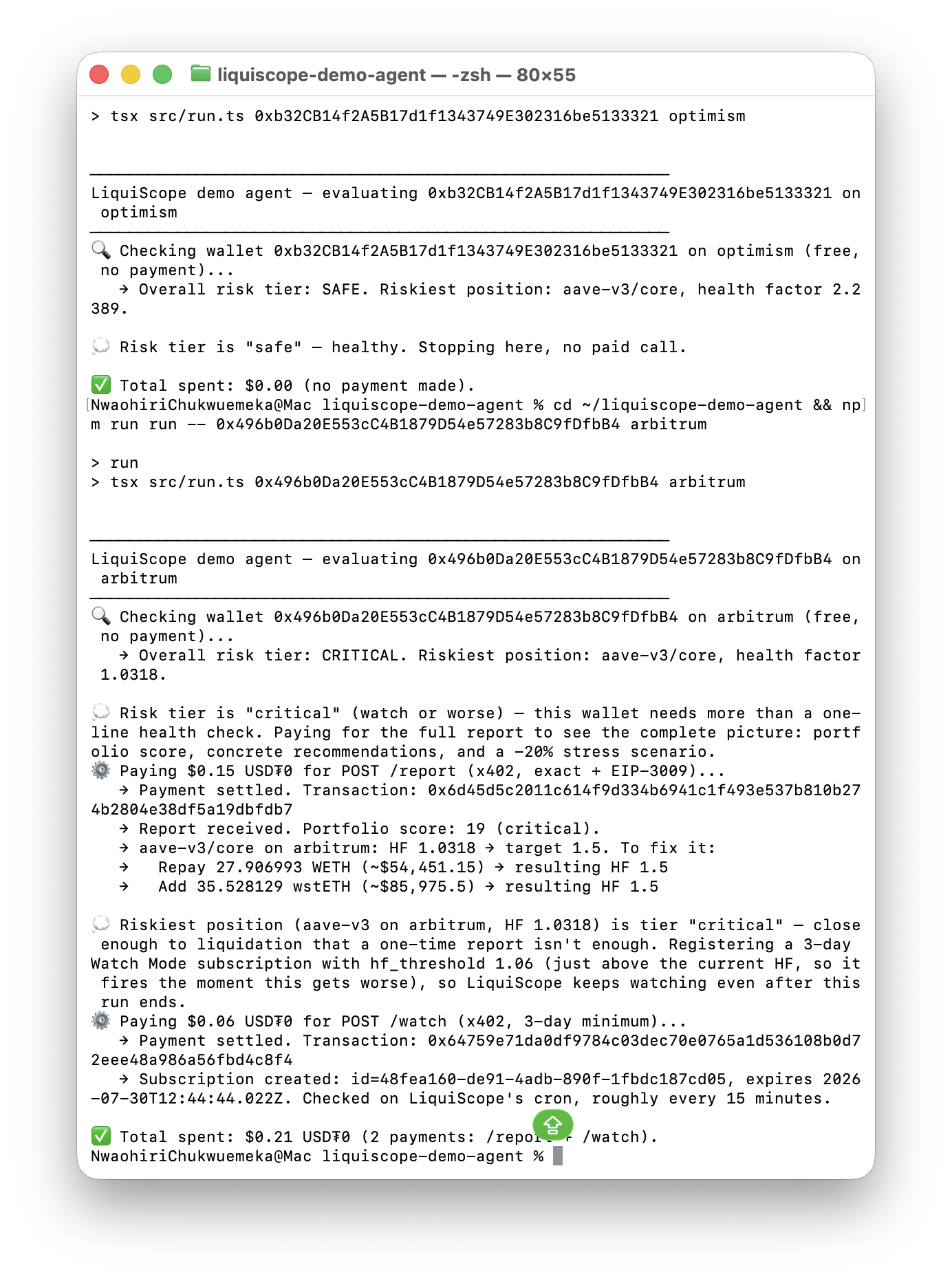
LiquiScope is exposed as an agent-callable service (A2MCP / MCP transport) with x402 pay-per-call pricing, so AI agents can query liquidation risk and pay for deeper analysis programmatically. I built a standalone autonomous agent that proves this end-to-end: it checks a wallet for free, decides for itself whether the risk justifies paying for a full report or ongoing monitoring, and settles real on-chain payments with no human approving each step. It's also directly usable by people, not just agents: a public landing page offers the free check with no signup, and the same Telegram bot anyone can message directly for a real-time risk check.
Built end-to-end during the hackathon: multi-chain position reader for Aave v3 and Compound v3 across Ethereum, Base, Arbitrum, and Optimism; risk engine computing health factors, liquidation prices, and drop-to-liquidation per position, plus a portfolio-wide risk score and concrete repay/add-collateral recommendations; a stress-test mode simulating a 20% price drop; recurring paid monitoring (Watch Mode) that checks a wallet on a schedule and alerts on a threshold crossing via webhook or Telegram; a historical replay mode that reconstructs a wallet's health-factor trajectory over its recent on-chain history and flags past liquidation-eligible crossings; an AI summary layer with a deterministic template fallback; and the MCP/agent transport with x402 pay-per-call pricing. Also shipped a public landing page and Telegram bot for direct human use, a call-volume transparency endpoint, and a standalone autonomous agent that proves the full pay-per-call loop end-to-end with real on-chain settlements, no human approving each step. Verified against live mainnet positions across multiple wallets and chains, including a real critical-tier Aave v3 position on Arbitrum. Approved by OKX.
Not fundraising at this time. I'm self-funding the build because I believe in it, and any proceeds from this hackathon will go straight into further development; deeper agent integrations, wider chain and protocol coverage, and expanding what's already live (Watch Mode monitoring, the Telegram bot) into something more complete.