
Aquarius is a DeFi risk intelligence protocol using AI agents and a verifiable pipeline to detect and act on risks before losses, designed to integrate 0G Compute, Storage, Privacy, and Agent ID.
What It Is ?
Aquarius is a protocol-aware risk intelligence and mitigation system for DeFi positions, starting with Aave.
The architecture is extensible so additional protocols can be added over time.
What It does ?
Aquarius continuously :
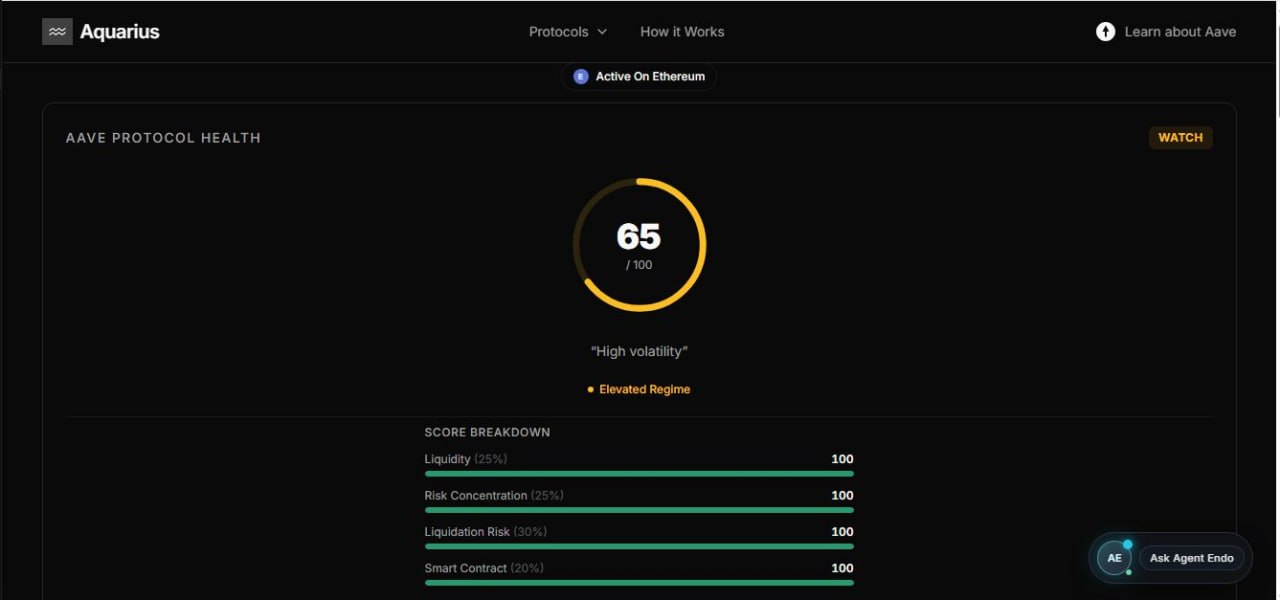
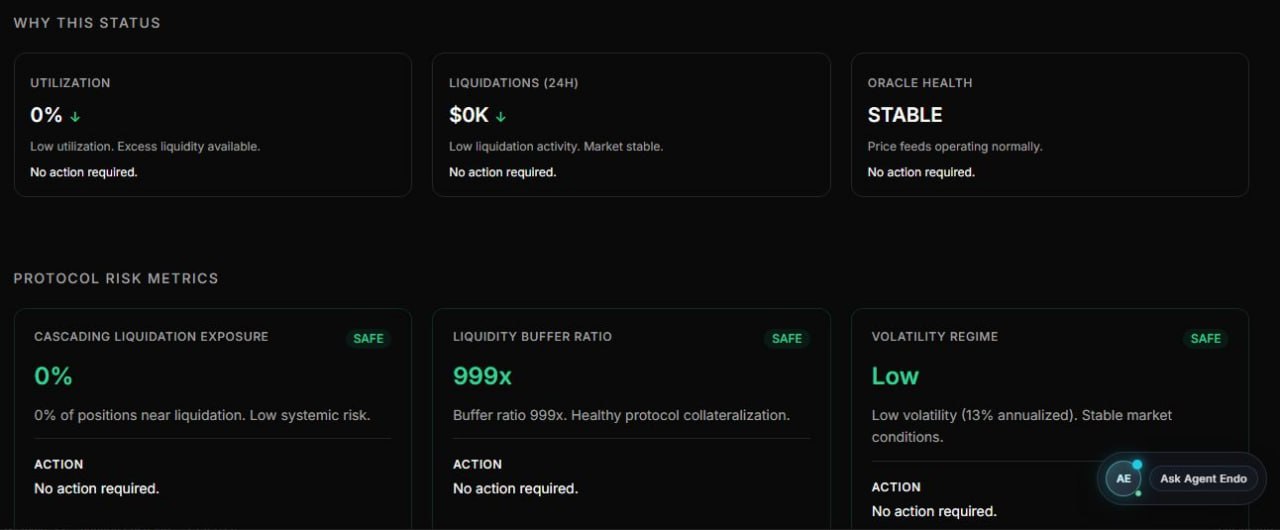
Monitors on-chain position health,
Computes deterministic risk signals off-chain using Aquarius’s risk engine; Chainlink CRE orchestrates workflow evaluation and mitigation dispatch. 0G-aligned integration is exposed through a ZG pipeline (commitments, optional inference, optional storage bridge) and vault-gateway advisory routing—including logical 0G chain routing—supporting verifiable, auditable intelligence alongside CRE.
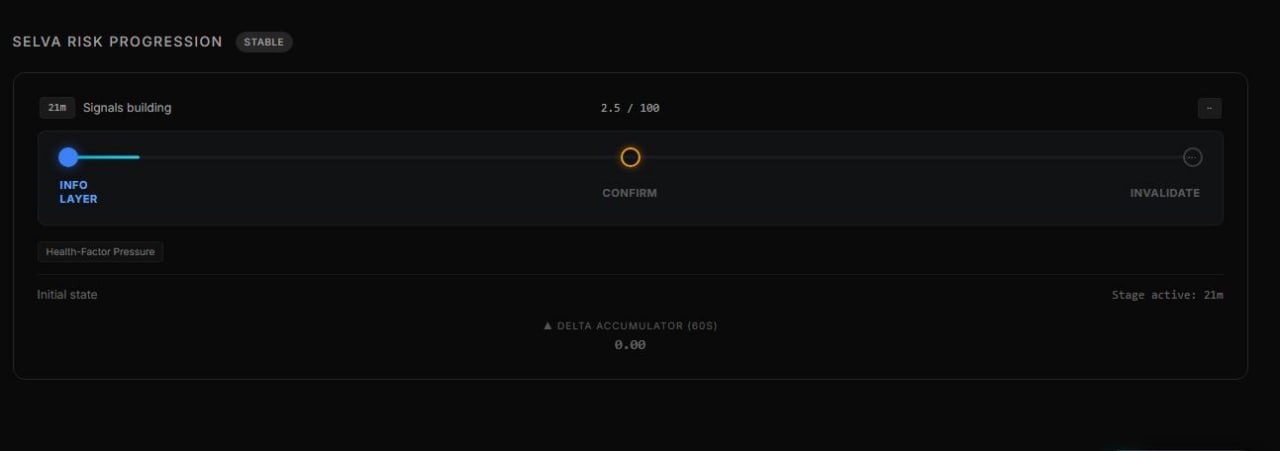
Escalates risk states through a predefined state machine,
Triggers protective on-chain actions before liquidation thresholds are reached.
By shifting DeFi risk management from reactive liquidation to proactive mitigation, Aquarius improves capital efficiency and reduces cascading risk events.
The problem Aquarius Solves:
There have been countless times where I — and even DAO operators — hold leveraged DeFi positions on protocols like Aave, Curve, or Compound, and only realize the health factor is deteriorating when liquidation pressure is already close.
At that point, liquidator bots are already watching the position 24/7 on-chain, ready to capture liquidation incentives. Protocols like Aave reward these external liquidators to maintain system solvency — which is good for the protocol, but often results in avoidable capital loss for the user.
Because of this, most users end up repeatedly coming back to their screens to manually monitor their health factor and adjust their position whenever it becomes risky. This management task is time-consuming, stressful, and inefficient — especially when managing positions across multiple protocols like Compound, Curve, or Lido.
Instead of exploring new strategies or focusing on capital efficiency, users are stuck babysitting their positions.
Most existing systems today are still reactive dashboards:
They show risk metrics, but they do not orchestrate deterministic protection workflows. There is no proactive, autonomous risk protection layer. Aquarius changes that.
How Aquarius is different
Instead of waiting for liquidation triggers, Aquarius turns risk monitoring into a proactive, machine-speed orchestration layer — where positions are continuously assessed, escalated through defined risk states, and mitigated before liquidation conditions become critical.
"Aquarius is designed to be ahead of liquidation bots"
Liquidator bots operate within protocol-defined constraints.
They can only act once a position crosses the liquidation threshold — when incentives become available.
But Aquarius has a different objective.
Because it is designed for protection, not incentive capture, it evaluates projected health factor deterioration before liquidation conditions are triggered and can initiate mitigation earlier.
This creates a structural timing advantage:
protection logic can act before liquidation logic becomes eligible — positioning Aquarius ahead of external liquidators and reducing the likelihood of avoidable liquidation losses for defi users.
Aquarius introduces the missing protection layer for on-chain finance through the following mechanisms:
Users can choose any of the options:
Manual Monitoring (Dashboard Only)
Alert Mode Ins
Autonomous Agent Mode
Insurance Buffer Vault
Option A — Manual Monitoring (Dashboard Only)
Users monitor risk metrics and rebalance manually when needed, without automation.
Option B — Alert Mode
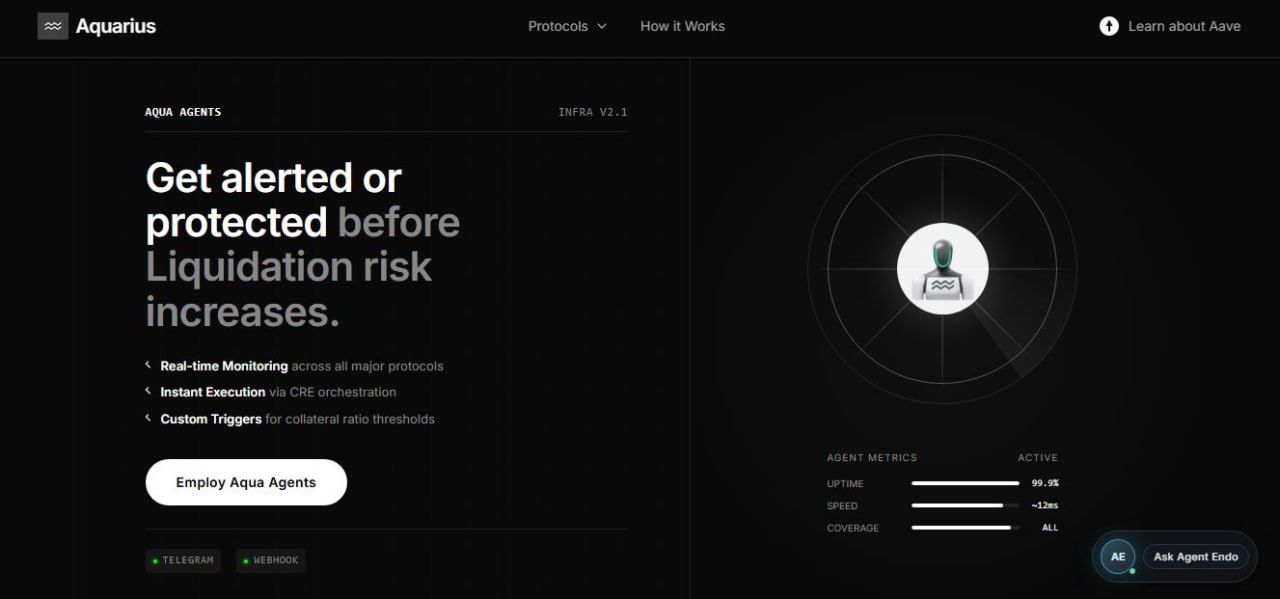
Aqua Agents continuously monitor positions and send alerts when risk escalates.
Alerts can be delivered via: Telegram Webhook, Web push
Option C — Autonomous Agent Mode
Users delegate mitigation authority to Aqua AI Agents under a selected protection policy.
When predefined risk thresholds are reached, the agent:
Executes repay or collateral reinforcement. and the agent is non-custodian and privacy focused.
Option D — Insurance Buffer Vault
(Includes Alerts + Autonomous Protection)
For users seeking additional resilience, Aquarius provides a tokenized vault buffer mechanism.
In this mode:
Users allocate capital into a protective buffer vault
When risk escalates, the system can draw from the vault
Collateral is automatically reinforced to prevent liquidation
"Importantly, vault funds are not idle."
The buffer is structured as a tokenized vault that generates yield, allowing users to maintain capital efficiency while securing downside protection.
This aligns protection with productive capital deployment.
About our vault :
The per-chain vault is evolving toward allowlisted strategy adapters so buffer and yield capital can be deployed into multi-chain staking and yield paths, including 0G, under explicit risk and policy controls. Today the contract emphasizes share accounting and safety boundaries; multi-chain staking execution is planned and will ship as audited modules, not implied as live for every chain.
0G validator goal (intent)
one of our goal is to take part in 0G staking (validators). It sits alongside our risk tools: not instead of them, but as another way to align the protocol with network health and capital that backs protection.
rance Buffer Vau
Manual Monitoring (Dashboard Only
Maual Monitoring (Dashboard Only)
Progress during hackathon
Shipped ZG pipeline route and vault gateway manifest/routing APIs; documented 0G-aligned architecture (chain, DA bridge hook, inference, commitments).
- Extended README + docs with OG-narrative sections (now vs roadmap).
- Deployed/iterated frontend (Vercel) and API surfaces for judges to exercise.
Pre-seed / Early-stage fundraising — currently exploring grants, ecosystem funding, and strategic investment opportunities to accelerate development of Aquarius Protocol... moving the project from ZERO to ONE ⚡